 Rowing Machine Nerd
Air vs. Water vs. Magnetic Rowing Machines: Which Type?
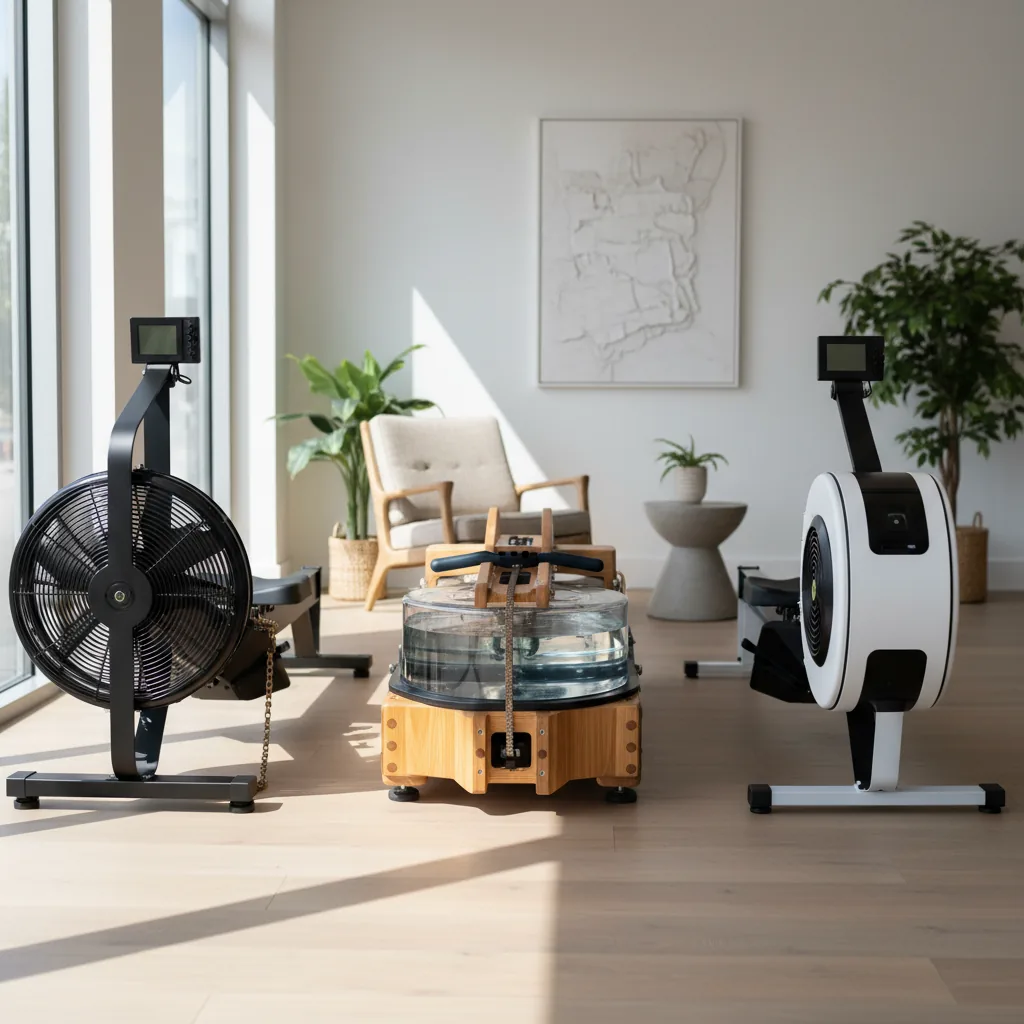
Before you compare specific models, decide which type of resistance you want. Air, water, and magnetic rowers feel different, sound different, and suit different homes and goals. Here's how they actually compare.
Air rowers
A fan flywheel provides resistance: pull harder and the air pushes back harder, so resistance scales infinitely with your effort. On these machines a damper lever changes the airflow and feel, while the actual intensity comes from how hard you pull.[1] This is what nearly every gym, CrossFit box, and competitive rower uses (the Concept2 being the benchmark).
- Pros: Responsive, effort-scaled resistance; the most accurate performance data; durable; the standard for serious training and comparison.
- Cons: The loudest type (a whooshing fan); larger footprint.
- Best for: Anyone training seriously or who wants reliable metrics and resale value.
Water rowers
A paddle spins in a water tank, so resistance also scales with effort and produces a satisfying swooshing sound many people love. Often the best-looking option, with wooden frames that suit a living room.
- Pros: Smooth, natural catch; pleasant sound; attractive; effort-scaled resistance.
- Cons: Heavy; usually pricier for equivalent quality; tanks need occasional purification tablets; performance data is typically less precise than an air rower's.
- Best for: Home users who want a beautiful machine and an immersive feel over hard data.
Magnetic rowers
Magnets near the flywheel create resistance set by a dial or the console - independent of how hard you pull. The defining feature is that they're near-silent.
- Pros: Very quiet (great for apartments or rowing while others sleep); compact; often affordable; resistance is consistent and selectable.
- Cons: Resistance doesn't scale with effort the way air/water does, so the feel is less dynamic; cheaper units have basic monitors.
- Best for: Quiet-conscious home users and beginners prioritising silence and price.
Quick comparison
- Most realistic feel & data: air
- Quietest: magnetic
- Best looking / most immersive: water
- Best for serious training & resale: air
- Best for small, quiet spaces: magnetic
The bottom line
If you want to train seriously and track progress, get an air rower - our buying guides rank the best models. If silence is your top priority, go magnetic. If you want a gorgeous machine with a satisfying feel and don't need lab-grade data, a water rower is hard to beat. Once you've picked a type, browse our reviews for specific models.
References
Frequently asked questions
- Which type of rowing machine is best?
- Air rowers are best for serious training, accurate data, and resale value. Magnetic rowers are quietest and best for apartments. Water rowers offer a beautiful look and immersive feel.
- What's the quietest type of rowing machine?
- Magnetic rowers are near-silent, making them ideal for apartments or rowing while others sleep. Air rowers are the loudest because of the spinning fan.
- Are water rowers better than air rowers?
- Neither is strictly better. Water rowers feel smooth and look great; air rowers give more accurate performance data and are the standard for serious training. It depends on your priorities.

Jordan Lockwood (BSc, CPT)
Certified personal trainer (CPT), sports-science graduate, and lifelong rower. Jordan writes and reviews every guide on Rowing Machine Nerd.