 Rowing Machine Nerd
Concept2 Model D Review
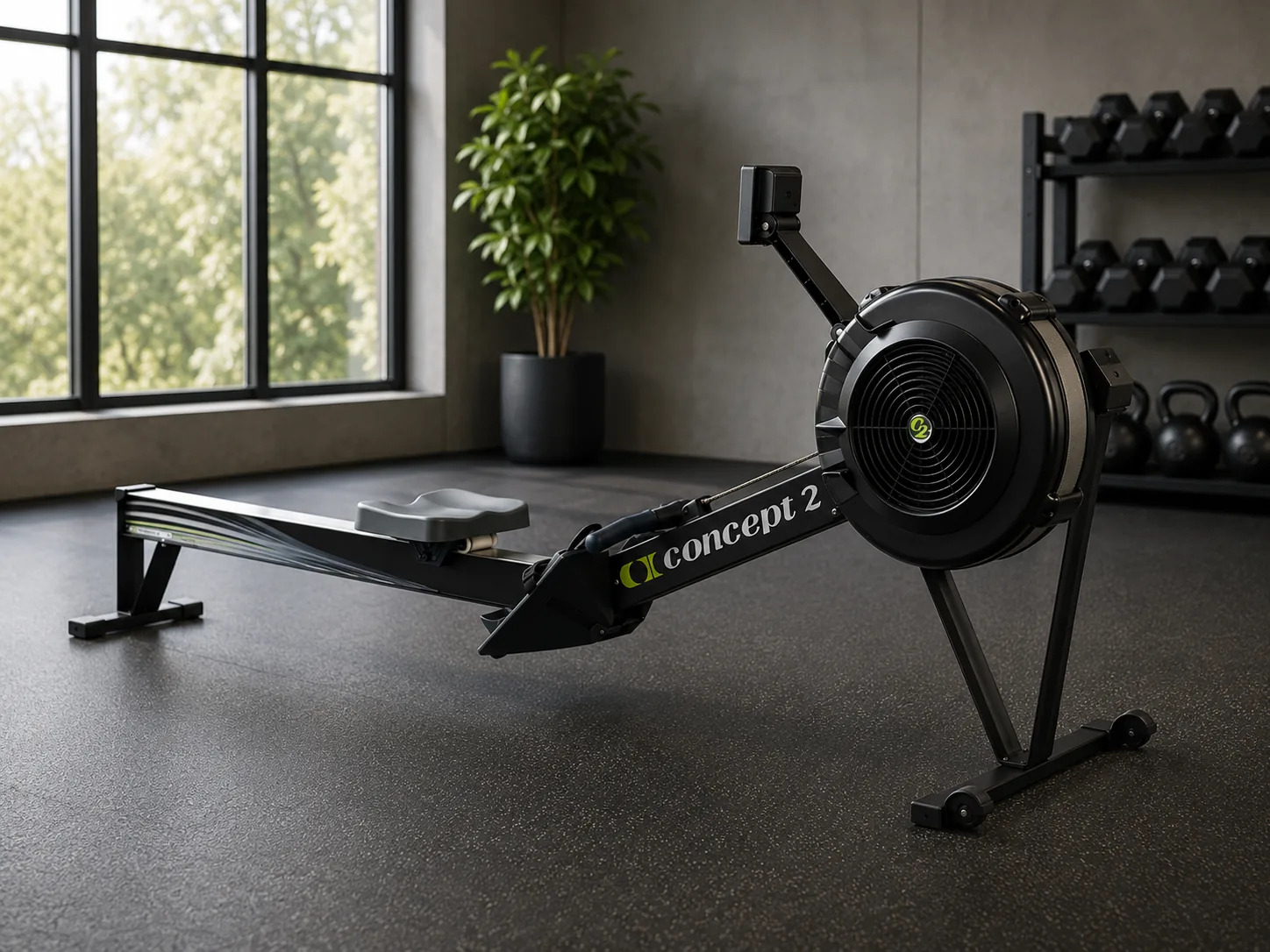
Air rower · ~$990
Concept2 Model D (RowErg)
The benchmark air rower: gold-standard data, near-indestructible build, and resale value that makes its price look like a bargain.

How we review
Every rower is scored on the same six weighted criteria - resistance & feel, build, monitor, comfort, footprint, and value - from verified specifications, expert consensus, and aggregated long-term owner feedback. Our reviews are independent: we never accept payment for placement or a higher score. Reviewed by Jordan Lockwood (BSc, CPT). See our full methodology.
If you ask competitive rowers, CrossFit coaches, or physiologists which indoor rower to buy, the answer is almost monotonously consistent: the Concept2. The Model D - now sold as the RowErg - is the machine the rest of the market is measured against, and it has held that position for decades.
At $990 it isn't the cheapest option, but it occupies an unusual sweet spot: it costs a fraction of premium connected rowers while out-measuring and out-lasting nearly all of them. Here's how it scores against our methodology.
Specifications at a glance
| Resistance | Air (spiral damper, 10 settings) |
|---|---|
| Monitor | PM5 (backlit; Bluetooth & ANT+; USB) |
| Connectivity | ErgData + 40+ compatible apps |
| Max user weight | 500 lb (227 kg) |
| Machine weight | 57 lb (26 kg) |
| Footprint | 96" × 24" (244 × 61 cm) |
| Seat height | 14" (36 cm) |
| Storage | Separates into two parts; front casters |
| Warranty | 5-yr frame / 2-yr parts & monitor |
Pros
- Industry-standard data accuracy - the PM5 is what races are run on
- Air resistance scales infinitely with effort; you'll never outgrow it
- Famously durable; commonly runs for 10+ years with minimal upkeep
- Holds resale value better than almost any home cardio machine
- Open app ecosystem (ErgData, Kinomap, EXR and many more)
Cons
- Long 8-ft footprint while in use (though it separates for storage)
- Fan produces a noticeable whoosh - louder than magnetic or water
- Utilitarian looks won't suit a design-led living room
Best for: Serious and data-driven rowers, and anyone who wants to buy one machine for life.
The resistance ceiling you will never hit
Air resistance is the Model D's defining trait, and it behaves differently from the magnetic or water rowers it gets cross-shopped against. There are no resistance levels in the way most buyers expect. The damper lever on the flywheel cage (1 to 10) does not make the row harder or easier so much as it changes how the air feels, more like adjusting gears than turning up the weight. The actual intensity comes entirely from how hard you pull. Sprint and the flywheel fights back; ease off and it goes quiet. That means a deconditioned beginner and a competitive lightweight can use the same machine on the same day without touching a setting.
The practical upshot is that you cannot outgrow this rower. Most magnetic machines have a top resistance level that a fit rower will eventually find too easy, and water rowers are similar in that the drag is fixed by the water volume. The Model D simply scales with your effort forever, which is exactly why it is still the machine serious rowers buy after years of training. The trade-off is the one already in the cons: the fan makes a real whoosh under load, louder than a magnetic or water unit, and it gets louder the harder you go.
A common beginner mistake is cranking the damper to 10 thinking it means maximum workout. It mostly just makes the stroke feel heavy and grindy and can wreck your form. Most coaches and the Concept2 community settle around a damper setting of 3 to 5 for general fitness, which keeps the stroke crisp and closer to the on-water feel the machine was designed to mimic.
The PM5 is the real product
It is fair to say you are partly buying the monitor. The PM5 is the reason this machine is the testing and racing standard worldwide, with an online ranking holding over a million logged results across standard distances. When people talk about data accuracy in rowing, they mean Concept2 numbers. Your 2k split here is directly comparable to a rower on the other side of the planet, which no app-driven competitor can claim because their numbers are proprietary and not cross-comparable.
Crucially, the data ecosystem is open and free. The PM5 has Bluetooth and ANT+, talks to chest straps, and feeds the free ErgData app and the Online Logbook with no subscription anywhere in sight. It also connects to third-party apps like Kinomap, EXR and Zwift if you want gamified or scenic rowing, but none of that is required and none of it is locked behind a paywall. This is the structural opposite of a connected rower, where the screen and content are the business model and the monthly fee never stops.
The honest caveat is that the PM5 is a function-first LCD, not a glossy touchscreen. There are no instructors, no video routes, no leaderboards beaming into your living room out of the box. If your motivation depends on a coach on a screen telling you to push, the bare PM5 can feel utilitarian. If you are self-directed or chase your own splits, it is close to perfect and it will still be perfect in ten years when a tablet-based rower's software has been abandoned.
Build, comfort and the few honest weak points
The core build is the stuff of legend and the durability reputation is earned. Aluminium I-beam monorail, stainless track, and a nickel-plated chain that is close to maintenance-free are why units from the 1990s are still logging meters and why the resale market is so strong. Real upkeep is minimal: a periodic wipe of the monorail, the occasional chain oil, and a dust-out of the flywheel housing, which matters more in a dusty garage where lint on the vents slowly changes the drag factor.
It is not flawless, and being specific is fairer than gushing. The monitor arm is plastic and is the least premium-feeling part of the machine. Long-term, heavy users report the molded seat getting firmer over the years, and many eventually add a gel cushion or pad, which is a cheap fix but worth knowing. The handle and footplates are functional rather than luxurious. None of this dents the 4.8 rating, but if you expect everything to feel as bombproof as the frame, the trim is a step below.
Storage is the genuine planning point. In use it occupies roughly an 8-foot footprint, so it wants a dedicated lane of floor. It does separate into two pieces without tools and the front section stands upright, but it does not fold flat and compact like some space-savers. Plenty of owners simply leave it assembled with the rail tilted up against a wall. If your only option is a small shared apartment, also weigh the noise: the fan whoosh does not travel through walls badly, but the seat rolling on the rail at speed can transmit to a unit below you.
Model D versus Model E: do not overpay by reflex
The closest decision most buyers actually face is not Concept2 versus a rival, it is Model D versus Model E, since they are now both sold under the RowErg name with identical PM5 monitors and identical flywheels. The workout, the data and the durability are the same. You do not get a better row by spending more on the E.
The differences are ergonomic and structural. The Model E sits about 6 inches higher (roughly 20 inches vs 14 inches at the seat), has a taller fixed monitor arm, a fully enclosed chain, and a slightly beefier welded frame, for roughly $200 to $300 more. That higher seat is a real benefit if you have knee, hip or mobility issues, or if you are tall and find getting up off a low seat annoying. For most people the lower Model D is the better buy: it is lighter, easier to move, the monitor arm folds, and it puts you in a posture closer to an actual boat.
The plain advice is to default to the Model D and only step up to the E for the seat height, not for any perceived quality upgrade. Spending the extra for a stiffer frame you will never stress is money better kept.
Versus the connected rowers it gets compared to
The other comparison buyers wrestle with is the Model D against a connected, screen-led rower like a Hydrow. These are different products solving different problems, and the choice is really about what keeps you rowing. The Hydrow and its peers sell immersion: a big touchscreen, filmed routes, live instructors and a polished class library, paid for with a heavy machine and an ongoing monthly subscription. The Model D sells a tool: superb data, an open free ecosystem, and a machine that outlives everything around it.
On feel, air resistance generally wins. Owners describe electromagnetic rowers as feeling slightly flat or sluggish because the resistance is simulated and always a fraction behind your stroke, whereas the Model D's flywheel responds instantly and infinitely to effort. On cost of ownership it is not close: a Hydrow-class machine is often two to three times the price up front, weighs more than twice as much, and then bills you every month for the content that justifies it. When that company changes its app or sunsets a model, your expensive screen ages fast. A Model D's value is in hardware that does not depend on a subscription staying alive.
The case for the connected rower is genuine for one type of buyer: people who will only train if a charismatic instructor is pushing them through a class. If that is you, the engagement may be worth the premium and the fee. For nearly everyone else, the Model D delivers the better workout, the better data and far better long-term economics, and you can always bolt scenic or gamified apps onto the PM5 later if you want them.
Our take
Buy the Model D if you want a rower you will own for a decade or more, care about real comparable performance data, and do not need a coach on a screen to make you train. It is the safest purchase in the entire home-cardio category. The air resistance never runs out, the build is famously hard to kill, the data is the global standard, and the resale value is so strong (used units routinely fetch 75 to 85 percent of new and sell fast) that the real cost of trying it is remarkably low. That combination is exactly why we rate it 4.8 out of 5.
Skip it, or at least think twice, if your motivation lives and dies with instructor-led classes and a big immersive screen, in which case a connected rower may keep you consistent despite its cost and subscription. Think twice too if you are squeezed into a small apartment where an 8-foot footprint and the fan's whoosh genuinely will not work, or if you specifically need a higher seat, in which case the Model E is the right Concept2 rather than the D. For the design-led living room, accept that this is a gym tool that looks like one. Everyone else: this is the one to buy, and the only real upgrade decision is D versus E on seat height, not on quality.
Our verdict
The Concept2 Model D is the rower we recommend without hesitation to almost anyone. It earns its 4.8 out of 5 by being the rare piece of home cardio that gets the fundamentals completely right: air resistance that scales with your effort forever so you can never outgrow it, the PM5 monitor that makes your data the worldwide testing and racing standard, a frame that routinely runs for a decade or more, and a free, open app ecosystem with no subscription. Add resale value that holds 75 to 85 percent of new, and the real cost of ownership is lower than almost anything else you could buy.
It is not the choice for everyone. If you only train when an instructor is on a big screen pushing you, a connected rower may keep you more consistent despite costing far more and charging monthly. If you live above neighbors in a tight apartment, weigh the 8-foot footprint and the fan whoosh honestly, and if you need an easier-to-mount higher seat, the Model E is the better Concept2 for you. But for self-directed buyers who want the best workout, the best data and a machine that will outlast the trends, the Model D is the benchmark, and everything else in the category is measured against it.
Frequently asked questions
- Is the Model D outdated now that it is called the RowErg?
- No. Concept2 simply renamed the Model D and Model E to RowErg in 2021. The machine is the same proven design with the current PM5 monitor. If you see a new unit listed as Model D or RowErg, it is effectively the same product, so do not pay a premium chasing a newer-sounding name.
- Do I need a subscription to use it?
- No, and that is a core part of its value. The PM5 monitor works fully on its own, and the ErgData app plus the Online Logbook are free with no monthly fee. You can optionally connect paid third-party apps like Kinomap, EXR or Zwift if you want scenic or gamified rowing, but nothing essential is locked behind a paywall.
- Is it too loud for an apartment?
- It depends on your situation. The air fan makes a clear whoosh that is louder than magnetic or water rowers, but it is fan noise that does not punch through walls badly. The bigger issue for upstairs apartments is the seat rolling on the rail, which can transmit to the unit below. On a ground floor or with a mat it is usually fine; in a shared building above neighbors, test carefully.
- Should I buy used to save money?
- It is a reasonable move because these machines are nearly indestructible and hold their value, so used units sell for close to new and do not last long on the market. Check the monitor type (you want a PM5, or budget to upgrade an older PM3 or PM4), inspect the chain and monorail for wear, and confirm the flywheel spins freely. A well-kept used unit can run for years more.
- What damper setting should I use?
- Lower than most beginners assume. The damper is airflow, not difficulty, so cranking it to 10 just makes the stroke feel heavy and can hurt your form. Most rowers settle around 3 to 5 for general fitness, which keeps the stroke crisp and closest to the on-water feel. Your effort, not the lever, sets the intensity.
References
Jordan Lockwood (BSc, CPT)
Certified personal trainer (CPT), sports-science graduate, and lifelong rower. Jordan writes and reviews every guide on Rowing Machine Nerd.