 Rowing Machine Nerd
Rowing Stroke Rate (SPM) Explained
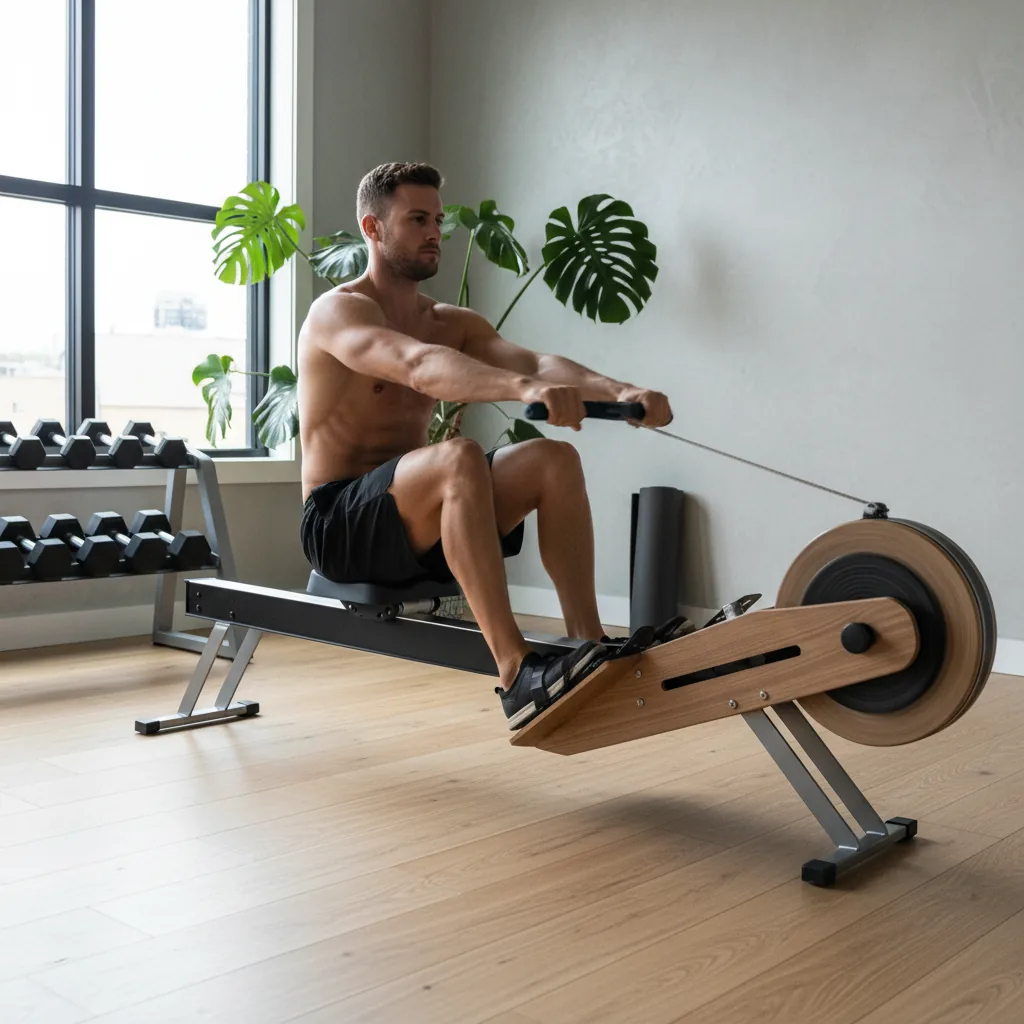
Stroke rate - shown as SPM (strokes per minute) on your monitor - is one of the most misunderstood metrics in indoor rowing. Most beginners assume a higher rate means a better workout. In reality, stroke rate is a tool, not a target, and rowing faster is often counterproductive. Understanding what SPM is, what it isn't, and how to use it will make every session more effective.
What stroke rate measures
SPM is simply how many complete drive-and-recovery cycles you take per minute. At 20 SPM that's one stroke every 3 seconds; at 28 SPM, roughly every 2.1 seconds. But a higher rate doesn't automatically mean more power or a faster split. Total power is power per stroke × number of strokes - and most untrained rowers generate more total power at a lower rate with more force per stroke than at a high rate with shallow, rushed pulls.
The "rate vs. power" confusion
Here's a test worth doing: row at 28 SPM for two minutes, then at 20 SPM for two minutes, and compare your splits. Almost always the 20-SPM piece is equal or faster - because at the lower rate you apply more force to each stroke instead of spinning the flywheel with weak pulls. That's the central insight: power per stroke matters more than rate. Concept2 makes the same point - a higher rate doesn't necessarily mean greater intensity; you row harder by driving faster and harder, not just by rating up.[1]
Stroke rate by workout type
Use these as deliberate targets - pick the rate that fits the session, then focus on the drive:
| Workout type | SPM | Notes |
|---|---|---|
| Recovery | 16–18 | Technique focus, minimal aerobic demand |
| Endurance / steady-state | 18–22 | Efficient aerobic pace, sustainable 20–60+ min |
| Threshold | 22–24 | Elevated intensity, sustainable 10–20 min |
| Race pace (2,000m) | 26–30 | Competitive race intensity |
| Sprint / anaerobic | 30–36 | Maximum effort, not sustainable beyond 60–90 sec |
How to train stroke rate
Rate pyramid session
A classic structure for developing comfort across rates. The goal of every segment: hold the same split regardless of rate, which forces power-per-stroke adaptability instead of relying on rate for speed.
Rate caps
A technique used by serious erg athletes: cap your rate at 20 SPM for every workout for 4-6 weeks. You can't "spin" your way to a better split, so it forces technique and power development. When you remove the cap, your natural rate produces noticeably more power per stroke than before.
Common stroke rate mistakes
- Rushing the slide: too little time on the recovery. Good rowing has a 1:2 ratio - one part drive, two parts recovery. Frantic-sounding strokes mean you're rushing.
- High rate, low power: spinning the handle with the arms without engaging the legs - high SPM, slow split, exhausted arms.
- Inconsistent rate: drifting stroke to stroke. Hold your programmed rate within ±1 SPM through a session.
The bottom line
Stroke rate is a variable you set deliberately, not a number you maximise. Use it to structure training - easy rows at 18-20, intervals at 24-26, race pieces at 28-30 - and in every session prioritise the power and length of each stroke over how fast you cycle through them. That's where the speed actually comes from. See it applied across our interval and steady-state workouts, each of which lists a target SPM.
References
- Rowing Stroke Rate Explained - Concept2
Frequently asked questions
- What does SPM mean in rowing?
- SPM is strokes per minute - how many complete strokes you take each minute. It measures cadence, not effort or speed.
- What is a good stroke rate?
- Steady-state work usually sits around 18-24 SPM; intervals and sprints climb to 28-36+. Lower rates with strong drives often beat frantic high-rate rowing.
- Is a higher stroke rate better?
- Not by itself. Speed comes from power per stroke times rate. Rating up while losing length or power can actually slow your split - pace first, rate second.

Jordan Lockwood (BSc, CPT)
Certified personal trainer (CPT), sports-science graduate, and lifelong rower. Jordan writes and reviews every guide on Rowing Machine Nerd.