 Rowing Machine Nerd
Rowing Interval Workouts: HIIT Routines That Burn Calories Fast
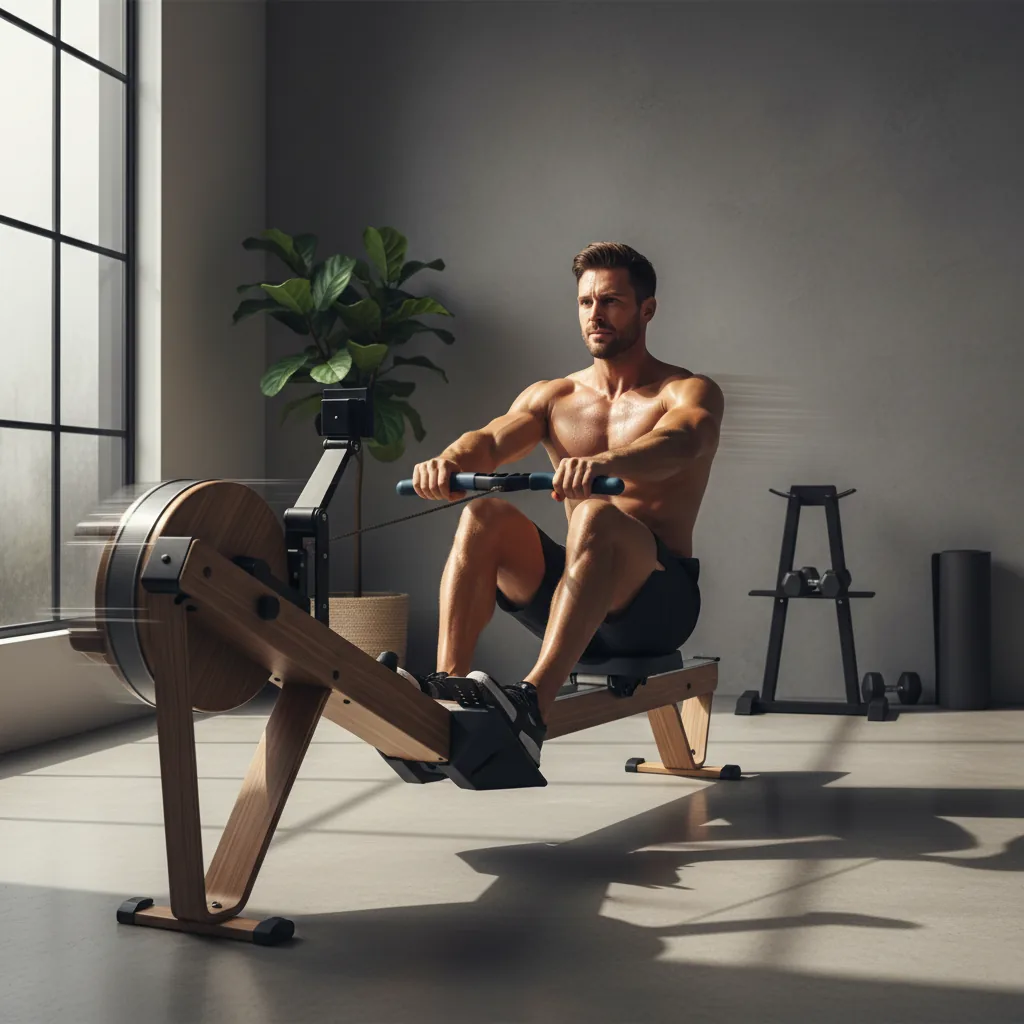
Interval training is the fastest way to raise your fitness and lower your splits, and the rowing machine is ideal for it because every stroke engages the whole body. Short bursts of hard effort followed by recovery push the heart rate up, build endurance, and make every minute count - a couple of weekly sessions also contribute toward the recommended vigorous-activity total.[2]
Below are six ready-to-row interval sessions, from a beginner-friendly 1:1 to an advanced distance ladder. Each card shows the structure, the effort zone, the stroke rate, and a pace target relative to your 2k - so you know exactly how hard to pull. Aim for genuine power on the work intervals rather than a frantic stroke rate; intensity comes from the drive, not the cadence.[1]
Effort zones used in these workouts
Targets are relative to your 2k pace - the most reliable reference for prescribing effort at any fitness level.
The interval workouts
Start with one or two interval sessions a week and fill the rest of your training with easier steady-state rows. Pick a session that matches your level and the time you have.
Classic 1:1 Intervals
The benchmark interval session - one minute hard, one minute easy, repeated ten times.
5 min easy + drills
10 × 1 min
Strong, controlled power from the legs - not a frantic rate.
1 min easy between each
3–5 min easy
Why it works: Equal work and rest teaches pacing and consistency while building both aerobic and anaerobic fitness - the perfect first 'real' interval workout.
40/20 Intervals
Eight rounds of 40 seconds hard, 20 seconds easy - a punchy, sweaty session that fits a lunch break.
5 min easy
8 × 40 sec
Only 20 sec recovery, so manage your effort - this is harder than it looks.
20 sec easy between each
4 min easy
Why it works: The short, incomplete recovery keeps your heart rate elevated throughout, building anaerobic capacity and torching calories in 20 minutes.
Tabata Rowing
A brutal, time-efficient protocol: 20 seconds max effort, 10 seconds rest, eight rounds - then again.
6 min easy + 3 builds
8 × 20 sec
All-out. Pull hard from stroke one.
10 sec between each
Repeat the 8-round block once after 3 min easy (optional)
4 min easy
Why it works: Maximal short efforts with tiny rests spike heart rate and anaerobic capacity, delivering a big training stimulus in minimal time.
Pyramid Intervals
Climb up and back down: 1-2-3-2-1 minutes of work, each matched by equal recovery.
5 min easy
1, 2, 3, 2, 1 min hard
Equal easy recovery after each effort. Pace the 3-min effort so you don't blow up.
Match each work bout
5 min easy
Why it works: Varying interval length trains pacing judgement and mental focus, and the changing structure keeps a hard session engaging.
6 × 500m
Distance intervals that build speed-endurance and let you track your 500m pace over the set.
8 min easy + 3 builds
6 × 500m
Aim to hold the same split across all six. Negative-split the last one if you can.
90 sec easy between each
5 min easy
Why it works: Fixed-distance reps give you concrete, comparable splits to chase - the cleanest way to measure interval progress over time.
Distance Ladder
Up and down the ladder - 250, 500, 750, 1000, then back - with full recovery between pieces.
8 min easy
250 / 500 / 750 / 1000 / 750 / 500 / 250m
Faster on the short pieces, controlled on the long ones.
1–2 min easy between pieces
5 min easy
Why it works: Mixing piece lengths trains the full range from speed to endurance in one session and keeps a long hard workout mentally fresh.
How to structure your own intervals
Every interval session balances effort and recovery. Work hard enough to challenge your body, but recover just enough to repeat the next rep with quality. The two levers are the work-to-rest ratio and the effort:
- 1:1 ratio - equal work and rest (1 min hard, 1 min easy). The best starting point.
- 2:1 ratio - longer work, shorter recovery (2 min hard, 1 min easy). Builds threshold.
- 1:2 ratio - short work, long recovery (30 sec hard, 1 min easy). Best for beginners and pure speed.
Want to set your own work, rest, rounds, and target split? Build a custom session in our interval workout builder, and use the pace calculator to turn your 2k pace into the exact split to chase.
Common interval mistakes to avoid
- Sprinting with poor form. Power comes from the legs, not frantic arm-pulling. A clean, strong stroke beats a fast, sloppy one.
- Rushing the recovery. Keep the 2-to-1 rhythm - quick drive, slower slide - even on hard efforts.
- Setting the damper too high. It feels tougher but breaks form and loads the back. Stay around 3-5; your effort sets the intensity, not the lever.
- Skipping the warm-up. Intervals demand a lot from the body - 5 minutes of easy rowing and a few builds prevents a flat first rep and lowers injury risk.
Who should do interval rowing?
Almost anyone, once the basic stroke is in place. Beginners should start with the 1:1 session and longer rests; intermediate rowers can use balanced ratios to build both engines; advanced rowers can push the ladders and shorter recoveries. Intervals are also superb low-impact conditioning for runners, cyclists, and other athletes. New to the machine? Start with our beginner plan first, then come back here.
References
- Rowing Stroke Rate Explained - Concept2
- Adult Activity: An Overview (Physical Activity Basics) - Centers for Disease Control and Prevention
Frequently asked questions
- Are rowing intervals good for fat loss?
- Yes. High-intensity intervals burn significant calories in less time and keep metabolism elevated afterward, making them an efficient fat-loss tool when recovery allows.
- What's a good work-to-rest ratio for rowing intervals?
- Beginners do well with 1:1 (e.g. 1 min hard, 1 min easy). Shorter, harder efforts use longer rest (1:2); longer threshold intervals use shorter rest (2:1 or 3:1).
- How often should I do interval workouts?
- One to three interval sessions a week is plenty for most people, with easier steady-state rows filling the rest to support recovery.

Jordan Lockwood (BSc, CPT)
Certified personal trainer (CPT), sports-science graduate, and lifelong rower. Jordan writes and reviews every guide on Rowing Machine Nerd.