 Rowing Machine Nerd
Rowing Machine Form: Legs, Core, and Arms Explained
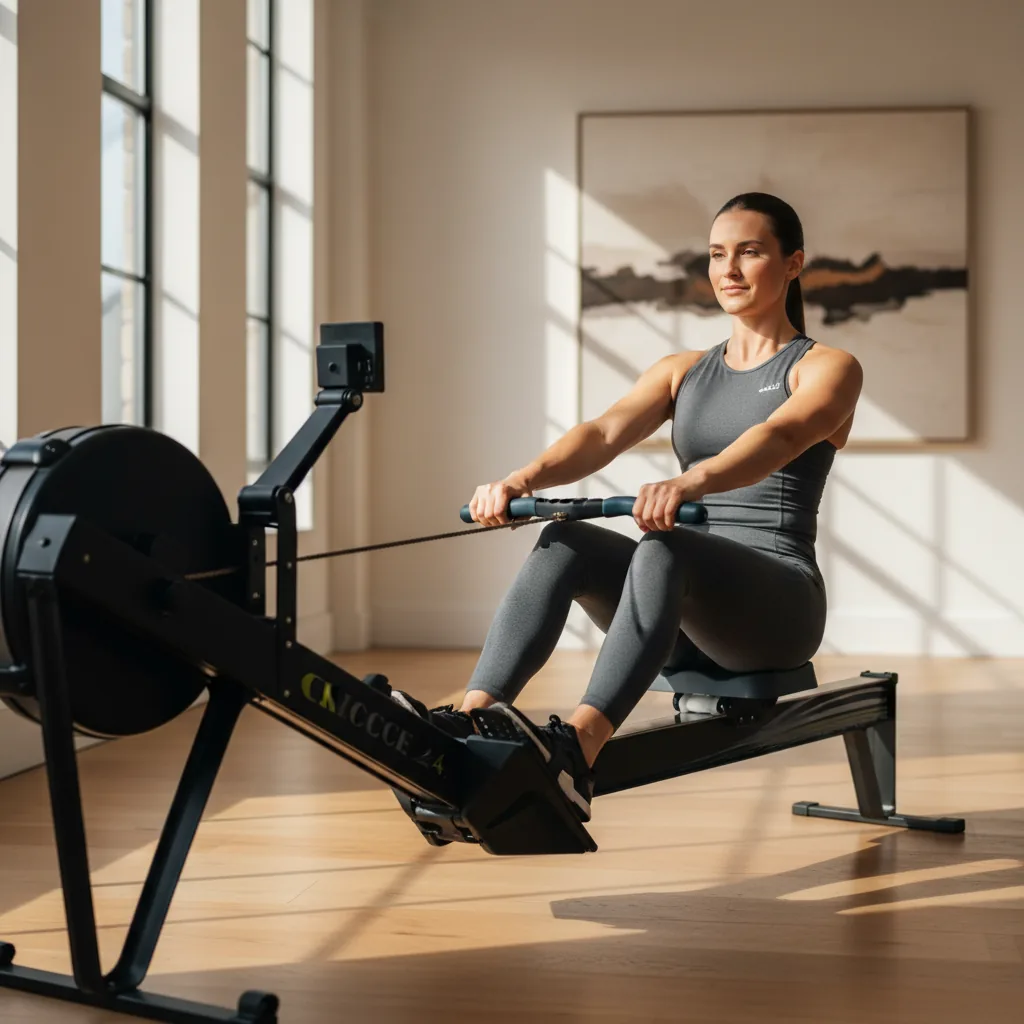
When people think of rowing, they often picture it as an arm exercise. The truth is, the rowing stroke is a coordinated movement that uses the legs, core, and arms in sequence. Each part of the body has a role, and when you understand how they work together, the stroke feels smooth, powerful, and efficient.
In my experience teaching beginners the full rowing stroke, once someone realizes that most of the power comes from the legs, everything starts to click. The core then stabilizes and transfers that power, and the arms simply finish the movement. When this sequence is consistent, rowing becomes safer, more effective, and far more enjoyable.
This guide will break down each part of the stroke - legs, core, and arms - so you can understand their specific roles. By focusing on form instead of force, you'll build better habits, protect your body, and get much more from every session on the machine.
The Role of the Legs
The legs are the foundation of the rowing stroke. Around 60% of your power should come from the drive through your legs, making rowing more like a squat than an arm pull. Concept2's technique guidance is explicit about the order: start the drive by pressing with the legs, then swing the back through vertical, and only then add the arm pull.[1] When you get this part right, the rest of the stroke feels smoother and more controlled.
How to use the legs
At the catch, your shins are vertical, heels close to the footplate, and chest tall. As the drive begins, push firmly through your heels, extending the knees and hips together. Keep your arms straight and your core engaged so all of that force transfers into the handle. The motion should feel like you're driving the machine away from you, not pulling yourself toward it.
Muscles at work
The quadriceps extend the knees, the glutes and hamstrings drive the hips, and the calves stabilize the movement. Together, these large muscle groups generate the power that makes rowing such an effective calorie burner and strength-builder. You can see exactly how that leg drive shapes your output by studying the power and force curves on the monitor.
Common mistakes with leg drive
- Early arm pull: Bending the arms too soon reduces leg power. Keep them straight until the legs are almost fully extended.
- Lifting the heels too much: A slight lift is fine, but driving from the toes reduces force and stresses the knees. Focus on pushing through the mid-foot and heels.
- Collapsing posture: Leaning forward or rounding the back weakens the drive. Keep your torso upright and core braced as you push.
When the legs are used correctly, each stroke feels strong but efficient, allowing you to row longer and with better rhythm.
The Role of the Core
The core is the link between the legs and the arms. Without it, all the power from the leg drive gets lost before it ever reaches the handle. A strong, stable core ensures that energy flows smoothly through the stroke while protecting the spine from unnecessary strain.
How to use the core
As you drive with the legs, engage your abdominal muscles and lower back to stabilize the torso. Think of your core as a solid frame that transfers force rather than a part of the body that bends. The movement at the hips is a hinge, not a slump - your spine stays tall while your torso rocks slightly back and forth.
Muscles at work
The abdominals and obliques stabilize the trunk, while the erector spinae in the lower back keep the spine supported. The hip flexors and extensors also play a role, helping you hinge forward at the catch and backward at the finish in a controlled way.
Common mistakes with the core
- Slouching or collapsing forward: This weakens the drive and can cause back pain. Sit tall and hinge from the hips instead.
- Over-leaning back at the finish: A slight backward lean is enough. Throwing yourself too far back creates strain and breaks rhythm.
- Letting the torso move too early: The body swing comes after the leg drive has begun. If you lean back too soon, you lose leg power.
When the core is engaged properly, the stroke feels connected. Each push from the legs transfers cleanly through the body, setting up the arms to finish the movement with control.
The Role of the Arms
The arms finish the stroke, but they are not the main source of power. Their role is to take the energy generated by the legs and core and guide it smoothly into the handle. Used correctly, the arms add control and precision to the end of the movement.
How to use the arms
Keep the arms straight during the leg drive and the early part of the stroke. Once the legs are nearly extended and the body begins to swing back, draw the handle into your torso. Pull the elbows straight back, close to the ribs, until the handle reaches just below the chest. At the finish, the wrists are flat, shoulders relaxed, and the handle moves in a straight line, not upwards.
Muscles at work
The biceps and forearms handle the pull, while the lats and rear shoulders control the movement and keep it stable. These muscles don't need to do much heavy lifting - they simply add a final snap to complete the stroke.
Common mistakes with the arms
- Pulling too early: Bending the arms before the legs finish reduces power from the lower body.
- Shrugging the shoulders: Lifting the shoulders wastes energy and creates tension. Keep them down and relaxed.
- Over-pulling: Yanking the handle into the chest or throat breaks form. The stroke ends when the handle reaches the lower ribs.
When the arms are used properly, they feel like the final link in a chain - efficient, controlled, and smooth.
Putting It All Together
Rowing is most effective when the legs, core, and arms work in sequence. Each part of the body has its moment, and when the order is correct, the stroke feels smooth, powerful, and repeatable.
On the drive, the sequence is:
- Legs push first - the main source of power.
- Core swings back slightly to stabilize and transfer force.
- Arms pull last to finish the stroke cleanly.
On the recovery, the order reverses:
- Arms extend forward.
- Core hinges forward.
- Legs bend as the seat slides back to the catch.
This flow creates rhythm and balance. The drive is strong and quick, while the recovery is slower and more controlled. A good way to think of it is like a dance step - one part naturally sets up the next.
Practicing the sequence regularly helps you develop muscle memory. Over time, you won't need to think about legs, core, and arms - the movement will come together as one smooth stroke.
Drills to Improve Form
Drills are one of the best ways to reinforce good habits and make the rowing stroke feel natural. By isolating parts of the movement, you can focus on technique without worrying about speed or distance.
Legs-Only Drill
Sit tall at the catch, arms extended and torso stable. Row using only your legs, keeping the arms straight and the body still. This highlights the power of the leg drive and prevents you from pulling too early.
Arms-Only Drill
With legs straight and torso upright, row using just your arms. Focus on keeping the handle path straight and your wrists flat. This helps refine the finish and teaches control.
Pick Drill
Start with arms-only strokes. Then add the body swing, and finally add the leg drive. Layering the movements in this order reinforces the correct sequence: legs, core, arms on the drive; arms, core, legs on the recovery.
Pause Drill
Row normally but pause briefly at key positions - the catch, the finish, or halfway through the recovery. Pausing builds awareness of posture and makes you more conscious of moving in the right order.
Spending just a few minutes on these drills before or after a session will improve your form, build muscle memory, and make your stroke more efficient over time. Once your sequence feels solid, put it to work in a session built with our interval workout builder.
References
Frequently asked questions
- What is the correct rowing stroke sequence?
- Drive with legs first, then swing the back open, then pull the arms in. Reverse it on the recovery: arms away, body over, then legs. Think 'legs-back-arms, arms-back-legs.'
- What damper setting should I use?
- Most rowers are best served by a damper of 3-5. Higher isn't harder in a useful way - it just changes the feel and can strain your back. Pace is set by how hard you pull, not the damper.
- Why does my lower back hurt when I row?
- Almost always a form issue: rounding the back at the catch or opening the hips too early. Brace your core, hinge from the hips, and keep a tall spine through the drive.

Jordan Lockwood (BSc, CPT)
Certified personal trainer (CPT), sports-science graduate, and lifelong rower. Jordan writes and reviews every guide on Rowing Machine Nerd.