 Rowing Machine Nerd
Beginner Rowing Workouts: Your First 4 Weeks on the Machine
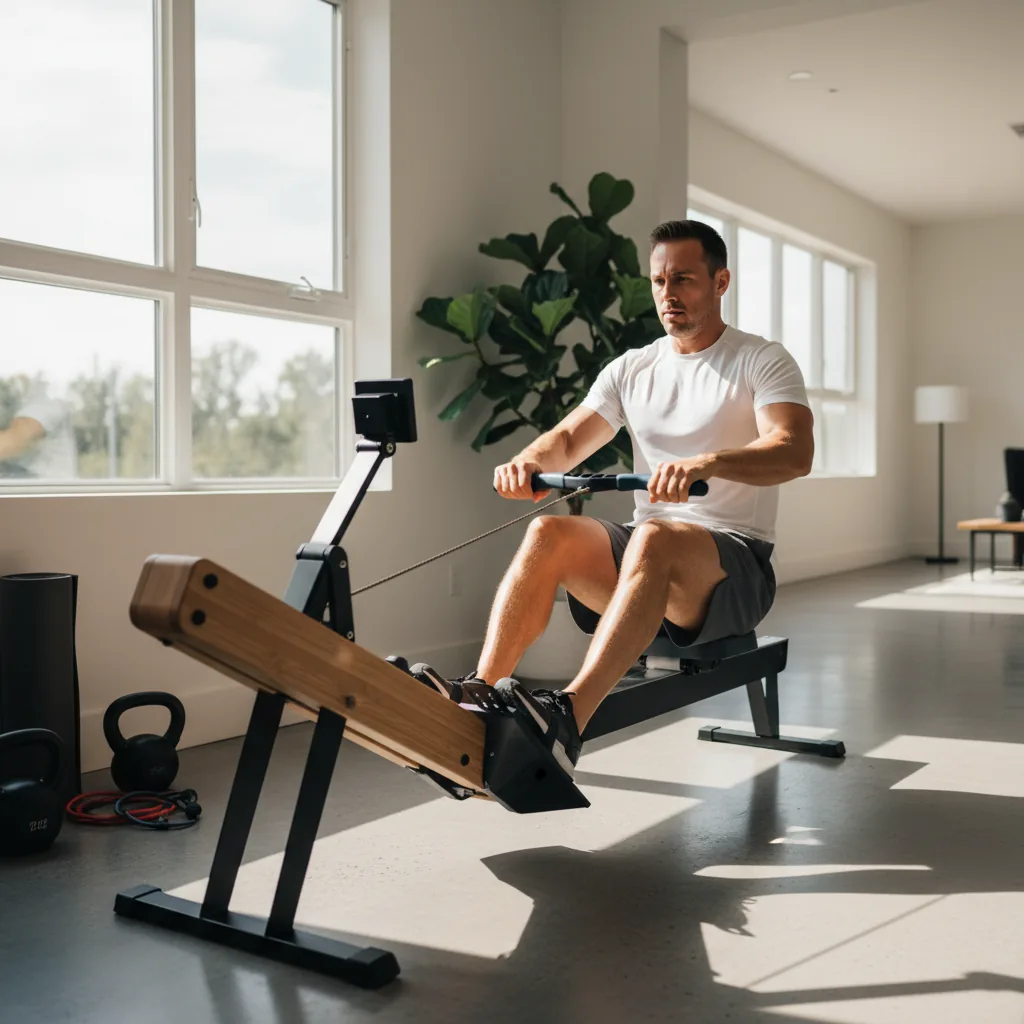
Most beginner programs make the same mistake: they chase intensity before you've built technique or an aerobic base. The result is poor form under fatigue, excessive soreness, and people quitting within a month. This plan is the opposite. For four weeks, technique and consistency come first - the workouts are deliberately manageable so you can focus on how you row, not just how hard.
Before you start
Burn the stroke sequence into your head: legs → body → arms on the drive; arms → body → legs on the recovery. This is the order Concept2 teaches for an efficient, powerful stroke.[1] It's the single most important thing you'll learn on the machine.
Set the damper to 3-5. Lower isn't easier - it's just a cleaner feel that teaches better power application and is kinder to your lower back. Most beginners crank it high because it feels satisfying; resist that urge.
Your three core sessions
These are the building blocks you'll rotate through. Three sessions a week, with at least one rest day between each, is a sound start and counts toward the recommended 150 minutes of weekly activity.[2]
First Row: Orientation
Your very first session - short work blocks at a relaxed rate so you can lock in the stroke sequence.
3 min easy
4 × 3 min
2 min easy paddle between each. Focus on legs → body → arms.
2 min between blocks
3 min easy + stretch
Why it works: Short blocks at low rate let you think about the stroke without fatigue wrecking your form. Don't watch the split yet - the monitor can wait.
15-Minute Continuous Build
Your first sustained row - 15 unbroken minutes at a relaxed, repeatable rhythm.
5 min easy
15 min continuous
Relaxed breathing, clean catches, one smooth rhythm throughout.
5 min easy
Why it works: Sustained easy rowing builds the aerobic base everything else is built on - and teaches you that pace comes from rhythm, not strain.
First Intervals
A gentle introduction to harder efforts, with generous recovery so form holds up.
5 min easy + 3 quick 10-stroke builds
5 × 3 min
Comfortably hard - you should be able to speak a short sentence.
2 min easy between each
5 min easy
Why it works: Long rests keep technique clean while you learn what 'comfortably hard' feels like - the foundation for all later interval work.
The 4-week schedule
Three sessions each week, building gradually from pure technique to your first benchmark test.
Week 1
Orientation
Lock in the stroke sequence
- All 3 sessions: First Row orientation (4 × 3 min easy). Don't watch the split - just groove the legs-body-arms order.
Week 2
Building duration
Start watching stroke rate
- Session 1: 5 min warm-up + 15 min continuous at 20 SPM + 5 min cool-down
- Session 2: 3 × 5 min at 20-22 SPM, 90 sec rest between
- Session 3: 20 min continuous - relaxed breathing, clean catches
Week 3
Introducing pacing
Start watching your split
- Session 1: 20 min steady - keep your split consistent throughout
- Session 2: 4 × 4 min at 22 SPM, 90 sec rest. Note your split each piece.
- Session 3: Row 5,000m without stopping, as easy as needed. Note your time.
Week 4
Your first benchmark
Finish with a 2k test
- Session 1: 25 min steady, technique focus
- Session 2: 5 × 3 min hard / 2 min easy - your first interval session
- Session 3: Warm up, then row 2,000m at best sustainable effort. This is your benchmark.
What good beginner splits look like
- Women, beginners: 2:30-2:45 /500m for a 2,000m piece
- Men, beginners: 2:15-2:30 /500m for a 2,000m piece
These are starting benchmarks, not targets. Whatever your time is after four weeks, that's your baseline - the goal is to beat it, not to match someone else. Curious where you stand? Check the 2k calculator once you've done your test.
After month one
You now have the foundation for structured training. Add a fourth weekly session, start including longer steady-state rows with our endurance workouts, and begin working on speed with interval sessions. To understand the numbers on your monitor, read split times and how to read your monitor.
References
- Indoor Rowing Technique on the Concept2 RowErg - Concept2
- Adult Activity: An Overview (Physical Activity Basics) - Centers for Disease Control and Prevention
Frequently asked questions
- How long should a beginner row for?
- Start with 15-20 minutes including warm-up and cool-down, focusing on technique. Build duration gradually over your first month.
- How often should a beginner row?
- Three sessions a week with a rest day between each is ideal early on - enough to build the habit and adapt without excessive soreness.
- What should beginners focus on first?
- Stroke sequence and a relaxed, consistent rhythm - not split times. Lock in legs-back-arms before chasing pace.

Jordan Lockwood (BSc, CPT)
Certified personal trainer (CPT), sports-science graduate, and lifelong rower. Jordan writes and reviews every guide on Rowing Machine Nerd.