 Rowing Machine Nerd
Damper Setting vs. Resistance: What It Actually Does
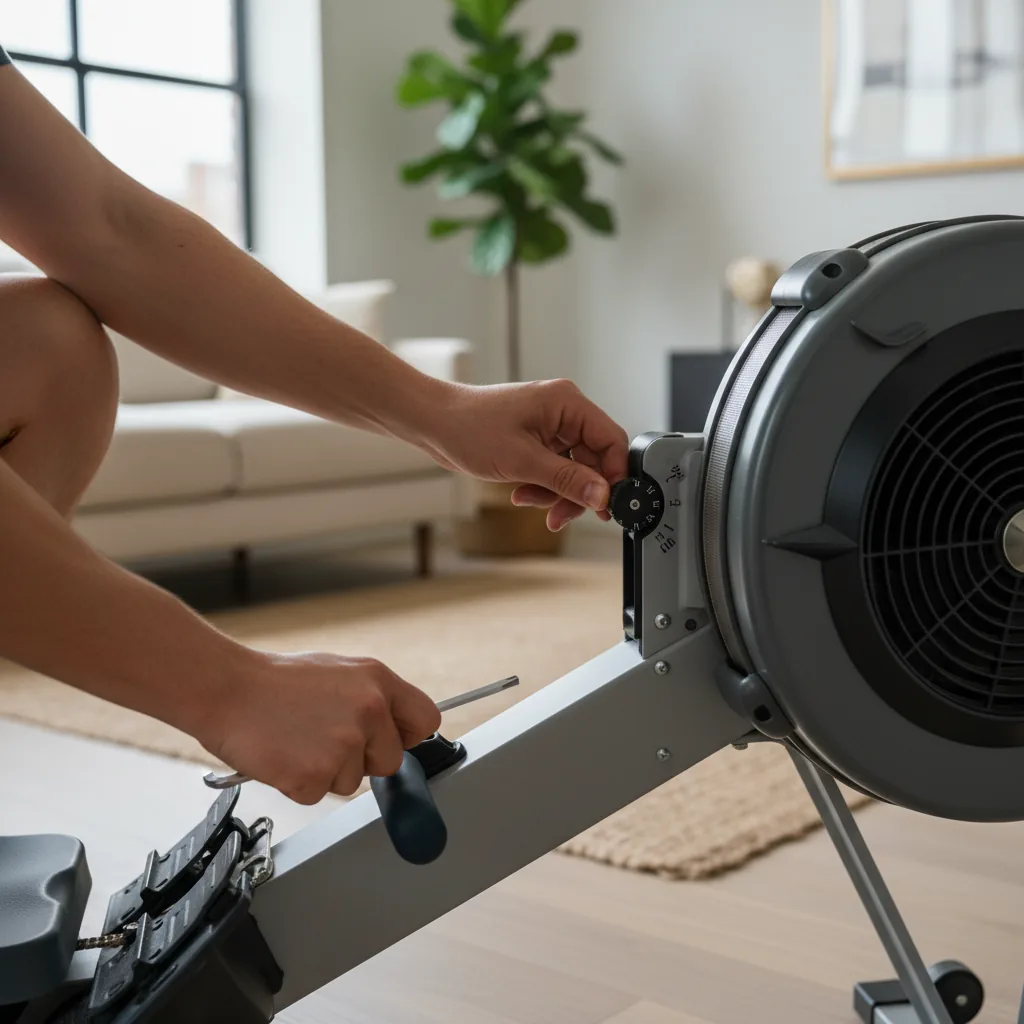
The single most misunderstood control on an air or water rower is the damper. New rowers crank it to 10 thinking they're making the workout "harder," then wonder why their back aches and their splits don't improve. Here's what the damper actually does - and why it isn't a difficulty dial.
The damper is airflow, not resistance
On an air rower (Concept2 and most commercial ergs), the damper is a lever that opens or closes a vent on the flywheel cage. A high setting lets more air into the cage, so the flywheel feels heavy and grabby - like rowing a big, slow boat. A low setting lets less air in, so the flywheel spins more freely - like a sleek racing shell.
Crucially, the resistance you feel comes from how hard you pull, not from the damper. Concept2 compares the damper to bicycle gearing: it changes the feel, but the intensity of your workout is set by how much you drive with your legs, back, and arms.[1] The monitor measures the work you do regardless of the lever position. A 1:50 split takes the same power at damper 4 as at damper 9 - the higher setting just changes the feel and demands more from your posterior chain each stroke.
What setting should you use?
- Most training: damper 3-5. This mimics the drag of an on-water shell and rewards clean, powerful technique.
- Strength-style intervals: 6-7 if you specifically want a heavier, grindier stroke for short pieces.
- Avoid 8-10 for steady work: it loads the lower back, encourages early arm-pull, and burns you out without improving fitness.
Drag factor: the number that actually matters
Damper numbers aren't standardized - a "5" on a dusty old erg flows differently than a "5" on a clean one. The real measure is drag factor, found in the monitor's menu (on a Concept2, Menu → More Options → Display Drag Factor). It accounts for the flywheel's actual condition. Concept2 itself recommends most people start at a damper of 3-5 and note that the same setting can feel different from machine to machine as temperature, elevation, and lint change the drag factor.[1] Many rowers settle around a drag factor of 110-130. If your damper-5 reads much higher, your flywheel cage needs cleaning.
Magnetic and water rowers are different
On a magnetic rower, the "damper" usually is a genuine resistance setting - moving magnets nearer the flywheel adds real braking force. (If you're still deciding between machine types, our guide to air, water, and magnetic resistance breaks down how each feels.) On a water rower, resistance is mostly fixed by the water level in the tank and how hard you pull; some models have a damper-style vent, but most don't. If you're on one of these, ignore advice written for air rowers and simply pull harder to work harder.
The takeaway
On an air rower, stop treating the damper like a difficulty setting. Set it to 3-5, check your drag factor, and make the workout harder by driving with more power - not by cranking the lever. If you're shopping for an erg that rewards good technique, start with our best rowing machine picks.
References
Frequently asked questions
- Does a higher damper mean a harder workout?
- No. The damper changes how the flywheel feels (airflow), not the resistance. You make a workout harder by pulling with more power - the monitor measures your work regardless of damper position.
- What damper setting should I use?
- Most rowers should train at 3-5, which mimics an on-water shell. Settings of 8-10 mainly load your back and rarely improve fitness.
- What is drag factor?
- Drag factor is the true, standardized measure of flywheel resistance shown in the monitor menu. Most people train at 110-130. Unlike the damper number, it accounts for how clean your flywheel is.

Jordan Lockwood (BSc, CPT)
Certified personal trainer (CPT), sports-science graduate, and lifelong rower. Jordan writes and reviews every guide on Rowing Machine Nerd.