 Rowing Machine Nerd
10-Minute Rowing Workouts for Busy Schedules
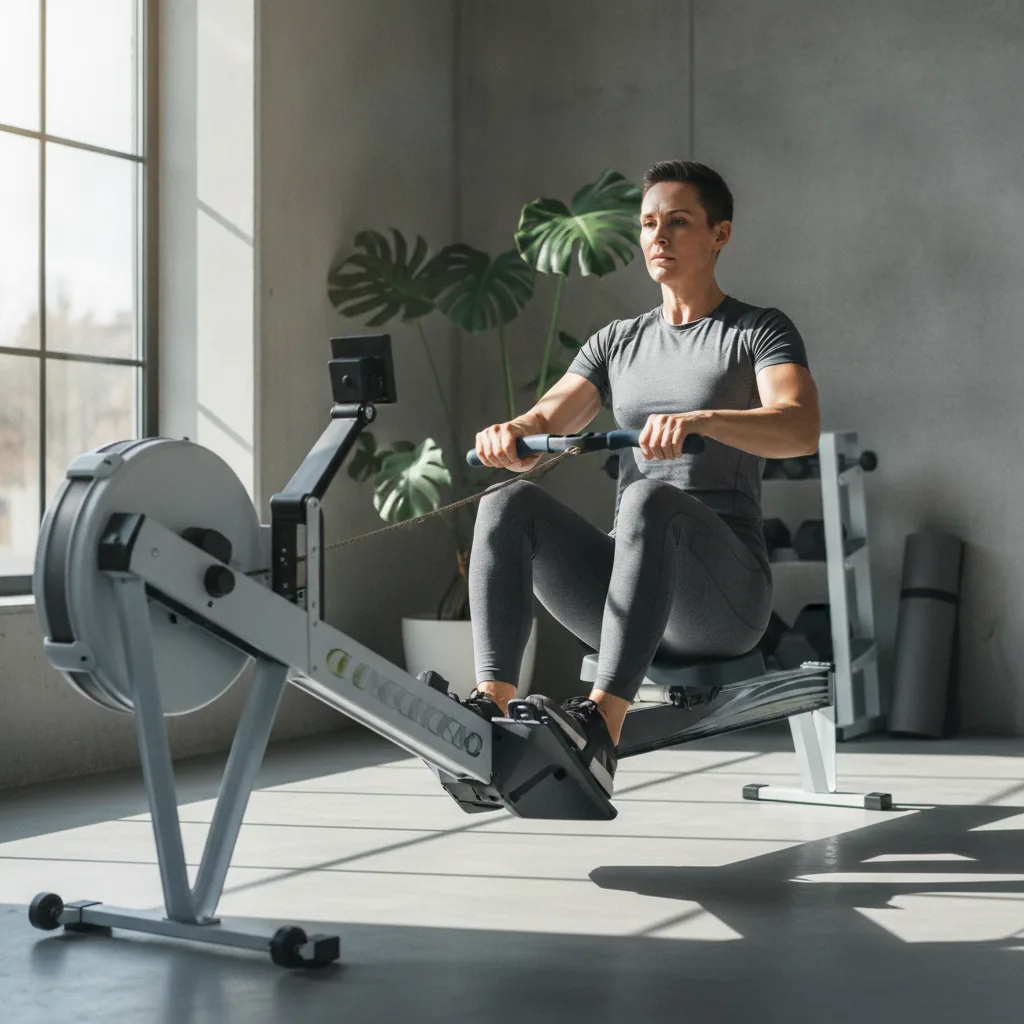
No time isn't a reason to skip training - it's a reason to train smart. On the rower, ten focused minutes is enough to raise your heart rate, work the entire body, and keep the habit alive. Some of the most consistent progress comes from stringing together short, sharp sessions like these several times a week - and they add up toward the recommended 150 minutes of weekly activity.[1]
Why short rowing workouts work
- Full-body per minute: every stroke recruits legs, core, back, and arms - few cardio machines match the muscle engagement.
- Calories add up: a 10-minute row burns roughly 80-150 calories depending on bodyweight and pace; done regularly, that compounds.
- Scalable: the same ten minutes can be easy conditioning or an all-out finisher - you decide.
- Habit builder: it's far easier to commit to ten minutes than an hour, and consistency is what actually drives results.
The 10-minute workouts
Each of these fits in a coffee break. The first three need barely any warm-up; the Tabata is demanding, so save it for a day you're fresh. Keep the damper around 3-5 and drive with the legs.
10-Minute Blast
Five rounds of one minute hard, one minute easy - maximum stimulus when you're short on time.
1 min easy (built in)
5 × 1 min
1 min easy between each
Why it works: Even ten focused minutes raise heart rate, work the whole body, and - most importantly - keep the habit alive on busy days.
10-Minute Pyramid
A short ascending-then-descending ladder that flies by: 20s, 40s, 60s, 40s, 20s of work.
2 min easy
20 / 40 / 60 / 40 / 20 sec
Equal easy recovery after each.
Match each effort
Why it works: The changing intervals make ten minutes pass quickly while still delivering a genuine cardiovascular hit - ideal for beginners.
10-Minute Steady
A simple ten-minute continuous row - perfect as a recovery day or a quick movement snack.
10 min continuous
One smooth, sustainable rhythm start to finish.
Why it works: Easy continuous rowing on busy or tired days keeps the streak going and aids recovery without adding training stress.
Tabata Rowing
A brutal, time-efficient protocol: 20 seconds max effort, 10 seconds rest, eight rounds - then again.
6 min easy + 3 builds
8 × 20 sec
All-out. Pull hard from stroke one.
10 sec between each
Repeat the 8-round block once after 3 min easy (optional)
4 min easy
Why it works: Maximal short efforts with tiny rests spike heart rate and anaerobic capacity, delivering a big training stimulus in minimal time.
Making ten minutes count
With so little time, focus does the heavy lifting. Decide before you start whether it's steady conditioning or high intensity so you don't drift. Keep the stroke sequence clean even when tired - a sloppy pull wastes the minutes you have. Track your split and stroke rate to stay honest, and remember that showing up regularly for a short row beats planning long sessions you never do.
Got more time on other days? Pair these with our full interval sessions and endurance rows, or build your own short session in the interval workout builder.
References
- Adult Activity: An Overview (Physical Activity Basics) - Centers for Disease Control and Prevention

Jordan Lockwood (BSc, CPT)
Certified personal trainer (CPT), sports-science graduate, and lifelong rower. Jordan writes and reviews every guide on Rowing Machine Nerd.