 Rowing Machine Nerd
WaterRower Natural vs Club: Which Wooden Rower Wins?
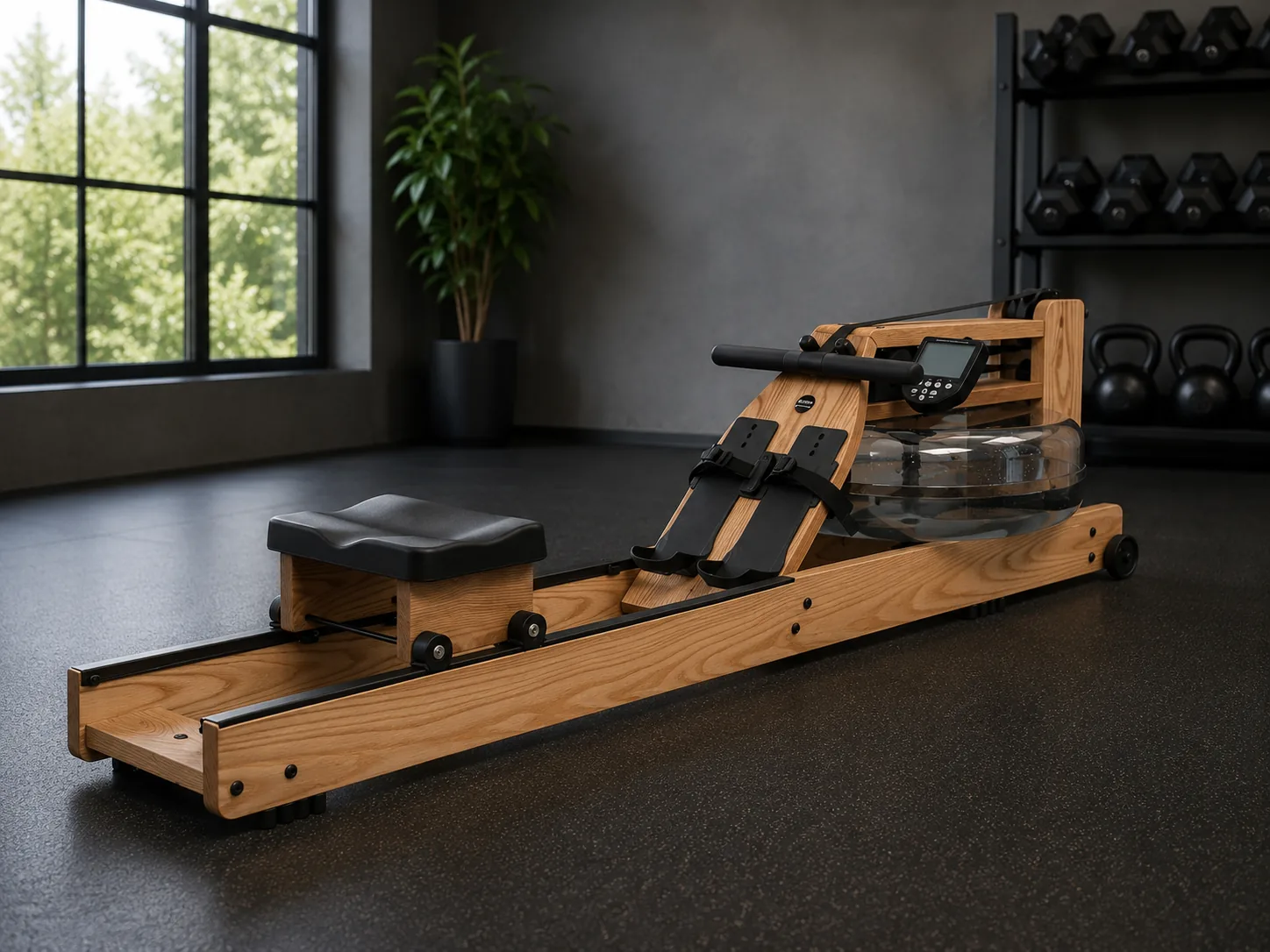
Both of these are WaterRowers, so you're getting the same things that make the brand special: a smooth, self-regulating water stroke, that pleasant whoosh, solid hardwood construction made in the USA, and upright storage. They even share the same S4 monitor. The differences are about build grade, capacity, and looks - and a modest price gap, roughly $1,200 for the Natural versus $1,399 for the Club.
If you've settled on a WaterRower, here's how to pick between its two most popular models.
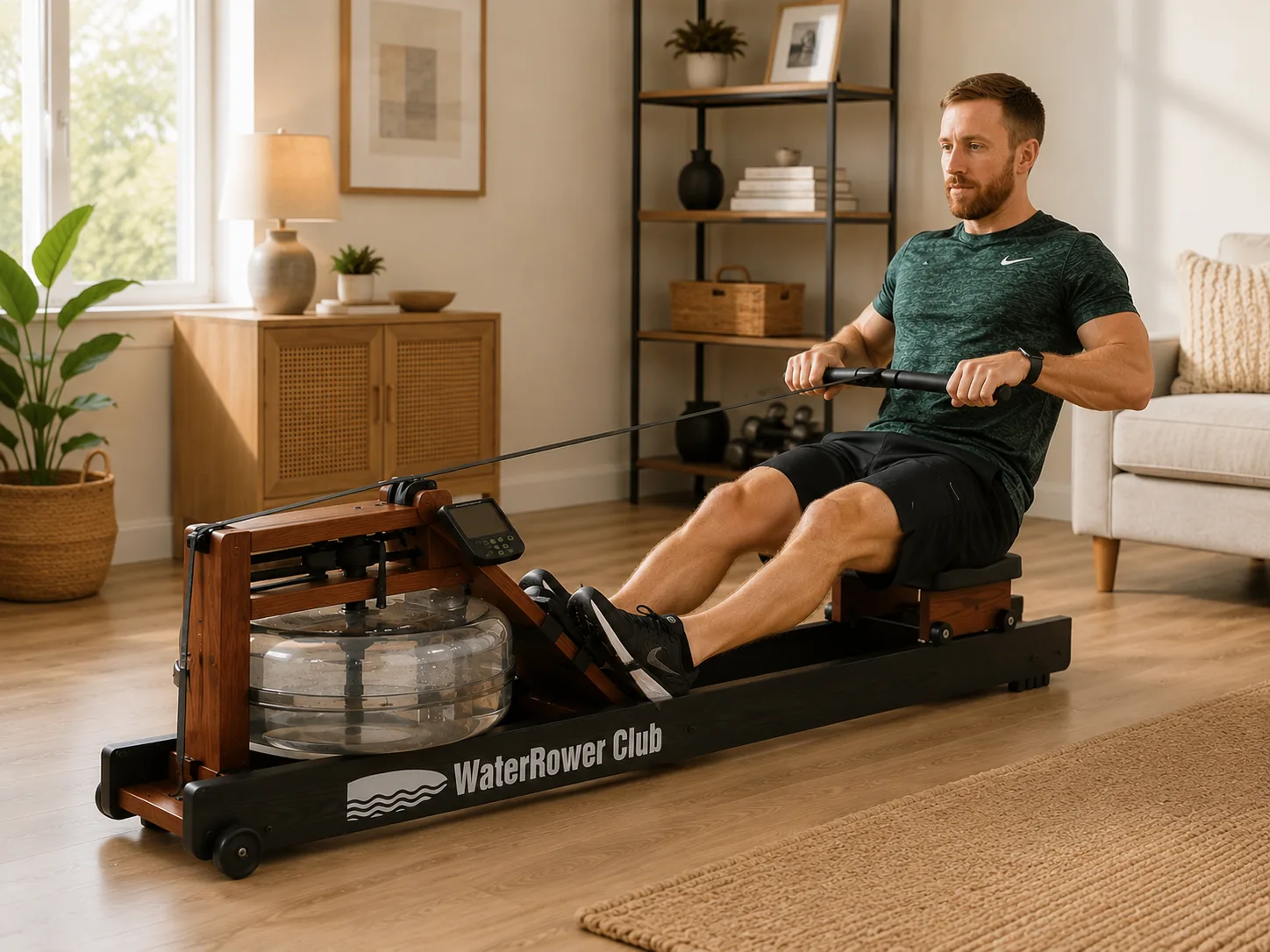
Verdict: The better choice for most homes - step up to the Club for commercial-grade toughness.
WaterRower Natural vs WaterRower Club: at a glance
| WaterRower Natural | WaterRower Club | |
|---|---|---|
| Our rating | 4.1/5 | 4.0/5 |
| Price | ~$1,200 | ~$1,399 |
| Resistance | Water (variable; self-regulating tank) | Water flywheel (self-regulating, speed-dependent) |
| Monitor / screen | S4 (pace, distance, watts, calories, HR) | Series 4 (S4) BLE performance monitor |
| Connectivity | S4; optional Bluetooth (Connect module) | Bluetooth Low Energy (BLE); optional heart-rate strap |
| Max user weight | 375 lb (170 kg) | 1,000 lb |
| Footprint / size | ~84" × 22" × 21" (213 × 56 × 53 cm) | 82.25" L x 22.25" W x 20" H |
| Storage | Stands upright on end; front wheels | Stands upright on end |
| Warranty | 5-yr frame / 3-yr parts (home use) | 1 year standard; upgradeable to 5 yr frame / 3 yr parts on registration |
Full WaterRower Natural review Full WaterRower Club review
Build and capacity: the Club's edge
The Club is the tougher machine. It's built in solid ash and rated for commercial use, with an enormous user-weight ceiling - the kind of durability headroom that suits a heavier rower, a busy household, or anyone who simply wants maximum margin. If the machine might see hard or shared use, the Club is built for it.
The Natural is no slouch - it's the same fundamentally robust WaterRower design with a strong frame warranty for home use - but it's pitched at the home user rather than commercial duty. For a typical household, the Natural's build is more than enough; the Club's extra toughness is headroom most people won't need.
Looks and feel: a close call
Both are genuinely beautiful, and both deliver the identical water stroke and whoosh - on feel, there's nothing to separate them. The difference is aesthetic and personal: the Natural's hardwood has the classic, warm look most people picture when they think of a WaterRower, while the Club's solid ash has a slightly more utilitarian, gym-ready character.
Both stand upright on their end for storage and both are heavy when filled, so repositioning either mid-room is a bit of a chore. In day-to-day use, you'd struggle to tell them apart with your eyes closed.
Monitor, warranty and price
They share the same S4 monitor - functional and now Bluetooth-equipped (BLE) for connecting to WaterRower's app, but dated and basic next to the touchscreens on connected rivals. Neither is the choice for data-driven training; both are about feel.
On warranty, watch the details: the Natural typically ships with its home-use frame and parts cover, while the Club's strongest terms may require registration to unlock. The Club costs a couple of hundred dollars more for its commercial-grade build and higher capacity. If you don't need that toughness, the Natural gives you the same experience for less.
Choose the WaterRower Natural if…
- You want the classic WaterRower look for a home
- Typical home use - you don't need commercial-grade durability
- You want the same water feel for a little less money
- You prefer the warm, traditional hardwood aesthetic
Choose the WaterRower Club if…
- You want commercial-grade build and maximum durability headroom
- You're a heavier rower or want the highest user-weight capacity
- The machine will see hard or shared/household use
- You prefer the gym-ready solid-ash look
Our verdict
For most homes, the WaterRower Natural is the one to buy - you get the full WaterRower experience (the same water feel, the same S4 monitor, the same upright storage) in the classic look, for a couple of hundred dollars less. The Club's extra toughness is headroom a typical household won't use.
Step up to the Club if you specifically want commercial-grade durability and maximum weight capacity - if you're a heavier rower, the machine will see hard use, or you simply want the most overbuilt option. Both are excellent and feel identical to row; you're really choosing between classic looks at a lower price and commercial toughness at a small premium.
Frequently asked questions
- What's the difference between the WaterRower Natural and Club?
- They share the same water resistance, S4 monitor, and upright storage, so they feel identical to row. The Club is built in solid ash for commercial-grade durability with a higher user-weight capacity, while the Natural is pitched at home use with the classic hardwood look and a lower price.
- Is the WaterRower Club worth the extra money?
- Only if you need its commercial-grade toughness or higher weight capacity - for a heavier rower, hard use, or shared use. For typical home use, the Natural delivers the same rowing experience for a couple of hundred dollars less.
- Do the Natural and Club use the same monitor?
- Yes - both use the WaterRower S4 monitor, which is functional and now includes Bluetooth (BLE) for connecting to WaterRower's app, but is basic compared with the touchscreens on connected rowers.

Jordan Lockwood (BSc, CPT)
Certified personal trainer (CPT), sports-science graduate, and lifelong rower. Jordan writes and reviews every guide on Rowing Machine Nerd.