 Rowing Machine Nerd
How to Protect Your Back While Rowing
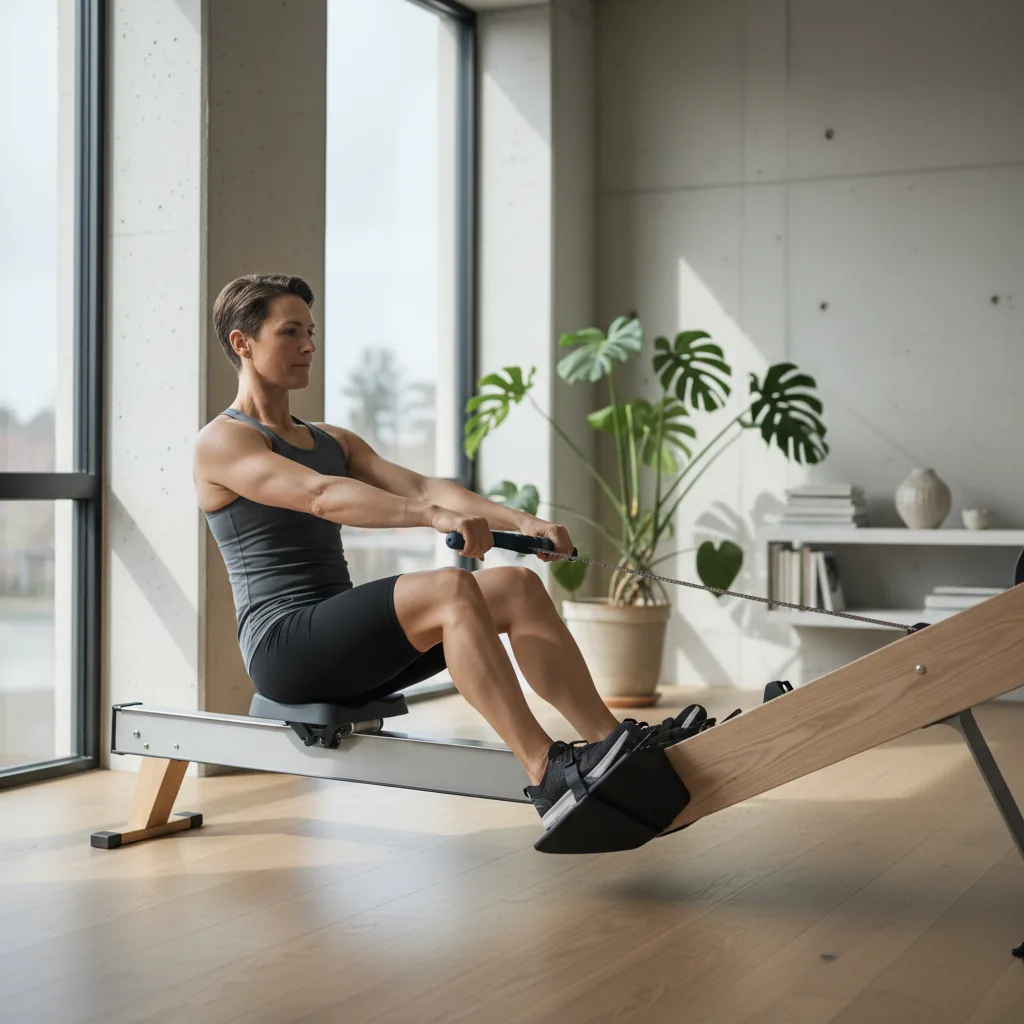
Back pain is one of the most common concerns I hear from people starting out on the rowing machine. And I get it - the rowing stroke looks like it could be hard on your spine. But here's the truth: rowing, when done correctly, is one of the safest and most back-friendly low-impact workouts you can do. The problem usually isn't the machine. It's technique.
The rowing machine gets a bad reputation for back injuries almost entirely because of four specific technique errors that are extremely common and extremely fixable.
The Correct Stroke Sequence (This Is Everything)
Before we get to what goes wrong, you need to understand what correct looks like. The rowing stroke has a precise sequence:
Drive phase: Legs extend first → body swings back (hinging from the hips, not rounding the spine) → arms pull to the ribcage.
Recovery phase: Arms extend → body swings forward → legs compress (seat slides toward the flywheel).
This sequence - legs, core, arms on the drive; arms, core, legs on the recovery - is the order Concept2 teaches,[1] and it ensures the power is generated by the largest muscles (legs, glutes, hamstrings) and transferred efficiently through a braced core. The spine stays in a neutral or slightly extended position throughout. No excessive flexion. No rotation.
Mistake 1: Shooting the Slide (Most Common)
"Shooting the slide" happens when the seat moves away from the flywheel faster than the handle during the drive. In other words, your legs extend before your upper body follows - leaving your lower back to bridge the gap by lumbar flexion under load.
The fix: Think of your legs and back moving as one connected unit in the early part of the drive. The handle and the seat should move at the same time, not sequentially. A useful cue: "push the foot board away" rather than "pull the handle toward you."
Mistake 2: Rounding the Lower Back at the Catch
At the catch (the compressed position when the seat is closest to the flywheel), many rowers roll their pelvis under and round their lumbar spine. This places the discs under both compression and flexion simultaneously - exactly the combination that causes injury over thousands of repetitions.
The fix: At the catch, your shins should be vertical (approximately), your back should maintain its natural curve, and your pelvis should be neutral - not tucked under. If you lack the hip flexion or ankle mobility to achieve this without rounding, you need to shorten your slide (don't come as far forward) until your mobility improves.
Mistake 3: Yanking with the Arms Before the Legs Finish
Using your arms early in the drive disconnects the kinetic chain and forces your lower back to act as a link between the lower and upper body. Instead of power flowing legs → core → arms, it fractures into two separate effort zones with your lumbar spine absorbing the discontinuity.
The fix: Keep your arms straight until your legs are 70-80% extended. The arms are the last thing to fire on the drive. A common cue: "hang on the handle - let the legs push you through it."
Mistake 4: Overreaching at the Finish
At the end of the drive, some rowers lean excessively backward to squeeze out extra split-time improvement. This puts the lumbar spine into hyperextension under load and isn't biomechanically necessary.
The fix: At the finish, your back should be at approximately 10-15 degrees past vertical - a slight, controlled layback - not a full recline. The handle should be just below your ribcage. Your core should be braced, not relaxed.
When to Stop and Seek Help
Muscle soreness in the lower back after new rowing training is normal and will diminish, especially if you bookend sessions with a proper warm-up and cool-down. Pain that is:
- Sharp or shooting
- Radiating down the leg
- Present at rest (not just during rowing)
- Getting worse rather than better
...is not normal and should be evaluated by a physical therapist or orthopedist before you continue training.
For most rowers, correcting technique eliminates back discomfort within a few sessions. If you're not sure your form is right, video yourself from the side and compare against athletes on the Concept2 or USRowing YouTube channels. For longer sessions, a supportive seat cushion can also reduce pressure on the lower back and tailbone.
References

Jordan Lockwood (BSc, CPT)
Certified personal trainer (CPT), sports-science graduate, and lifelong rower. Jordan writes and reviews every guide on Rowing Machine Nerd.