 Rowing Machine Nerd
Rowing Machine Warm-Up and Cool-Down Routines
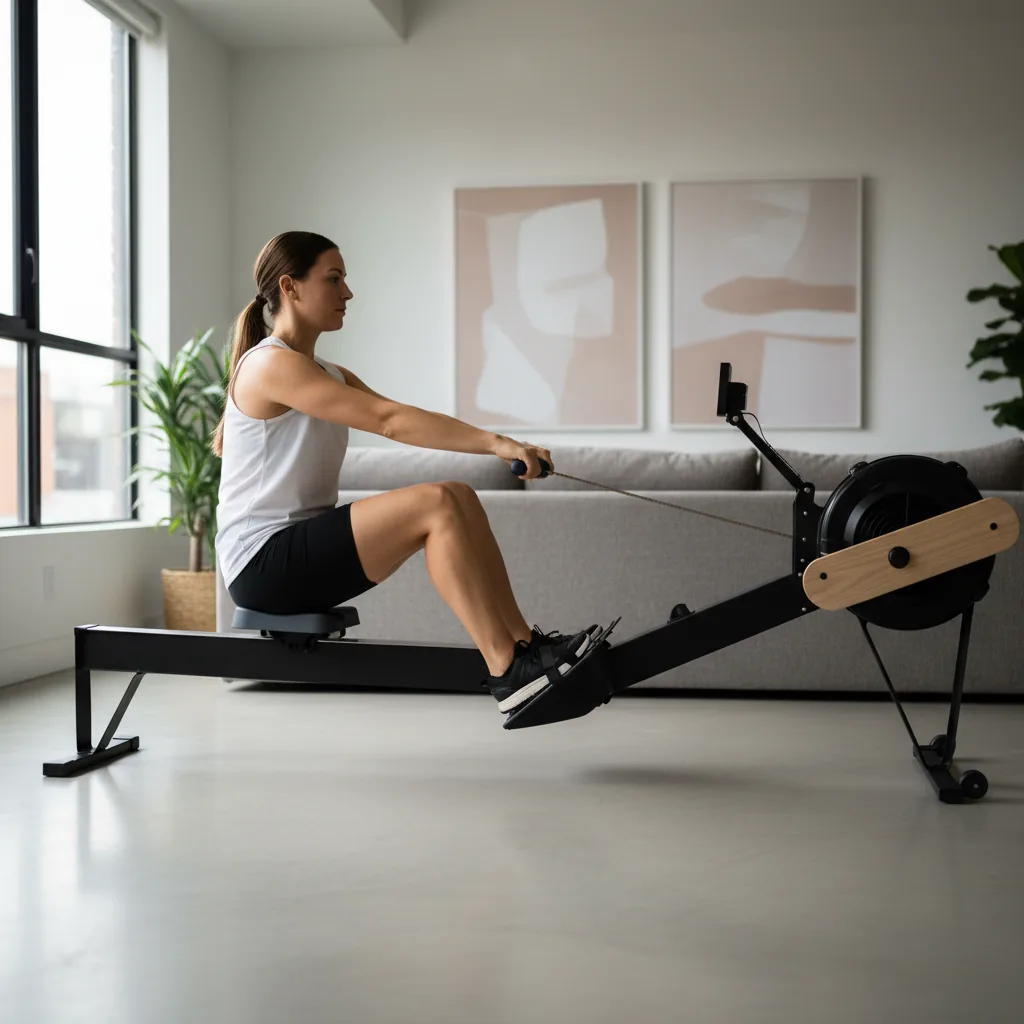
I see it constantly: someone walks into the gym, sits straight down on the erg, and immediately starts rowing at full pace. No warm-up, no mobility prep, nothing. They row fast, get out of breath quickly, wonder why their back feels tight, and stop. Sometimes they get off and go do something else. Sometimes they push through and pick up a repetitive strain injury.
Skipping the warm-up is one of the most common and costly mistakes in rowing training. Here's why it matters, and exactly what to do.
Why Warming Up for Rowing Is Different
The rowing stroke is a full-body movement that demands flexibility in the hips and ankles (for the catch position), thoracic extension and shoulder mobility (for the finish), and core stability throughout. If any of these are restricted - which they often are after sitting at a desk - your body will compensate in ways that shift load onto vulnerable structures like the lower spine.
A proper warm-up increases muscle temperature (improving contractile efficiency), increases synovial fluid production in joints (reducing friction and impact), and activates the specific muscle groups that will be doing the work. Reviews of the research lean toward warming up reducing injury risk as well as improving performance.[1]
The 8-Minute Pre-Row Warm-Up
1. Easy Row (3 minutes)
Start with 3 minutes of easy rowing at a stroke rate of 16-18 SPM. Keep the resistance low. Focus entirely on moving through the full range of motion - getting your shins to vertical at the catch, opening the hips at the finish - without any intensity. Think of this as "rehearsal" for the actual workout.
2. Hip Flexor Stretch (60 seconds per side)
Step off the machine and do a low lunge on each side, holding for 60 seconds. The hip flexors are typically tight after sitting and are directly involved in maintaining pelvic position on the erg. Tight hip flexors cause anterior pelvic tilt, which increases lumbar load during the drive.
3. Thoracic Rotation (30 seconds each side)
Sit cross-legged, place one hand on your opposite knee, and rotate your thoracic spine (mid-back) - not just your neck. This addresses the thoracic extension needed for a clean finish position.
4. Ankle Circles (20 seconds each foot)
Limited ankle dorsiflexion is one of the underrated causes of poor catch position. If your ankles can't flex to 90 degrees, you can't get your shins vertical - and your stroke sequencing will be off from the start.
5. Resistance Band Pull-Aparts or Arm Swings (30 seconds)
Activate the scapular retractors and rotator cuff before asking them to absorb thousands of repetitions. Arm swings (forward and backward) or light band pull-aparts accomplish this in 30 seconds.
The Cool-Down Protocol
The cool-down serves a different purpose from the warm-up. You're now trying to:
- Lower heart rate gradually (stopping abruptly can cause blood pooling)
- Begin the recovery process for the muscles you've just worked
- Reduce delayed onset muscle soreness (DOMS)
Easy Row (2-3 minutes)
After your main workout, row gently at 16 SPM for 2-3 minutes to flush lactic acid out of working muscles and bring your heart rate down progressively.
Static Stretching (5-8 minutes)
Post-workout is the right time for static stretches (holding a position for 30-60 seconds). Focus on:
- Hamstrings: Seated forward fold or standing single-leg
- Hip flexors: Low lunge hold
- Lats: Doorframe or overhead reach with side bend
- Lower back: Knees-to-chest or child's pose
- Wrists and forearms: Often neglected but heavily recruited in rowing
The Investment
This entire protocol takes 15-18 minutes. In a 60-minute training session, that's 25% of your time. In exchange, you dramatically reduce injury risk, improve the quality of every stroke in the main set you've planned in our interval workout builder, and recover faster for your next session. The rowers who skip the warm-up tend to be the same rowers who end up sidelined with a back injury after three months.
References
- Does warming up prevent injury in sport? Evidence from randomised controlled trials - Journal of Science and Medicine in Sport (PubMed)

Jordan Lockwood (BSc, CPT)
Certified personal trainer (CPT), sports-science graduate, and lifelong rower. Jordan writes and reviews every guide on Rowing Machine Nerd.