 Rowing Machine Nerd
Endurance Rowing Workouts: Build Your Aerobic Engine
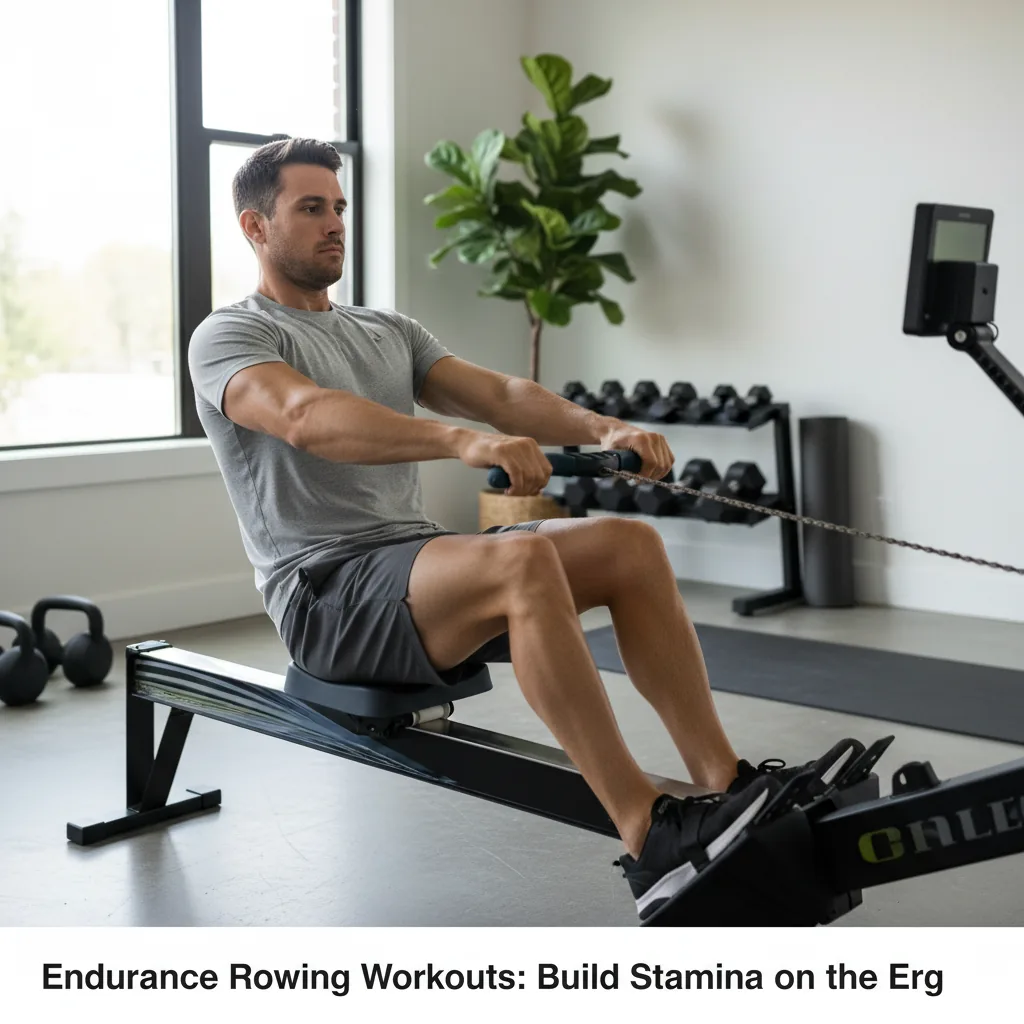
Endurance is the foundation of all rowing fitness. Whether your goal is fat loss, performance, or general health, the aerobic base you build through steady rowing determines how well you can execute every other type of training. Without it, intervals feel brutal; with it, they feel productive. Even the shorter sessions here help you meet the recommended 150 minutes of weekly aerobic activity.[2]
What "endurance" means on the erg
Endurance rowing means training at an intensity where you can hold a conversation - roughly 60-75% of your maximum heart rate, usually around 18-24 SPM. A low rate doesn't mean low effort; the work comes from the drive, not the cadence.[1] This zone (often called Zone 2) is where the deepest aerobic adaptations happen: more mitochondria, better fat oxidation, a stronger heart. You won't feel the changes day to day, but after 6-8 weeks of consistent easy volume your capacity for harder efforts rises noticeably.
Effort zones used in these workouts
Targets are relative to your 2k pace - the most reliable reference for prescribing effort at any fitness level.
The endurance workouts
Build from the 30-minute Zone 2 row up to the hour-long distance row as your aerobic base grows. Most of your weekly rowing should sit at this easy-to-steady intensity.
30-Minute Zone 2
The bread-and-butter session: 30 minutes of easy, conversational rowing that builds your engine.
5 min, drifting up to pace
20 min continuous
Nasal-breathing pace - you could hold a conversation. Long, unhurried recovery on every stroke.
5 min easy
Why it works: Most of your training should be easy. Low-intensity volume develops the aerobic base and fat-burning efficiency that lets you go harder when it counts.
3 × 10 Steady Blocks
Broken steady-state - three 10-minute blocks at a controlled pace, with short breathers to keep quality high.
6 min easy
3 × 10 min
Hold the same split across all three blocks.
2 min easy between blocks
4 min easy
Why it works: Breaking a long steady row into blocks makes a big aerobic dose more manageable and helps you hold cleaner technique throughout.
45-Minute Endurance Row
A longer steady row to extend your aerobic endurance and mental staying power.
5 min easy
35 min continuous
Settle into one sustainable split and hold it. Stay relaxed - this is steady, not hard.
5 min easy
Why it works: Extending time at a steady aerobic pace raises your aerobic ceiling and burns a lot of total calories without the recovery cost of intervals.
60-Minute Long Row
The classic long, slow distance row - an hour of easy aerobic work for serious base-building.
5 min easy
50 min continuous
Resist the urge to push. Easy pace, long recovery, total relaxation.
5 min easy
Why it works: Long easy rows are the single most effective way to grow your aerobic engine. Boring, but they build the durability faster work depends on.
Building from 15 to 60 minutes safely
The golden rule is the 10% rule: don't grow your weekly volume by more than about 10% per week. Connective tissue adapts more slowly than your heart and lungs, so ramping up too fast is the most common cause of overuse niggles. A sensible 12-week progression:
- Weeks 1-2: 3 × 15-minute steady rows
- Weeks 3-4: 3 × 20-minute rows
- Weeks 5-6: 2 × 25 min + 1 × 30 min
- Weeks 7-8: 2 × 30 min + 1 × 40 min
- Weeks 9-10: 2 × 30 min + 1 × 50 min
- Weeks 11-12: 2 × 30 min + 1 × 60 min
Distance goals to chase
Many rowers find a distance target more motivating than a time target:
- 5,000m: the first real benchmark - a good 4-6 week beginner goal.
- 10,000m: a meaningful endurance challenge, realistic at 8-12 weeks.
- Half marathon (21,097m): a serious goal needing 3-4 months of base.
- Marathon (42,195m): advanced territory - 90-120 minutes of continuous rowing.
Beating the boredom
Long steady rows can feel monotonous. Podcasts and audiobooks pair perfectly with the rhythm; setting internal challenges (hold an identical split for each 10-minute block) keeps you engaged; and rowing to a distance rather than a clock makes progress tangible. The single best antidote is a specific goal - a 10K time, a new distance, a personal record to chase. When you're ready to add speed, layer in our interval workouts, and use the pace calculator to set your steady split.
References
- Rowing Stroke Rate Explained - Concept2
- Adult Activity: An Overview (Physical Activity Basics) - Centers for Disease Control and Prevention

Jordan Lockwood (BSc, CPT)
Certified personal trainer (CPT), sports-science graduate, and lifelong rower. Jordan writes and reviews every guide on Rowing Machine Nerd.