 Rowing Machine Nerd
Rowing Workouts for Runners: Cross-Train Without Impact
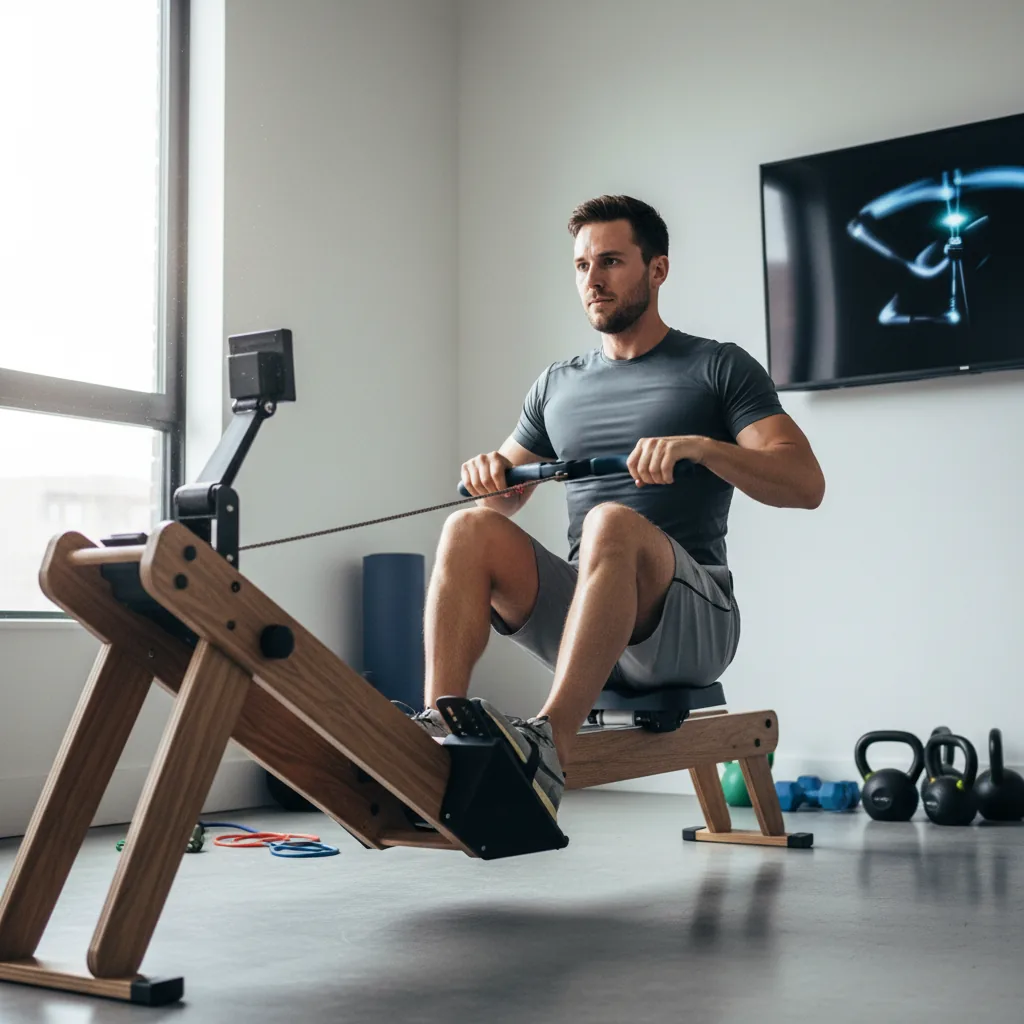
Runners may be the group that benefits most from rowing. Running is a high-impact, quad-dominant activity that creates specific imbalances over time; rowing is zero-impact and posterior-chain-dominant - hitting the glutes, hamstrings, and upper back in exactly the way running neglects. The two are biomechanically complementary in a way few exercise pairings are. Here's how to use the erg to become a stronger, more durable runner.
What rowing gives runners that running can't
Posterior-chain development. Running is quad-dominant - the quads absorb much of the load on each footstrike, where vertical ground-reaction forces commonly reach 1.5-3x bodyweight.[1] Over time the quads overpower the hamstrings and the glutes underperform, which drives a big share of running injuries (IT band syndrome, patellar tendonitis, hamstring strains). The rowing drive is powered by exactly those underloaded muscles, in a dynamic, rhythmic way no amount of squatting replicates.
Zero-impact cardio. Rowing gives you heart-rate elevation, aerobic work, and calorie burn without adding impact, so you can maintain aerobic volume - and keep hitting the recommended weekly activity targets[2] - on days you're dialling back the running. And better posture: rowing demands thoracic extension and scapular retraction, the opposite of the forward-collapsing posture high mileage can produce.
The cross-training sessions
Use these on easy run days, rest days, or while managing a niggle. The recovery row keeps blood flowing; the Zone 2 row builds aerobic volume; the power intervals build the posterior-chain strength running misses.
Runner's Recovery Row
Low-impact aerobic work for a rest day from running - keeps the engine ticking without pounding the joints.
5 min easy
15 min continuous
Truly easy. The point is blood flow and recovery, not training stress.
5 min easy
Why it works: Rowing gives runners aerobic volume and posterior-chain work with none of the impact, so you recover while still building fitness.
30-Minute Zone 2
The bread-and-butter session: 30 minutes of easy, conversational rowing that builds your engine.
5 min, drifting up to pace
20 min continuous
Nasal-breathing pace - you could hold a conversation. Long, unhurried recovery on every stroke.
5 min easy
Why it works: Most of your training should be easy. Low-intensity volume develops the aerobic base and fat-burning efficiency that lets you go harder when it counts.
Runner's Power Intervals
Leg-driven intervals that build the glute and hamstring power most runners are missing.
8 min easy + builds
6 × 90 sec
Drive hard with the legs - think of it as posterior-chain strength work.
90 sec easy between each
5 min easy
Why it works: Hard rowing strongly recruits the glutes and hamstrings - the posterior chain desk-bound runners neglect - building power and resilience against injury.
How to fit rowing into a running week
For most runners, 1-3 rowing sessions a week is the sweet spot - more risks competing with running recovery, less limits the benefit.
- Lower-mileage week (3-4 runs): add 2 sessions - one longer steady row and one set of power intervals.
- Higher-mileage week (5+ runs): add 1 easy recovery row to replace a rest day or follow an easy run.
Rowing through injury
If you can't run, rowing often maintains cardiovascular fitness during recovery. Knee issues (runner's knee, IT band, patellar tendonitis) are frequently compatible with rowing because the knee moves through a flexion-extension range that doesn't load those structures the way running does. Low-back injuries are the exception - check with your physio first. For more on the trade-offs, see rowing vs. running and protecting your back on the erg.
The bottom line for runners
If you run more than three days a week and don't row, you're leaving injury resilience and posterior-chain strength on the table. Start with one session a week, add a second within 4-6 weeks, and watch how your glutes and hamstrings respond - most runners notice their running efficiency improving within 6-8 weeks.
References
- Comparison of ground reaction forces as running speed increases - Frontiers in Bioengineering and Biotechnology
- Adult Activity: An Overview (Physical Activity Basics) - Centers for Disease Control and Prevention

Jordan Lockwood (BSc, CPT)
Certified personal trainer (CPT), sports-science graduate, and lifelong rower. Jordan writes and reviews every guide on Rowing Machine Nerd.