 Rowing Machine Nerd
Rowing Workouts for Weight Loss: An Evidence-Based Guide
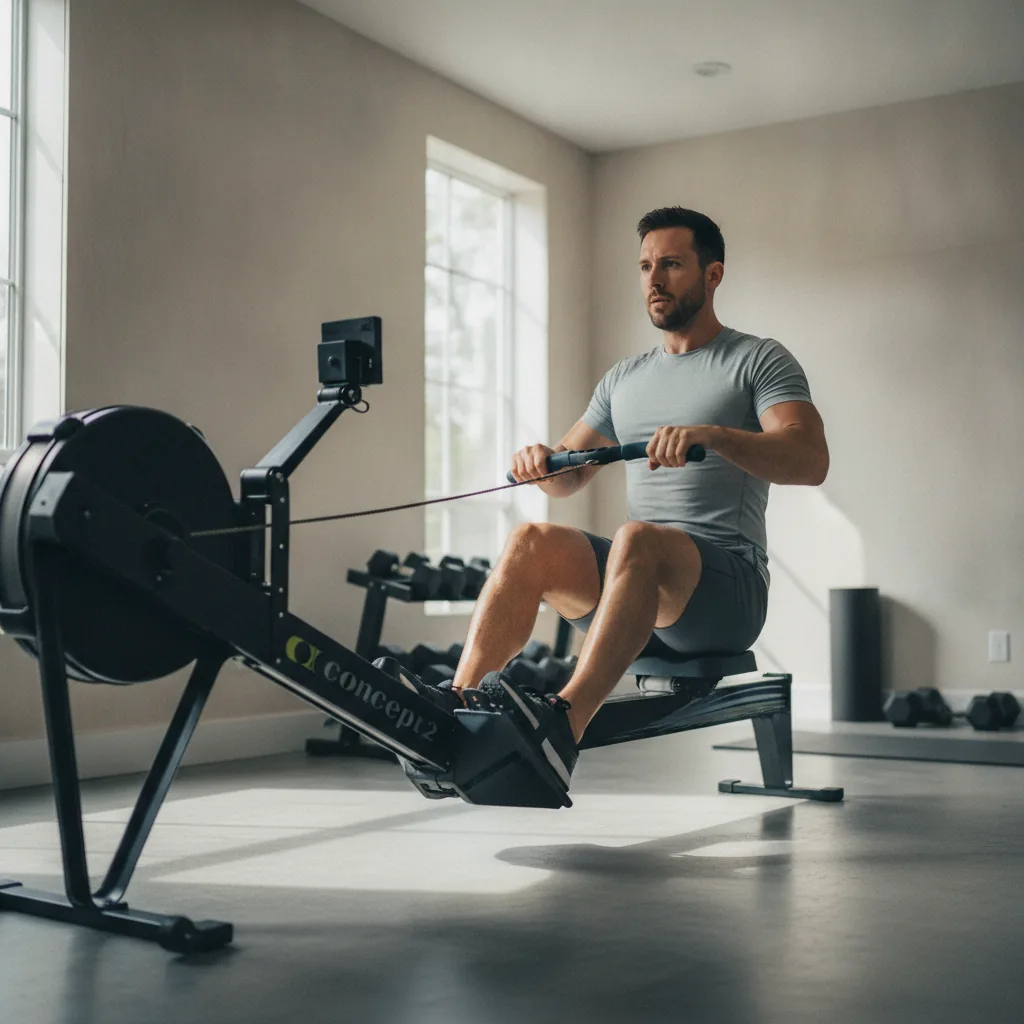
Rowing is one of the highest-calorie-burning exercises available. Harvard Health data puts a 125-pound person at roughly 255 calories in 30 minutes of vigorous rowing, and a 185-pound person around 440 - comparable to running, but without the joint impact.[1] The catch: calorie burn per session is only part of the story. The most effective weight-loss program is the one you can sustain for months, and it should clear the standard 150-minutes-a-week target.[2] And to say it plainly - you can't spot-reduce. Rowing lowers your total body fat; belly fat comes off as part of that, not because the movement targets your waist.[3]
The non-negotiable: a calorie deficit
No exercise produces fat loss without a calorie deficit. Rowing burns a lot, but it also stimulates appetite - eat back everything you burn and the scale won't move. A sustainable deficit is 300-500 calories below your total daily energy expenditure, which yields roughly 0.5-1 lb of fat loss per week: slow enough to preserve muscle, fast enough to see progress. The training below is how you build the burn side of that equation.
The fat-loss workouts
A mix works best: HIIT sessions for a big burn and an afterburn effect, plus longer steady rows that bank a large, repeatable calorie total. Aim for 1-2 hard sessions and 2-3 steady sessions a week, with at least two rest days.
Classic 1:1 Intervals
The benchmark interval session - one minute hard, one minute easy, repeated ten times.
5 min easy + drills
10 × 1 min
Strong, controlled power from the legs - not a frantic rate.
1 min easy between each
3–5 min easy
Why it works: Equal work and rest teaches pacing and consistency while building both aerobic and anaerobic fitness - the perfect first 'real' interval workout.
40/20 Intervals
Eight rounds of 40 seconds hard, 20 seconds easy - a punchy, sweaty session that fits a lunch break.
5 min easy
8 × 40 sec
Only 20 sec recovery, so manage your effort - this is harder than it looks.
20 sec easy between each
4 min easy
Why it works: The short, incomplete recovery keeps your heart rate elevated throughout, building anaerobic capacity and torching calories in 20 minutes.
Fat-Burn Mixed Session
Alternating blocks of steady rowing and short surges to maximise calorie burn while staying sustainable.
5 min easy
5 × (4 min steady + 1 min hard)
Roll straight from the steady block into the 1-min surge, then back.
1 min hard within each block
5 min easy
Why it works: Mixing steady volume with repeated surges keeps total calorie burn high and elevates metabolism afterwards, without the recovery cost of all-out HIIT.
Long Calorie Burn
A longer steady session aimed squarely at weekly calorie total - the real driver of fat loss.
5 min easy
35 min continuous
A pace you can sustain comfortably for the full block.
5 min easy
Why it works: Fat loss is driven by total weekly energy expenditure paired with diet. A longer steady row banks a big, low-stress calorie total you can repeat often.
HIIT vs. steady-state for fat loss
HIIT (the 1:1 and 40/20 sessions above) delivers a big burn in little time plus elevated post-exercise oxygen consumption - the "afterburn" where metabolism stays raised for hours afterward. Steady-state (the longer rows) burns serious calories during the session without the recovery cost, so you can repeat it often. You don't have to choose: the most effective programs use both.
A sample 4-week program
- Week 1: 3 × 20-minute steady rows. Groove the movement first.
- Week 2: 2 × steady + 1 × Classic 1:1 intervals.
- Week 3: 2 × steady + 1 × 40/20 + 1 × easy 20-minute row.
- Week 4: 2 × steady + 2 × intervals + 1 rest day.
Consistency beats intensity
The rowers who lose the most weight aren't the ones who train hardest - they're the ones who train most consistently over the longest period. Three moderate sessions you actually complete beat six intense ones you skip. Be realistic about your schedule, build in rest deliberately, and treat consistency as the metric that matters. For more on the science, see our guides to whether rowing burns belly fat and rowing vs. running, and track progress with the pace & calorie calculator.
References
- Calories burned in 30 minutes for people of three different weights - Harvard Health Publishing
- Adult Activity: An Overview (Physical Activity Basics) - Centers for Disease Control and Prevention
- Spot reduction: why targeting weight loss to a specific area is a myth - University of Sydney
Frequently asked questions
- How long should I row to lose weight?
- Most people see results with 30-45 minute sessions 4-5 times a week, mixing steady rows and intervals. Total weekly calorie burn - paired with diet - drives weight loss.
- How many calories does rowing burn?
- Roughly 400-600 calories per hour at a moderate pace for an average adult, more during intense intervals. Exact numbers depend on bodyweight and effort.
- Is rowing good for weight loss for beginners?
- Yes. It's low-impact, full-body, and scalable, so beginners can build a calorie-burning habit without the joint stress of running.

Jordan Lockwood (BSc, CPT)
Certified personal trainer (CPT), sports-science graduate, and lifelong rower. Jordan writes and reviews every guide on Rowing Machine Nerd.