 Rowing Machine Nerd
Does Rowing Burn Belly Fat? What to Know About Fat Loss
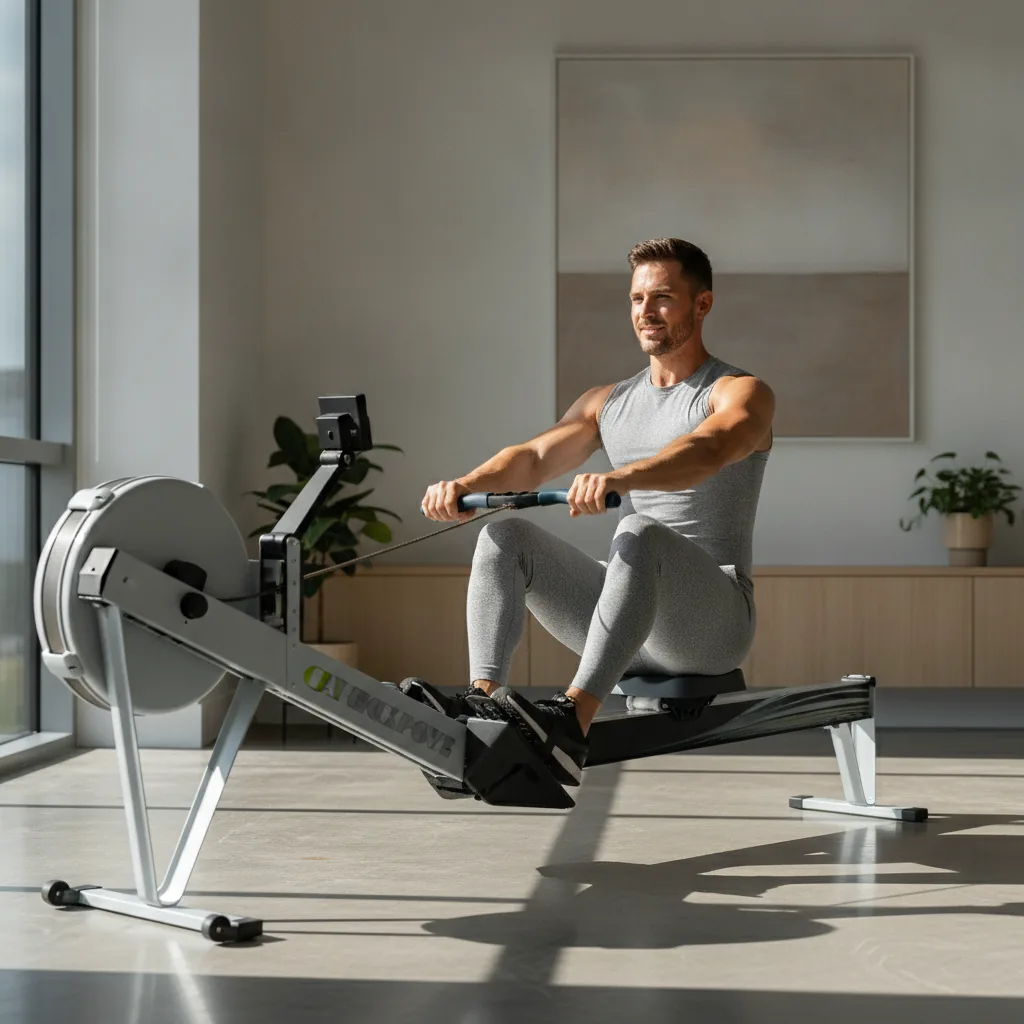
It's one of the most common questions I hear as a trainer: can the rowing machine burn belly fat? It's a fair one. Abdominal fat is stubborn, and the deep visceral fat around your organs is linked to higher risk of heart disease and type 2 diabetes. Rowing - high calorie burn, low joint impact, nearly the whole body working at once - looks like the perfect tool for the job.
The honest answer is a qualified yes: rowing is an excellent fat-loss tool, but not because it targets your stomach. To see why, it helps to separate two ideas that get tangled together - "burning belly fat" and "losing fat."
The spot-reduction myth
Here's the part the fitness industry tends to gloss over: you cannot choose where your body burns fat. The idea that working a body part strips fat from that area - known as spot reduction - has repeatedly failed to hold up in controlled research. A University of Sydney review of the evidence concluded that targeted exercise does not produce targeted fat loss; fat is mobilised from across the body according to genetics and hormones, not according to which muscles are working hardest.[1]
So rowing won't melt belly fat any more than crunches will. What it will do is drive down your total body fat - and because abdominal fat is part of that total, it falls along with everything else. The destination is the same; you just can't pick the route.
How many calories does rowing actually burn?
Rowing's real advantage is volume of work. Harvard Health Publishing's widely cited expenditure figures show that 30 minutes of vigorous rowing burns roughly 255 calories for a 125-pound person and around 440 calories for someone of 185 pounds.[2] You can estimate your own numbers with our rowing pace and calorie calculator. That puts the erg at or above running and the elliptical for calorie burn - while asking far less of your knees, hips, and back.
That low-impact profile is the quiet superpower. Because rowing is gentler on the joints, most people can row longer, more often, and for more years than they can run - and it's the total work accumulated over weeks and months, not any single session, that reshapes your body composition.
HIIT vs. steady-state on the erg
The most effective approach for most people blends both:
Steady-state rowing - 20-45 minutes at 60-70% of max heart rate, around 18-22 strokes per minute - burns a large number of calories per session and is easy enough to repeat several times a week. It's the foundation of any fat-loss program.
Interval (HIIT) rowing burns fewer calories minute-for-minute during the session but raises post-exercise oxygen consumption (EPOC), so you keep burning at a slightly elevated rate for hours afterward. A simple template: 1 minute hard at 26-30 spm, 1 minute easy, repeated 10 times. Twenty minutes, whole-body, and time-efficient.
A practical fat-loss framework
Public-health guidance is a useful floor: U.S. guidelines call for at least 150 minutes of moderate activity (or 75 minutes of vigorous) per week, plus two strength sessions.[3] Each tier below meets or exceeds that:
- Beginner: 3 steady-state sessions per week, 15-20 minutes each - technique and consistency first. Follow a structured set of rowing workouts for weight loss to stay on track.
- Intermediate: 4-5 sessions per week, mixing two steady rows with two intervals; 90-120 total minutes. Not sure how often you should row? Match the frequency to your recovery.
- Advanced: 5-6 sessions per week - 2-3 HIIT sessions plus longer 30-45 minute endurance rows.
You can't out-row the kitchen
No training plan outworks a poor diet. Rowing burns real calories, but it also builds appetite, and it's easy to "eat back" a session without realising it. Fat loss requires a modest, sustained calorie deficit - usually 300-500 calories below your daily expenditure. Exercise opens the deficit; nutrition keeps it open. Prioritise protein to preserve muscle while you lean out, and judge progress over weeks, not days.
Bottom line
Rowing is one of the best fat-loss tools available: it burns calories at a high rate, works the great majority of your muscle mass in a single movement, and is sustainable because it's kind to your joints. It will not selectively burn belly fat - nothing can - but paired with a sensible calorie deficit, consistent rowing lowers your overall body-fat percentage, and the fat around your midsection goes down with it.
References
- Spot reduction: why targeting weight loss to a specific area is a myth - University of Sydney
- Calories burned in 30 minutes for people of three different weights - Harvard Health Publishing
- Adult Activity: An Overview (Physical Activity Basics) - Centers for Disease Control and Prevention
Frequently asked questions
- Can rowing target belly fat specifically?
- No. Spot reduction isn't possible - you can't choose where your body burns fat. Rowing burns a lot of total calories, and as your overall body-fat percentage drops, abdominal fat goes with it.
- How long should I row to lose belly fat?
- Aim for 20-45 minutes per session, 3-5 times a week, combining steady-state and interval work. Consistency over weeks matters far more than any single workout's length.
- Is rowing or running better for fat loss?
- Both work. Rowing burns comparable calories to running but is low-impact and recruits more upper-body muscle, which makes it easier to sustain and gentler on the joints.

Jordan Lockwood (BSc, CPT)
Certified personal trainer (CPT), sports-science graduate, and lifelong rower. Jordan writes and reviews every guide on Rowing Machine Nerd.