 Rowing Machine Nerd
Rowing for Beginners: What to Expect in Your First Month
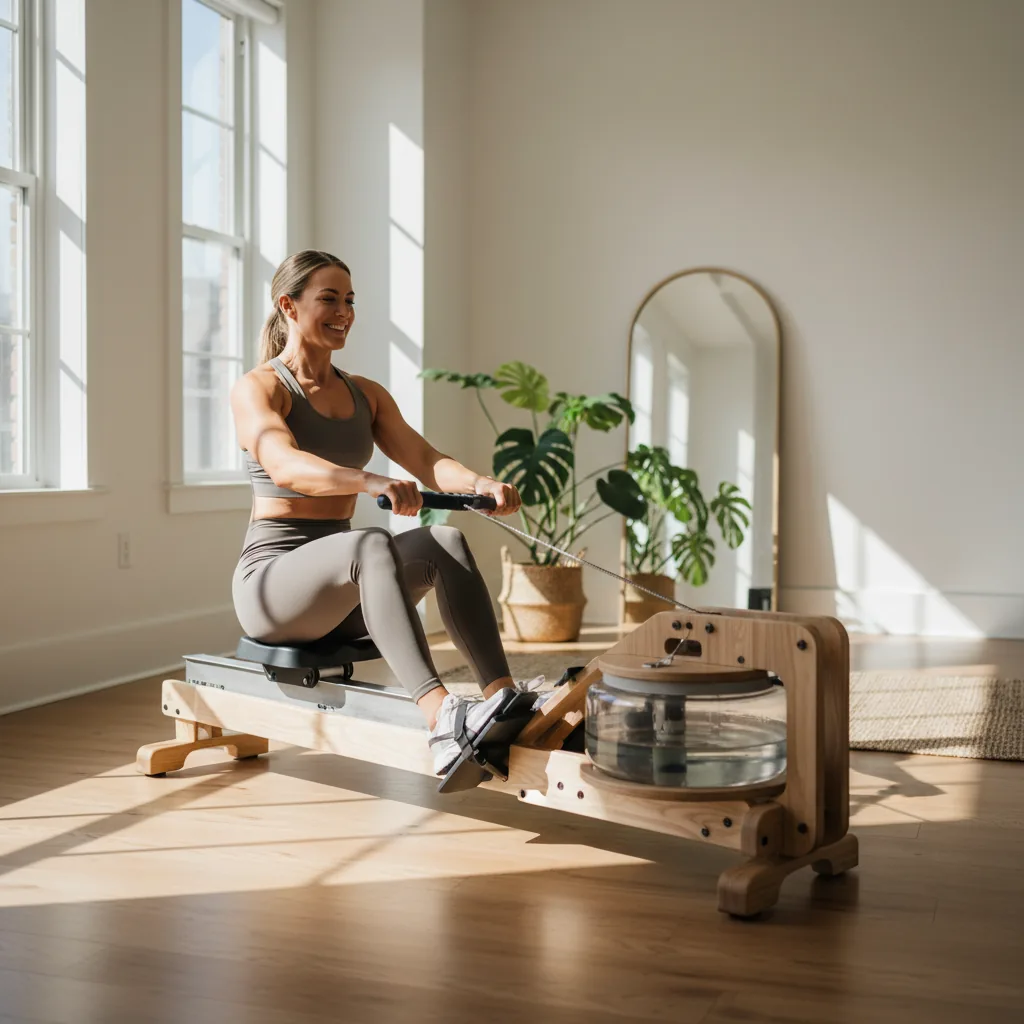
When I talk to people who are just getting started with rowing, I always give them the same reassurance: what you're feeling right now - awkward, out of breath, maybe a little sore in places you didn't expect - is completely normal. From the outside, rowing looks smooth and effortless. But once you sit down on the machine, it often feels like the most complicated, uncoordinated thing you've ever attempted.
That gap between what rowing looks like and what it feels like at first is why so many beginners give up too early. They assume something is wrong with them. In reality, something is right: they're learning a genuinely complex movement pattern, and the body takes time to adapt.
Here's what your first month on the rowing machine actually looks like.
Week 1: Coordination Before Conditioning
In your first week, forget about pace, split times, or calories burned. Your only goal is to learn the stroke sequence: legs drive first, then the core swings back, then the arms pull to the body. In reverse: arms extend, body swings forward, legs compress. Legs, core, arms. Arms, core, legs.
This sequence is where almost every beginner goes wrong. The instinct is to pull with the arms first because that's what "rowing" looks like from the outside. But the legs generate around 60% of the power in every stroke - Concept2 teaches exactly this order, legs then back then arms[1] - and if you're not using them, you're rowing like a person trying to pull a car with just their biceps.
Keep sessions short: 10-15 minutes at a low stroke rate (18-20 SPM), building gradually toward the 150 minutes of weekly activity health authorities recommend.[2] Go lighter than you think you need to. The goal is to wire the motor pattern, not to exhaust yourself.
Week 2: Your Body Will Be Talking Back
Expect soreness in your glutes, hamstrings, and lats - especially after the first session or two. This is the muscle groups you've been neglecting, suddenly being asked to perform a coordinated, high-repetition movement. The soreness is not a sign of injury; it's adaptation.
You may also notice calluses beginning to form on your hands from the handle. This is normal and will smooth out over a few weeks. If you're dealing with blisters, try wearing fingerless gloves while your hands toughen up.
In week 2, begin adding 2-3 minutes to each session. Aim for 15-20 minutes per workout, still keeping stroke rate low and focusing on clean technique over speed.
Week 3: The Conditioning Begins
By week 3, the movement should start to feel less like memorizing a dance routine and more like an automatic pattern. This is when the aerobic benefits start compounding. Your heart rate should be rising into a productive zone (roughly 60-75% of your maximum heart rate) and staying there throughout the session.
You might also start to notice your split time improving - even though you haven't consciously tried to row harder. This is the technique effect: when you sequence the stroke correctly, power output goes up naturally.
If you're training three times a week, you should be getting comfortable with 20-minute sessions by week 3. Rest days matter here. The adaptation happens during recovery, not during the session itself.
Week 4: Building Real Fitness
Week 4 is where most people start to feel a genuine sense of accomplishment on the erg. Stroke rate of 20-22 SPM should feel manageable. Sessions of 20-25 minutes should feel sustainable rather than survival-mode.
This is a good week to set a benchmark: row 2,000 meters and note your time. Don't try to sprint it - go at a pace you can maintain throughout. This number becomes your baseline to improve against over the coming months. If you're still deciding what to train on, our rowing machine finder can match you to the right erg.
What to Expect by the End of Month One
- Noticeable improvement in cardiovascular endurance
- Cleaner stroke mechanics, less conscious thought required
- Improved posture awareness (rowing strengthens the posterior chain)
- Measurable improvement in your 2,000m or 5,000m benchmark time
- Soreness becoming less frequent and less severe
A Note on Consistency
Three sessions per week is the sweet spot for beginners. More than that and you risk overtraining before your connective tissue has adapted. Less than that and you won't build momentum. Show up three times, keep sessions short and focused, and don't get competitive with yourself before you've built a solid foundation.
The rowers who progress fastest aren't the ones who push hardest in their first month. They're the ones who stay consistent long enough to let the adaptations accumulate.
References
- Indoor Rowing Technique on the Concept2 RowErg - Concept2
- Adult Activity: An Overview (Physical Activity Basics) - Centers for Disease Control and Prevention
Frequently asked questions
- Is rowing good for complete beginners?
- Yes - it's low-impact, full-body, and easy to scale. The main hurdle is learning the stroke, which most people grasp within a few sessions.
- What muscles does rowing work?
- Rowing is roughly 60% legs, 30% core and back, and 10% arms - it trains nearly every major muscle group in one movement.
- Do I need an expensive machine to start?
- No. Any well-built rower lets you learn good technique. Resistance type (air, water, magnetic) matters less than rowing consistently with good form.

Jordan Lockwood (BSc, CPT)
Certified personal trainer (CPT), sports-science graduate, and lifelong rower. Jordan writes and reviews every guide on Rowing Machine Nerd.