 Rowing Machine Nerd
Bladez Cascade Rower Review
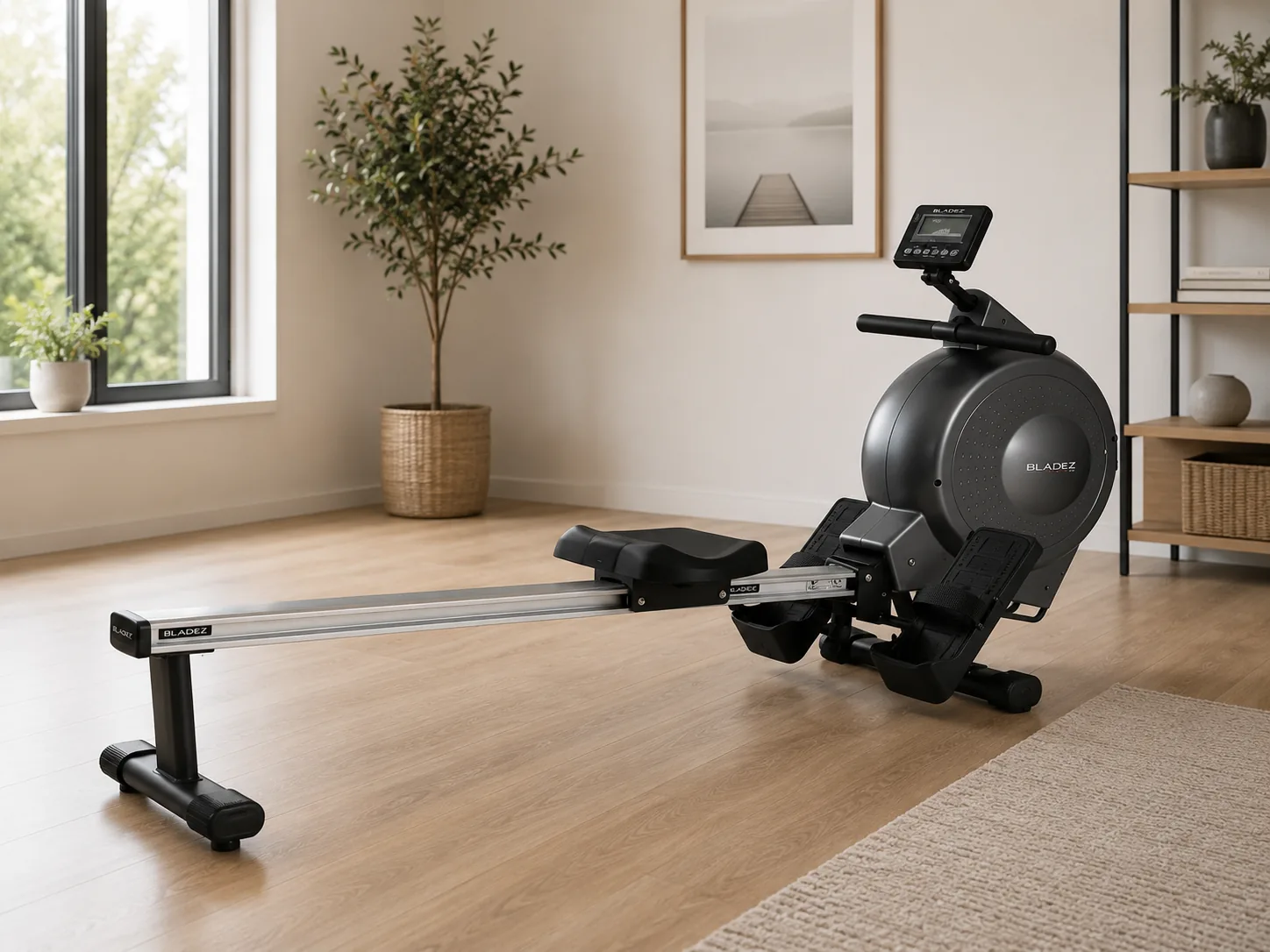
Magnetic rower · ~$599
Bladez Cascade Rower
A quiet magnetic folding rower with 17 programs and an included heart-rate strap, but limited by no app support and a short warranty.

How we review
Every rower is scored on the same six weighted criteria - resistance & feel, build, monitor, comfort, footprint, and value - from verified specifications, expert consensus, and aggregated long-term owner feedback. Our reviews are independent: we never accept payment for placement or a higher score. Reviewed by Jordan Lockwood (BSc, CPT). See our full methodology.
The Bladez Cascade is a full-size, folding magnetic rowing machine pitched at the home-fitness market, typically selling for around $599. It pairs 16 levels of magnetic resistance with 17 preset programs and a swiveling backlit LCD console, and it ships with a wireless heart-rate chest strap, a thoughtful inclusion at this price.
It is aimed at everyday users who want a quiet, low-maintenance cardio machine they can fold away between sessions rather than serious athletes chasing benchmark splits. A long slide rail makes it usable by taller people, and the program variety gives some structure. Where it falls short is connectivity and longevity assurances, areas where newer competitors and the long-standing Concept2 set a higher bar.
Specifications at a glance
| Resistance type | Magnetic, 16 levels (manual selection) |
|---|---|
| Programs | 17 preset programs (incl. heart-rate and race simulation) |
| Console | Swiveling backlit LCD; on-touch program buttons |
| Heart rate | Wireless chest strap included |
| App / Bluetooth | Not specified (no app or PC connectivity) |
| Assembled length | ~78 in |
| Machine weight | ~93-95 lbs |
| Max user weight | 265 lbs |
| Accommodates user height | Up to 6 ft 6 in |
| Folding / storage | Yes, folds for storage |
| Warranty | 1 year frame and parts |
| Power | Plug-in AC adapter |
Pros
- Magnetic resistance runs quiet, suitable for apartments and shared spaces
- Heart-rate chest strap included in the box, which many rivals omit
- Long slide rail accommodates taller users up to roughly 6 ft 6 in
- Swiveling backlit LCD with 17 programs gives structured workout options
- Folds for storage in a moderate footprint
Cons
- No app, Bluetooth, or data-storage support, so progress cannot be tracked over time
- Short one-year warranty and a modest 265 lb user-weight limit
- Seat comfort and the dated console design draw criticism
- Magnetic resistance lacks the dynamic, stroke-responsive feel of air rowers
Best for: Casual home exercisers, including taller users, who want a quiet folding rower with built-in programs and a heart-rate strap, and who do not need app connectivity.
Resistance and feel: quiet but capped
The Cascade uses a 16-level magnetic brake, and on that count it delivers exactly what magnetic resistance is good for: it is genuinely quiet, with none of the whooshing roar of an air rower, which is why it lands well in apartments, shared walls and rooms where someone is sleeping or watching TV nearby. The pull is smooth and consistent across the stroke, and several long-term owners report tens of thousands of meters of trouble-free, near-silent use.
The catch is the ceiling. Magnetic resistance on a machine in this class is fixed-effort rather than dynamic: it does not reward a faster, harder pull the way an air flywheel does, so the harder you train the more the top level feels like a soft wall instead of a real challenge. Reviewers and owners who row seriously consistently flag that the resistance is not enough for hard interval or strength-oriented sessions. For steady-state cardio, technique work and general fitness it is fine; for anyone planning to push pace and power, the Cascade will be outgrown.
Monitor and programs: more on paper than in practice
On specs the console looks generous for the money. You get a swiveling, backlit color LCD with 17 programs, including heart-rate training targets, a race-simulation mode with on-screen graphics and recovery assessment, plus an included chest strap that many rivals at this price leave out. That program count and the bundled strap are the Cascade's strongest selling points and a legitimate reason to consider it over a bare-bones budget rower.
In daily use the experience is more mixed. The interface draws criticism for being dated and not especially intuitive, and the heart-rate reading is hit-or-miss - some owners report it failing to register or showing the wrong rate even with the strap. The bigger structural limitation is that there is no app, no Bluetooth and no way to store or export your data. Every session resets to zero, so you cannot watch your splits trend over weeks or sync to a training log. For a 2020s buyer who expects to track progress, that is the console's real weakness, not the look of it.
Build, comfort and the durability question
The frame is roomy and stable for the category: a 36-inch rail comfortably fits users past six feet, the footplates are wide with a realistic foot position that helps form, and at roughly 95 pounds the machine feels planted rather than tinny. It folds for storage, though at that weight and with a power cord required, moving and placing it is more of a chore than the marketing implies - plan your outlet location before you buy.
Durability is where caution is warranted, and it ties directly into our rating. Alongside the merely-average seat comfort, there are owner reports of the flywheel assembly failing and needing replacement, in some cases repeatedly. Bladez has reportedly shipped replacement units rather than refunds when machines failed, which is something, but it is cold comfort given the warranty: just one year on the frame and parts. Competitors at this price routinely offer three to five years, and a short warranty on a machine with known mechanical complaints is the kind of combination that should make a value-focused buyer hesitate.
Who it actually suits
The Cascade makes the most sense for a specific buyer: someone in an apartment or shared space who wants near-silent rowing, values having structured programs and a heart-rate strap in the box, is tall enough to need the long rail, and intends to use the machine for moderate, steady cardio rather than competitive or high-intensity training. For that person, the package is reasonable and the quiet operation is a real quality-of-life win.
It is a poor fit for anyone who wants to track and improve measurable performance over time, anyone who trains hard enough to need real top-end resistance, and any value-conscious shopper who weighs the one-year warranty and durability reports against what else $600 buys today. If progress tracking or longevity is a priority, this is not the machine.
How it compares to the obvious alternative
At around $599, the Cascade's most direct competition is the current crop of dual air-plus-magnetic budget rowers, with the Sunny Health & Fitness Premium Smart rower being the clearest example at roughly $540. The Sunny undercuts the Cascade on price, adds app connectivity through SunnyFit so you can actually track and follow workouts, offers a higher 300-pound weight capacity, and pairs magnetic with an air component for a more responsive feel under hard pulls. On the modern essentials - data, weight limit and resistance feel - it simply does more for less.
The Cascade answers with its bundled chest strap, its swiveling color screen and a longer rail for tall users, and it is the quieter of the two thanks to pure magnetic resistance. If silence and a no-extra-cost heart-rate strap matter more to you than tracking, it holds an edge. For the durability and data benchmark of the category, the Concept2 RowErg remains the reference point: it costs more and is louder, but its bombproof reliability, exportable performance data and multi-year warranty are exactly the things the Cascade lacks. Against either rival, the Cascade looks like a machine whose feature list aged faster than its price.
Our take
Buy the Bladez Cascade only if your priorities line up narrowly with its strengths: you need genuinely quiet rowing for an apartment, you want a heart-rate strap and a stack of programs included, you are tall, and you row at a moderate intensity for general fitness. In that lane it is a serviceable, smooth machine and the quiet is a real benefit.
Skip it if you care about tracking progress, plan to train hard, or are simply trying to get the most machine for your money. The lack of any app or data storage, the one-year warranty, the 265-pound weight limit and the recurring flywheel-durability reports are not nitpicks - they are the reasons our rating sits at 2.6 out of 5. For most buyers at this price, a dual air-plus-magnetic rower with app support and a higher weight limit, or a step up to a Concept2 RowErg if budget allows, is the smarter purchase.
Our verdict
The Bladez Cascade is a quiet, smooth magnetic rower that does one thing genuinely well - near-silent operation - and bundles in a heart-rate strap and 17 programs that look generous on paper. But at roughly $599 it is held back by the things modern buyers care about most: no app, Bluetooth or data storage of any kind, a stingy one-year warranty, a modest 265-pound weight limit, a soft resistance ceiling and credible owner reports of flywheel durability problems. The feature list aged faster than the price.
Our verdict is a cautious one at 2.6 out of 5. It is a reasonable pick for a tall apartment dweller who wants quiet, moderate-intensity cardio with a strap in the box and does not care about tracking progress. For nearly everyone else, a dual air-plus-magnetic rower with app support and a higher weight capacity gives you more for less money, and a Concept2 RowErg is the better long-term investment if you can stretch the budget. Buy the Cascade for silence and simplicity; skip it if you want data, durability or a real training ceiling.
Frequently asked questions
- Does the Bladez Cascade have app or Bluetooth connectivity?
- No. There is no app, no Bluetooth and no USB or PC data storage. The console shows your stats during a session but resets afterward, so you cannot save splits, track trends over time or sync to a training log. If progress tracking matters, this is the machine's biggest shortcoming.
- Is the Cascade quiet enough for an apartment?
- Yes. This is its strongest practical advantage. The pure magnetic resistance runs near-silent with no air-flywheel noise, making it well suited to apartments, shared walls and rooms where others are sleeping or watching TV. It is quieter than the air-plus-magnetic hybrids it competes with.
- What is the warranty and how reliable is it?
- The warranty is short for the category: about one year on the frame and one year on parts and labor, where many rivals offer three to five years. There are owner reports of the flywheel assembly failing, sometimes repeatedly. Bladez has reportedly sent replacement units rather than refunds, but the combination of a known mechanical complaint and a one-year warranty is a real concern.
- Will the Cascade fit tall and heavier users?
- The 36-inch sliding rail comfortably accommodates users past six feet, and the wide footplates help form. However, the maximum user weight is only 265 pounds, which is lower than several competitors that reach 300 pounds or more, so heavier rowers should check the limit before buying.
- Is the Cascade good enough for serious training?
- Not really. The 16-level magnetic resistance is fine for steady-state cardio, technique work and general fitness, but it lacks the dynamic, stroke-responsive feel of air resistance and tops out too soft for hard intervals or strength-focused rowing. Serious or competitive rowers will outgrow it and should look at an air rower or a Concept2 RowErg.
References
- Bladez Cascade Rower Machine Review - Rowing Machine Guide
- Bladez Fitness Cascade Rower - Amazon
- Bladez Fitness Cascade Rower (magnetic resistance) listing - PicClick
Jordan Lockwood (BSc, CPT)
Certified personal trainer (CPT), sports-science graduate, and lifelong rower. Jordan writes and reviews every guide on Rowing Machine Nerd.