 Rowing Machine Nerd
Concept2 Model E Review
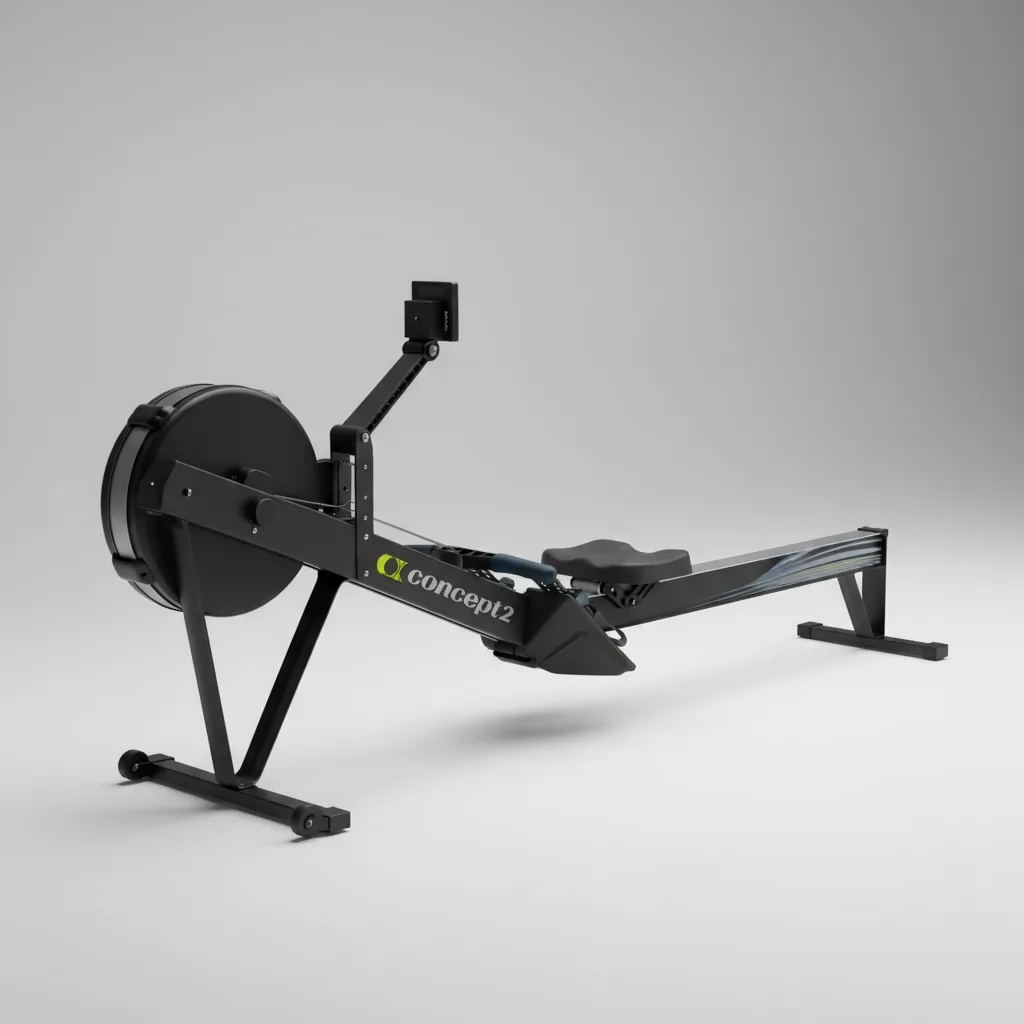
Air rower · ~$1,200
Concept2 Model E
The Concept2 Model E pairs the brand's gold-standard air rowing with a raised 20-inch seat, at a premium over the standard RowErg.

How we review
Every rower is scored on the same six weighted criteria - resistance & feel, build, monitor, comfort, footprint, and value - from verified specifications, expert consensus, and aggregated long-term owner feedback. Our reviews are independent: we never accept payment for placement or a higher score. Reviewed by Jordan Lockwood (BSc, CPT). See our full methodology.
The Concept2 Model E is the elevated, commercial-grade sibling of the company's ubiquitous RowErg (formerly the Model D). It uses the same air-resistance flywheel, the same PM5 performance monitor, and the same training data that have made Concept2 the default choice in gyms, boathouses, and competitive racing for decades. The headline difference is a seat that sits roughly 20 inches off the floor rather than 14, along with a heavier welded-steel frame and a glossy double powder-coat finish aimed at high-traffic settings.
That higher seat is not just cosmetic. It makes sitting down and standing up far easier, which matters for taller rowers, heavier users, and anyone with knee, hip, or mobility limitations. The trade-off is price: the Model E typically costs several hundred dollars more than the mechanically equivalent RowErg. This assessment, based on manufacturer specifications and reputable retailer and review sources rather than hands-on testing, weighs whether that premium is justified for your situation.
Specifications at a glance
| Resistance type | Air (flywheel, damper 1-10) |
|---|---|
| Monitor | PM5 Performance Monitor, backlit |
| Connectivity | Bluetooth Smart + ANT+, USB workout storage |
| Assembled dimensions | 96 in L x 24 in W |
| Seat height | 20 in (51 cm), elevated |
| Machine weight | 57-65 lb (26-29 kg) |
| Max user weight | 500 lb (227 kg) |
| Frame | Welded steel, double powder-coat finish |
| Storage | Separates into two pieces without tools |
| Warranty | 5-year frame, 2-year parts |
Pros
- Elevated 20-inch seat makes getting on and off noticeably easier than the standard RowErg
- Air resistance scales naturally with effort and suits everyone from beginners to competitive rowers
- PM5 monitor is accurate, well supported, and pairs with Bluetooth and ANT+ heart rate straps and apps
- Welded steel frame and nickel-plated chain are built for years of heavy, low-maintenance use
- 500 lb user capacity and a globally recognized data standard for comparing scores
Cons
- Significantly more expensive than the near-identical Model D / RowErg you give up only the higher seat
- Heavier and bulkier than the standard model, so it is less convenient to move and lift for storage
- PM5 screen is functional but monochrome and dated compared with touchscreen connected rowers
- Air flywheel produces a noticeable whooshing noise that some households find loud
Best for: Taller, heavier, or less mobile rowers who want Concept2's proven performance with an easier-to-mount elevated seat.
Resistance and feel: the genuine reference standard
The Model E rows on exactly the same flywheel, chain, handle and spiral damper as every other Concept2, and that is the whole point. Air resistance here is self-scaling: pull harder and the fan fights back harder, so a deconditioned beginner and a national-team rower can share the machine and each get an honest workout without touching a setting. The damper dial from 1 to 10 changes how the air feels, not how hard you have to work, and most owners settle into the 3 to 5 range that competitive rowers actually use.
The catch is smooth, the seat glides cleanly on the monorail, and the chain pulls without snagging even after years of use. There is no resistance ceiling to outgrow, which is the single biggest reason this drivetrain has been the racing and testing standard for decades. If you want a rower you will never out-train, the feel is as good as it gets at any price, and the Model E inherits all of it unchanged.
The 20-inch seat is the only reason to buy this model
Everything that makes the Model E worth its premium lives in the 20-inch seat, six inches taller than the standard RowErg's 14 inches. That extra height turns getting on and off from a deep squat into something closer to sitting down in and standing up from a normal dining chair. For older rowers, anyone with knee, hip or back limitations, taller users, and people transferring from a wheelchair, this is not a luxury - it is the difference between using the machine daily and dreading it.
It is worth being clear-eyed about who this does not matter for. If you are reasonably mobile and under, say, your fifties, you will adapt to the lower RowErg seat within a session or two and never think about it again. The raised seat does not make you row better, faster or longer; your 2000m time is identical on both machines. So treat the seat as an accessibility and comfort feature you either need or do not, rather than a performance upgrade.
Monitor and data: PM5 is dated to look at, excellent to train with
The PM5 monitor is the same brain found across the Concept2 line, and it remains the most trusted performance computer in rowing. It is accurate, it stores workouts, it runs intervals and preset sessions, it lets you race other ergs, and it pairs over both Bluetooth and ANT+ to heart-rate straps and to apps like ErgData, Kinomap and others. Crucially it needs no subscription to do any of this, which quietly saves you the recurring fee that connected rowers bake into ownership.
What you give up is glamour. The screen is monochrome and visually a generation or two behind the bright touchscreens on Hydrow, Aviron and the Peloton Row. If you want guided, on-screen instructor-led classes as your main motivation, the PM5 will feel austere and you should mirror an app on a tablet instead. If you care about clean, comparable, exportable numbers and a data standard the whole sport uses, it is hard to beat and it will not be obsoleted by a discontinued app.
Build, weight and storage: built to outlast you, harder to shuffle around
The Model E is the more heavily built of the two seat heights. It uses fully welded steel legs front and rear plus a double powder coat and clear coat finish, where the standard RowErg mixes in aluminum. Combined with the nickel-plated chain and a 500 lb user capacity, this is a machine families and even light commercial settings keep running for a decade or more with almost no maintenance beyond the occasional chain oiling. Concept2's parts support and resale value are both excellent, which matters if you ever change your mind.
The trade-offs are physical. At around 65 lb the Model E is roughly eight pounds heavier than the RowErg, and its fixed extended monitor arm does not fold the way the standard model's flexible arm does, so it is a touch less convenient to break down and tuck away. It still separates into two pieces and stands on end, but if frequent moving and tight storage are priorities, the lighter, foldable standard model is the friendlier choice. Expect a footprint around 96 by 24 inches in use.
Noise and household reality
Air resistance has one unavoidable side effect: it is loud. The flywheel produces a distinct whooshing rush that rises with your effort, and at a hard intensity it is noticeably louder than any magnetic or water rower. In practice most owners find it tolerable - someone watching TV in the next room is rarely bothered - but it can wake a sleeping baby through a thin wall or annoy downstairs neighbors in an apartment.
If silence is non-negotiable, no air rower including this one is the right tool, and you should look at magnetic or water machines instead while accepting their weaker feel and data. For most home gyms, garages and basements, the noise is a non-issue you stop noticing after a week.
Concept2 Model E versus the standard RowErg (Model D)
This is the comparison that actually decides the purchase, because the two machines are mechanically identical twins. Same flywheel, same chain, same handle, same PM5, same rowing stroke and same race times. The Model E costs roughly 200 to 300 dollars more, and for that premium you get exactly three things: the 20-inch seat, the slightly beefier welded frame with a nicer finish, and a marginally better chain housing that needs even less attention. You do not get a better workout.
Our read is simple. If the higher seat solves a real problem for you - age, joints, height, mobility, getting up and down - the Model E is money well spent and the upgrade you will appreciate every single day. If it does not, you are paying a premium for a seat you do not need, and the standard RowErg is the smarter buy: cheaper, lighter, foldable, and rowing-identical. There is no scenario where the Model E is the better value for an able-bodied buyer who could happily use the lower seat.
Our take
Buy the Model E if the raised seat is a genuine need rather than a nicety. Older rowers, anyone rehabbing or living with knee, hip or back issues, very tall users, and households where an easier sit-down keeps people consistent will get real daily value, wrapped in the most respected drivetrain and the most trusted monitor in the sport. For those buyers this is close to a forever machine, and the accessibility justifies the surcharge.
Skip it if you are reasonably mobile and just want the best air rower for the money - the standard RowErg gives you the same rowing experience for less, with easier storage. Also skip it if you specifically want a big touchscreen and instructor-led classes as your primary draw; a connected rower serves that better, albeit with a subscription and a shorter expected lifespan. Our 4.4 out of 5 reflects a superb machine carrying a price premium that only some buyers should pay.
Our verdict
The Concept2 Model E is the gold-standard air rower with one targeted upgrade: a 20-inch seat that makes getting on and off dramatically easier. Mechanically it is identical to the standard RowErg - same flywheel, chain, handle, PM5 monitor and stroke feel - so it inherits all of Concept2's legendary smoothness, accuracy, durability and subscription-free data, and gives up none of it. The only thing the extra 200 to 300 dollars buys is that raised seat plus a slightly beefier welded frame.
That makes the recommendation refreshingly clear. If the higher seat solves a real problem - age, joints, height, mobility, or simply staying consistent - the Model E is an outstanding, near-lifetime purchase and the premium is justified. If you are able-bodied and could happily use the lower seat, buy the standard RowErg instead and pocket the difference. A brilliant machine at 4.4 out of 5, held back only by a price premium that is right for some buyers and wasted on others.
Frequently asked questions
- Is the Concept2 Model E worth the extra money over the RowErg?
- Only if you need the 20-inch seat. The two machines row identically, so the premium buys easier getting on and off plus a slightly sturdier welded frame, not a better workout. If the higher seat helps with age, joints, height or mobility, it is worth it; if not, the standard RowErg is the smarter buy.
- How much higher is the Model E seat and who benefits?
- The seat sits at 20 inches versus 14 inches on the standard model, a six-inch difference. Sitting down and standing up feels like using a normal chair rather than a deep squat, which helps seniors, taller users, people with knee, hip or back limitations, and those transferring from a wheelchair.
- Does the Model E need a subscription?
- No. The PM5 monitor tracks workouts, runs intervals, races other ergs, and pairs over Bluetooth and ANT+ with heart-rate straps and apps, all with no recurring fee. You can mirror a third-party app on your own tablet if you want guided classes, but nothing is locked behind a subscription.
- Is the Model E too loud for an apartment?
- It makes the same air-rower whooshing as the rest of the line, which gets louder with effort. Most owners find it fine for a normal home and someone in the next room is rarely disturbed, but through thin walls or to downstairs neighbors it can carry. If silence is essential, choose a magnetic or water rower instead.
- Can I move and store the Model E easily?
- It separates into two pieces and stands on end, but at around 65 lb it is heavier than the standard model and its monitor arm does not fold, so it is a bit less convenient to relocate and stow. If frequent moving and tight storage matter most, the lighter, foldable standard RowErg is friendlier.
References
- Concept2 RowErg Rowing Machine (official specifications) - Concept2
- Concept2 RowErg Model E Indoor Rowing Machine with PM5 Console - CFF Strength Equipment
- Concept2 RowErg Review (2026) - Garage Gym Reviews
Jordan Lockwood (BSc, CPT)
Certified personal trainer (CPT), sports-science graduate, and lifelong rower. Jordan writes and reviews every guide on Rowing Machine Nerd.