 Rowing Machine Nerd
Hydrow Wave Review
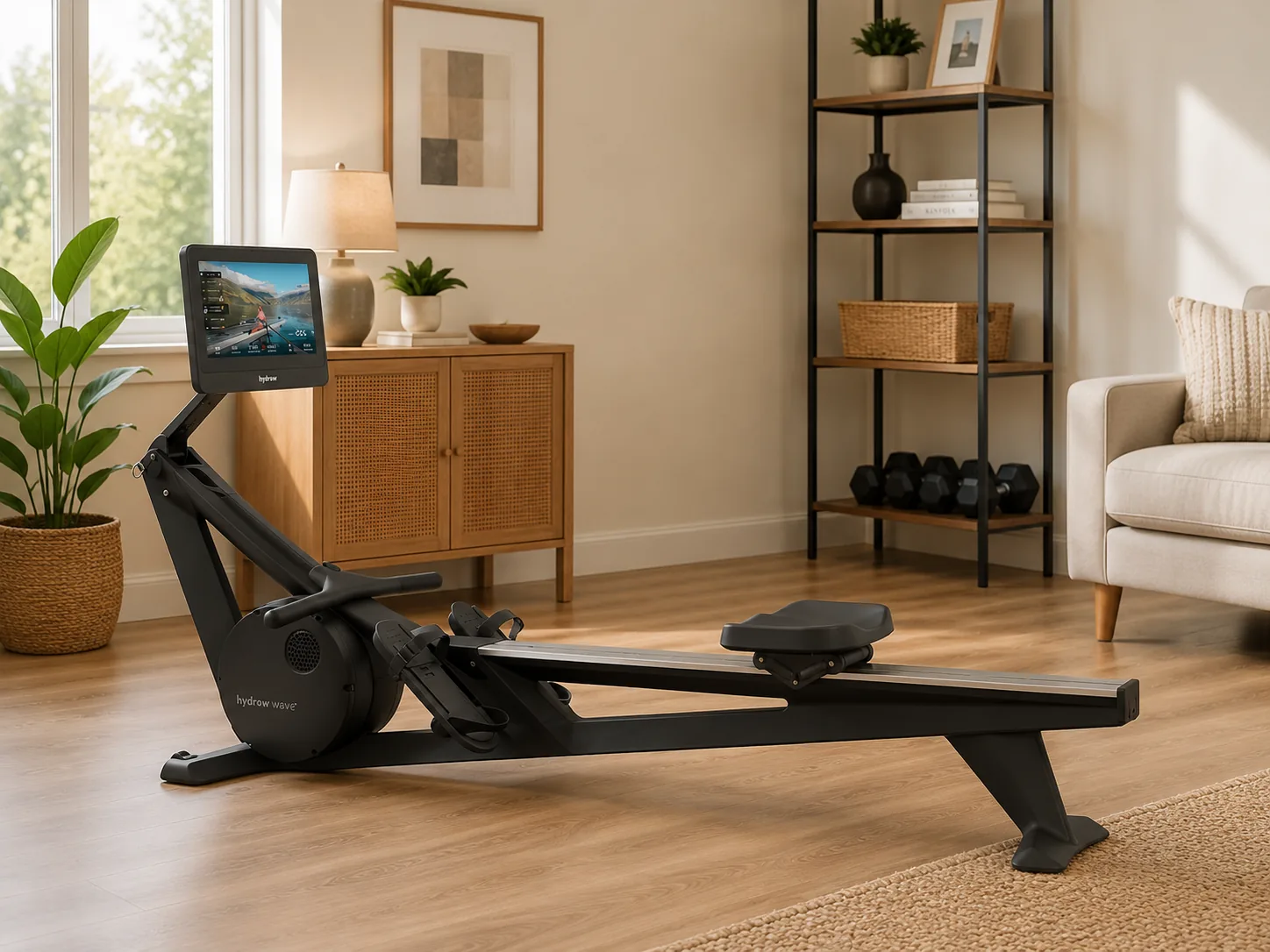
Smart/connected rower · ~$1,695
Hydrow Wave
A compact connected rower with smooth electromagnetic resistance and a polished 16-inch class experience, best for subscribers.

How we review
Every rower is scored on the same six weighted criteria - resistance & feel, build, monitor, comfort, footprint, and value - from verified specifications, expert consensus, and aggregated long-term owner feedback. Our reviews are independent: we never accept payment for placement or a higher score. Reviewed by Jordan Lockwood (BSc, CPT). See our full methodology.
The Hydrow Wave is the more compact, lower-priced sibling to the original Hydrow rower, built around the same core idea: bring an immersive, instructor-led on-water rowing experience into the home. It pairs a computer-controlled electromagnetic resistance system with a 16-inch HD touchscreen and a deep library of live and on-demand classes filmed on real waterways. At roughly $1,695, it slots into the premium connected-rower bracket alongside the likes of Peloton Row, while undercutting Hydrow's flagship.
This is a machine aimed squarely at people who want guidance and motivation rather than raw, no-frills training data. The Wave is smaller and lighter than the standard Hydrow, making it more realistic for apartments and shared spaces, and it supports users up to 375 lbs. As with most connected equipment, though, the hardware is only half the story: getting full value depends on a monthly membership, so it is best judged as an ecosystem rather than a one-time purchase.
Specifications at a glance
| Resistance type | Computer-controlled electromagnetic (magnetic), strap drive |
|---|---|
| Resistance levels | Approx. 300, with automatic adjustment in guided workouts |
| Monitor | 16" HD touchscreen (1920 x 1080), non-tilting, front-facing speakers |
| Connectivity | Wi-Fi + Bluetooth (headphones, heart rate monitors, Apple Watch) |
| Assembled dimensions | 80" L x 19" W x 43" H |
| Machine weight | 102 lbs |
| Max user weight | 375 lbs |
| Max inseam | 36" |
| Storage | Monitor folds flat; frame does not fold; vertical storage kit ~$190 (sold separately) |
| Warranty | 5 years frame; 1 year components, electronics and labor |
| Membership | Approx. $44/month (Hydrow All-Access) |
Pros
- Smooth, water-like electromagnetic resistance that avoids the jerkiness of cheaper magnetic rowers
- Sharp 16-inch HD touchscreen with a large library of live and on-demand instructor-led rows
- Compact, lighter footprint than the standard Hydrow, with a high 375 lb user capacity
- Quiet operation suitable for apartments and shared spaces
- Solid build with stainless steel seat rail and a 5-year frame warranty
Cons
- High upfront price, and the experience leans heavily on a roughly $44/month membership
- Frame does not fold; the vertical storage kit is an extra ~$190 purchase
- Non-tilting screen makes off-rower (floor/strength) classes awkward to follow
- Without a subscription the standalone metrics and "Just Row" mode are limited
Best for: Buyers who want a guided, studio-style connected rowing experience in a compact footprint and are willing to pay an ongoing subscription.
Resistance and feel: smooth and quiet, but only loosely water-like
The Wave runs the same computer-controlled electromagnetic drag as the pricier Hydrow models, adjusting resistance hundreds of times per second to mimic the load curve of a boat moving through water. In practice that means a smooth, consistent pull with none of the bumpy chain feel of cheap magnetic rowers and none of the building whoosh of an air erg. It is genuinely pleasant to use and the resistance never feels notchy.
Set expectations on the marketing, though. Hydrow leans hard on the water imagery, and the Wave only loosely resembles real on-water rowing. Reviewers who came from a rope-and-chain erg describe a short adjustment period, and the dynamic feel is a software simulation rather than a physical flywheel. If you want the visceral splash-and-glide of an actual water rower or the honest fan resistance of a Concept2, this is a different sensation. As a daily-driver cardio machine for an apartment, it is excellent; as an authentic water-rowing experience, it is approximate.
The screen and the membership are the real product
The 16-inch HD touchscreen is sharp and the interface is surprisingly approachable given there are thousands of classes behind it. The draw is the content: live and on-demand instructor-led rows filmed on real waterways, plus off-rower strength, yoga, Pilates and mobility sessions, taught by a coaching roster that includes Olympians. For people who need a voice in their ear to stay consistent, this is the machine's whole reason to exist and it does the job well.
The catch, which you should treat as a recurring cost rather than an optional extra, is the roughly $44 per month membership tied to a single machine. Without it the hardware drops to a limited Just Row mode with bare metrics, so realistically you are signing up for the subscription for the life of the machine. Over three years the ongoing fee dwarfs the upfront price, and that is the single biggest thing to budget for. The content genuinely earns its keep if you use it several times a week, but it is dead weight if you do not.
One practical annoyance keeps coming up: the screen does not tilt or pivot. The larger Hydrow Origin and Arc have pivoting displays specifically so you can follow floor-based strength and yoga classes. On the Wave you are squinting sideways at a fixed monitor whenever a class leaves the rower, which undercuts the value of all that cross-training content.
Build, comfort and storage in a smaller package
The Wave is roughly 30 percent smaller and lighter than the standard Hydrow, with a thermoplastic polymer frame around a stainless steel seat track and a high 375 lb user capacity. It feels solid and stable through hard pulls, owners report no wobble during sprints, and the 5-year frame warranty backs that up. Long-term test fleets have held up well, with the seat glider and rail being low-maintenance.
Two caveats temper the build story. First, the Wave uses a simpler seat-roller setup than the flagship models; reviewers call the difference subtle in daily use, but it is a step down in mechanical refinement. Second, and more importantly for the buyer, the frame does not fold. Hydrow markets the Wave as compact and apartment-friendly, and the footprint is indeed smaller, but to stand it up for storage you are looking at an extra vertical storage kit purchase of around $190. Factor that in if floor space is the reason you are considering this model in the first place.
On noise, it lives up to its apartment-friendly billing but not the whisper-quiet hype. The electromagnetic drive is much quieter than air or water rowers, though independent measurements put the smaller Wave housing a few decibels louder than the full-size Hydrow. The dominant sound is the seat rolling on the rail, which is fine for shared walls but not silent.
How it compares to the Concept2 RowErg
The obvious alternative is the Concept2 RowErg, and the two are barely the same kind of purchase. The Concept2 costs around $990 with no subscription, no membership and no recurring cost ever. Over three years the Hydrow Wave can run close to four times the total cost, almost entirely because of the mandatory membership. The Concept2 is also the universal standard for erg testing, racing and rankings, with rock-solid data comparability and a famously durable PM5 monitor that does not depend on a content library to function.
So the decision is really about what keeps you on the machine. Buy the Concept2 if you are self-motivated, care about training data and longevity, or want to spend nothing after purchase; its air resistance and bombproof build are unmatched for serious or budget-conscious rowers. Buy the Hydrow Wave if guided, on-demand coaching and a polished screen are what will actually get you to row three times a week. The Wave is the better motivator and the nicer living-room object; the Concept2 is the better tool and vastly cheaper to own.
Where the Wave sits in the Hydrow lineup
Within Hydrow's own range, the Wave is the entry point: the same resistance system and identical class library as the larger Origin and Arc, packed into a lighter, cheaper, smaller frame with a 16-inch screen instead of a 22 or 24-inch pivoting one. If the full Hydrow experience appeals but the price and size of the flagship do not, the Wave gets you most of the way there.
The trade-offs are concentrated in two places: the smaller fixed screen and the slightly simpler seat rail. If you will mostly do straight rowing classes and want to save money and floor space, those compromises barely register. If you plan to lean heavily on the off-rower strength and yoga content, the larger models with pivoting screens are worth the upgrade, because following a floor class on a fixed sideways monitor is awkward enough that you may stop doing it.
Our take
The Hydrow Wave earns its 4 out of 5 as a well-built, quiet, genuinely motivating connected rower for the right buyer. That buyer is someone in an apartment or shared space who wants instructor-led classes to stay consistent, who will use the membership several times a week, and who is comfortable treating the roughly $44 per month as a permanent line item alongside the $1,695 hardware. For that person it is a polished, easy-to-love machine.
Skip it if you are self-motivated, budget-conscious, or focused on measurable training: the Concept2 RowErg does the actual rowing better for a fraction of the lifetime cost. Skip it too if you specifically want a tilting screen for strength and yoga, since the fixed display makes off-rower classes a chore and the larger Hydrow models or a different setup serve you better. And go in clear-eyed that the membership, not the rower, is the real spend here.
Our verdict
The Hydrow Wave is a smooth, quiet, well-made connected rower that does exactly one thing very well: it makes instructor-led rowing feel premium and keeps motivated subscribers coming back. The electromagnetic resistance is pleasant if only loosely water-like, the 16-inch screen is sharp, and the compact frame fits real apartments. It is a 4 out of 5 because the experience is genuinely good - provided you accept that the roughly $44 per month membership is the real product and a permanent cost.
Buy it if you want coaching, scenery and structure to stay consistent and you will use it several times a week. Skip it if you are self-disciplined, data-driven, or cost-sensitive, in which case the Concept2 RowErg gives you a better tool for a fraction of the lifetime price. Just go in knowing the fixed screen makes off-rower classes awkward, the frame does not fold, and vertical storage costs extra. Match those trade-offs to how you will actually train and the Wave is an easy machine to recommend.
Frequently asked questions
- Do I really need the membership, or can I just row without it?
- You can row without it, but the machine drops to a limited Just Row mode with basic metrics and no classes, leaderboards or scenic rows. Since the entire appeal of the Wave is the instructor-led content, realistically you are committing to the roughly $44 per month membership for as long as you own it. Budget for it as a recurring cost, not an optional add-on.
- How does the Wave differ from the standard Hydrow?
- It uses the same electromagnetic resistance and the exact same class library, but in a frame about 30 percent smaller and lighter with a 16-inch fixed screen instead of a larger pivoting one, plus a simpler seat-roller system. It is the cheaper, more compact entry point; the main things you give up are screen size, the tilting display for floor classes, and a bit of mechanical refinement.
- Is it quiet enough for an apartment?
- Yes, comfortably. The electromagnetic drive is far quieter than air or water rowers, and the loudest sound is the seat moving along the rail. It is not literally silent, and independent measurements put the smaller Wave housing a few decibels louder than the full-size Hydrow, but it is well suited to shared walls and early-morning sessions.
- Can I store it vertically to save space?
- The frame does not fold, but it can be stood upright. Doing so cleanly requires the separate vertical storage kit, which costs around $190 on top of the machine. If saving floor space is your main reason for choosing the compact Wave, factor that extra purchase into your budget.
- Should I get this or a Concept2 RowErg?
- Get the Wave if guided classes and a coach in your ear are what keep you rowing. Get the Concept2 if you are self-motivated, want serious training data, or want to avoid any subscription; at around $990 with no recurring fees it costs a fraction over time and is the standard for erg testing and racing. They suit very different buyers.
References
- Hydrow Wave Rower | Compact Rowing Machine with HydroMetrics - Hydrow
- Hydrow Wave Review (2026) - BarBend
- Hydrow Wave Review (2026) - Garage Gym Reviews
Jordan Lockwood (BSc, CPT)
Certified personal trainer (CPT), sports-science graduate, and lifelong rower. Jordan writes and reviews every guide on Rowing Machine Nerd.