 Rowing Machine Nerd
LifeSpan RW1000 Review
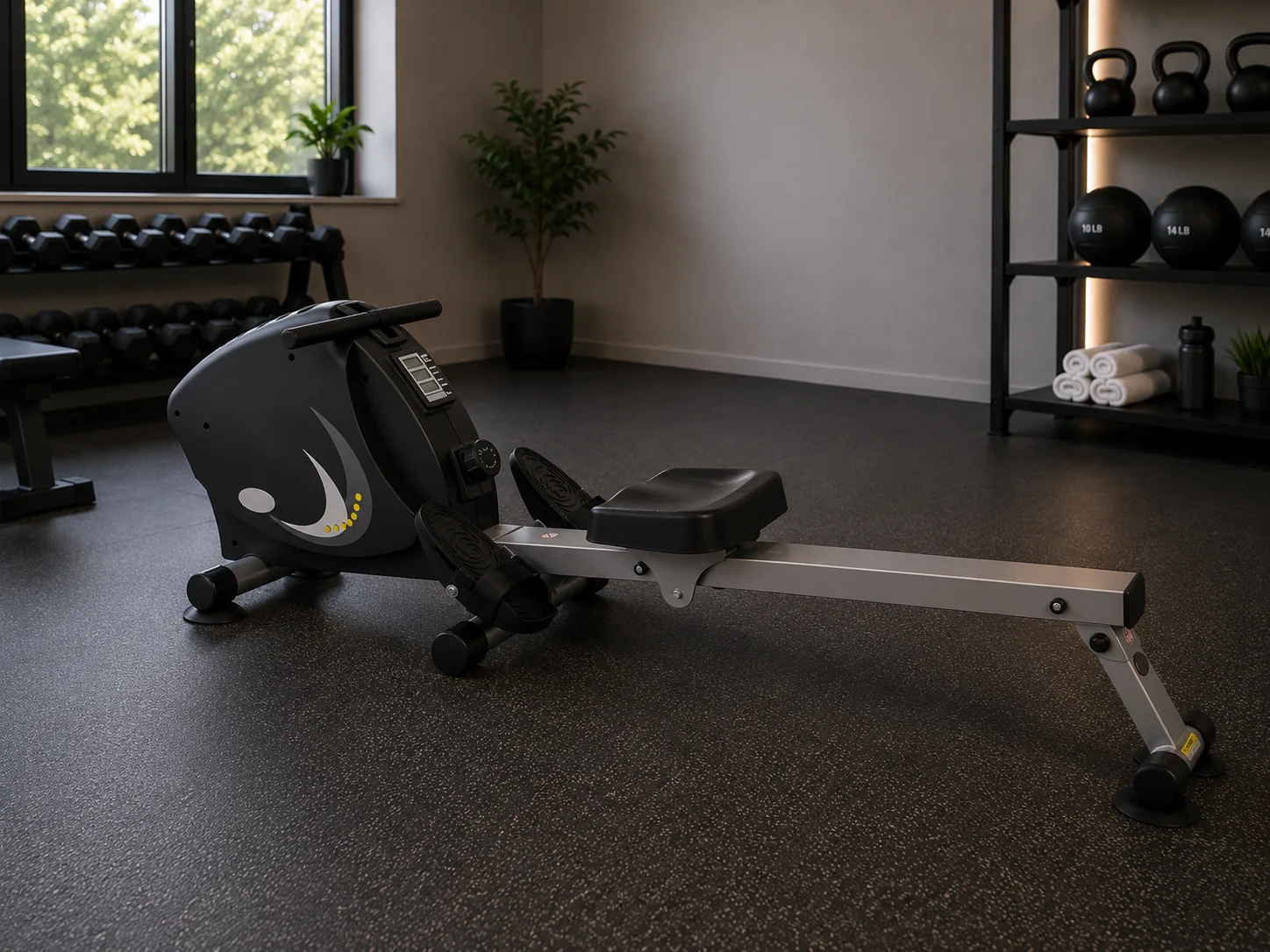
Magnetic rower · ~$899 (often ~$499 on sale)
LifeSpan RW1000
A quiet, foldable magnetic rower that's fine for beginners but feels overpriced at list and lacks the connectivity and rail length serious rowers want.

How we review
Every rower is scored on the same six weighted criteria - resistance & feel, build, monitor, comfort, footprint, and value - from verified specifications, expert consensus, and aggregated long-term owner feedback. Our reviews are independent: we never accept payment for placement or a higher score. Reviewed by Jordan Lockwood (BSc, CPT). See our full methodology.
The LifeSpan RW1000 is a folding magnetic rowing machine aimed at home users who prioritize a small footprint and quiet operation over performance ceilings. It uses an eddy-current magnetic brake with five resistance levels and a modest 16.5-pound flywheel, paired with a simple battery-powered LCD console. The pitch is straightforward: a no-fuss cardio machine that tucks away in a closet or corner when you're done.
That makes it most relevant to beginners, casual exercisers, and anyone short on space rather than to competitive or high-mileage rowers. It folds to a compact upright footprint and carries a 300-pound user rating, but it skips the connectivity, deeper resistance range, and longer rail that more demanding users expect. At a list price near $900, it sits in an awkward spot against both cheaper folding rowers and the air-resistance machines that dominate this price tier.
Specifications at a glance
| Resistance type | Magnetic (eddy-current brake) |
|---|---|
| Resistance levels | 5 |
| Flywheel weight | 16.5 lb |
| Console | Battery-powered LCD |
| Console metrics | Distance, time, calories, stroke count, strokes per minute |
| App / Bluetooth | None |
| Assembled dimensions | 90" L x 18.5" W x 23" H |
| Folded dimensions | 34" L x 19" W x 64" H |
| Machine weight | Approx. 80.5 lb gross |
| Max user weight | 300 lb |
| Seat | 14" contoured foam seat |
| Folding / storage | Folds upright without tools for vertical storage |
| Warranty | 2 years parts, 1 year labor (some listings cite a longer frame warranty) |
Pros
- Folds upright to a compact 34" x 19" footprint, suiting small rooms and apartments
- Quiet eddy-current magnetic resistance that won't disturb others nearby
- Simple, tool-light assembly and a cushioned 14-inch seat
- 300 lb user capacity is generous for a folding magnetic rower
Cons
- Only 5 resistance levels and a 16.5 lb flywheel limit the ceiling for stronger or advanced rowers
- Basic LCD with no Bluetooth, app integration, or programmable workouts
- List price near $900 is hard to justify against better-built rivals
- Reviewers report stability concerns under vigorous rowing and a short rail that crowds taller users
Best for: Beginners and casual exercisers in tight spaces who want a quiet, foldable magnetic rower and can buy it on sale rather than at full list price.
Resistance and feel: smooth, but a low ceiling
The RW1000 uses an eddy-current magnetic brake, and on that count it delivers exactly what magnetic resistance is good at: a quiet, even, repeatable pull that never grinds or rattles. For a beginner learning the catch-drive-finish sequence, that consistency is genuinely helpful, and owners regularly describe the stroke as smooth and easy to settle into.
The trouble is the ceiling. Five fixed resistance levels and a 16.5 lb flywheel mean the hardest setting still tops out where a fit rower is just getting warm. Magnetic resistance is also load-static rather than dynamic the way air resistance is, so pulling harder does not give you proportionally more back. Beginners and rehab users will rarely notice; anyone with real cardio or strength engine will hit the wall fast and find nowhere to go.
Monitor and connectivity: bare-bones and not always honest
The LCD covers the basics (time, distance, calories, strokes, stroke rate) and nothing more. There is no Bluetooth, no ANT+, no app, and no programmable workouts, so you cannot push data to Strava, ErgZone, Kinomap or any training platform. At a list price flirting with $900, that omission is the single hardest thing to defend in 2026, when far cheaper rowers ship with app connectivity.
More frustrating is that several owners question the numbers themselves, reporting calorie and distance readouts that feel inflated or inconsistent. The console also sits low and the rail angles slightly downward, so you crane your neck to read it mid-stroke. If you are the kind of rower who trains to splits or watts, this monitor will quietly drive you up the wall.
Build, stability and the things that wear out
This is where the rating really lands at 2.7. The 300 lb capacity sounds reassuring, but owner reports tell a more nervous story: one reviewer at just 135 lb of body weight described the front of the machine lifting off the floor during a hard pull, and others note the unit creeping or sliding under vigorous rowing. With a clean, horizontal stroke it behaves; with any jerk or an off-axis pull, the frame lets you know.
Longevity is the other worry. Multiple owners report squeaking pulleys after fewer than ten sessions, foot straps that work loose mid-workout, and the occasional LCD failure. The plastic flywheel housing and lighter frame simply do not inspire the decades-of-abuse confidence that steel-framed rivals do. It is fine for light-to-moderate use, but it is not a machine you should expect to thrash daily for years.
On the credit side, it folds upright to a genuinely small 34-by-19-inch footprint, assembly is quick and tool-light, and the cushioned 14-inch seat earns consistent praise even on 30-plus-minute sessions. For storage and comfort, it does the job.
Who it actually fits
The honest buyer for the RW1000 is the apartment dweller or casual exerciser who wants something quiet, foldable, and forgiving to learn on, and who will row a few easygoing sessions a week rather than chase performance. For that person, the smooth magnetic pull and small folded footprint are a real match.
Taller rowers should be cautious: the rail is on the short side, and reviewers note that users above roughly six feet may not reach full leg extension at the catch. If you are tall, strong, train hard, or care about data, this is not your machine, and you will outgrow it quickly.
Our take
Buy the RW1000 only if two things are true: you specifically need a rower that folds away small in a tight space, and you can get it on one of its frequent sale dips toward $499. At that price, with realistic expectations of light home use, it is a defensible quiet-and-compact pick for a beginner.
Skip it at the ~$899 list price, full stop. The connectivity gap, the modest resistance ceiling, and the stability and durability complaints make that number very hard to justify when sturdier, smarter, or simply cheaper options sit right next to it. We would also steer away anyone tall, anyone planning to train seriously, and anyone who wants their splits to sync to an app. This is a starter rower, priced and built like one, occasionally tagged like a premium one.
How it compares: the Concept2 RowErg shadow
The RW1000's biggest problem is the machine sitting about $100 above it. The Concept2 RowErg lists around $1,000, and nearly every reviewer who looks at both reaches the same conclusion: save the extra hundred. The RowErg is air resistance with effectively infinite dynamic range, a steel-and-heavy-duty-plastic build that survives decades of hard use, a PM5 monitor with Bluetooth and ANT+, and a resale value that barely moves. It is the machine national teams and competitive rowers actually use.
That comparison is brutal for the RW1000 at list. Where the LifeSpan wins is footprint and noise: the RowErg does not fold upright nearly as compactly, and air resistance is louder, which matters in a thin-walled apartment or a shared room at night. If small-and-quiet is non-negotiable, the RW1000 has a niche. If you are simply price-shopping in the $900 range, the RowErg out-classes it on almost every axis that lasts. Budget shoppers who cannot stretch to the Concept2 are often better served by a cheaper Sunny Health or Stamina folding rower than by paying near-premium money for this one.
Our verdict
The LifeSpan RW1000 is a perfectly pleasant beginner's rower trapped behind a premium price tag. The magnetic pull is quiet and smooth, the seat is comfortable, and it folds away to a footprint that genuinely suits small apartments. But the five-level resistance ceiling, the data-free LCD with questionable accuracy, and a string of owner complaints about squeaking pulleys, slipping foot straps, and a frame that slides or lifts under hard pulls all point to a machine built for light, casual use and nothing more.
Our recommendation is simple: only buy it on a deep sale near $499, and only if a compact folding design is genuinely your top priority. At its ~$899 list price it makes little sense, because roughly $100 more buys the Concept2 RowErg, a machine that out-builds, out-measures and out-lasts it on almost every count. As a quiet starter rower for a small room it earns its 2.7 out of 5; as a serious or long-term purchase, look elsewhere.
Frequently asked questions
- Is the LifeSpan RW1000 worth $899?
- Not at that list price. The lack of Bluetooth or app support, the five-level resistance cap, and recurring stability and durability complaints make it hard to justify near $900. It becomes reasonable on sale around $499 for a beginner who needs a quiet, foldable rower.
- Does the RW1000 connect to apps like Kinomap, ErgZone or Strava?
- No. The basic LCD has no Bluetooth or ANT+ and cannot export data to any training app or platform. It only shows on-screen metrics such as time, distance, calories and stroke rate, and some owners find those readouts inaccurate.
- Is it stable enough for hard rowing?
- Only with a smooth, horizontal stroke. Owners report the frame sliding or even the front lifting off the floor during vigorous or jerky pulls, in at least one case at just 135 lb of body weight. It is fine for steady, controlled sessions but not built for aggressive training.
- Will the RW1000 fit a tall user?
- It is tight for taller rowers. The rail is relatively short and angled slightly downward, and reviewers note that users above roughly six feet may not get full leg extension at the catch. Taller buyers should look at a longer-rail machine.
- How does it compare to the Concept2 RowErg?
- The RowErg costs only about $100 more at roughly $1,000 and outclasses the RW1000 on durability, resistance range, monitor, app connectivity and resale value. The RW1000's only real edges are a more compact folded footprint and quieter magnetic resistance, which matter mainly in apartments.
References
- RW1000 Indoor Rower - Official Product Page - LifeSpan Fitness
- Lifespan RW1000 Review (2026) - Garage Gym Reviews
- LifeSpan RW1000 Indoor Rower - Walmart
Jordan Lockwood (BSc, CPT)
Certified personal trainer (CPT), sports-science graduate, and lifelong rower. Jordan writes and reviews every guide on Rowing Machine Nerd.