 Rowing Machine Nerd
Stamina DT397 Review
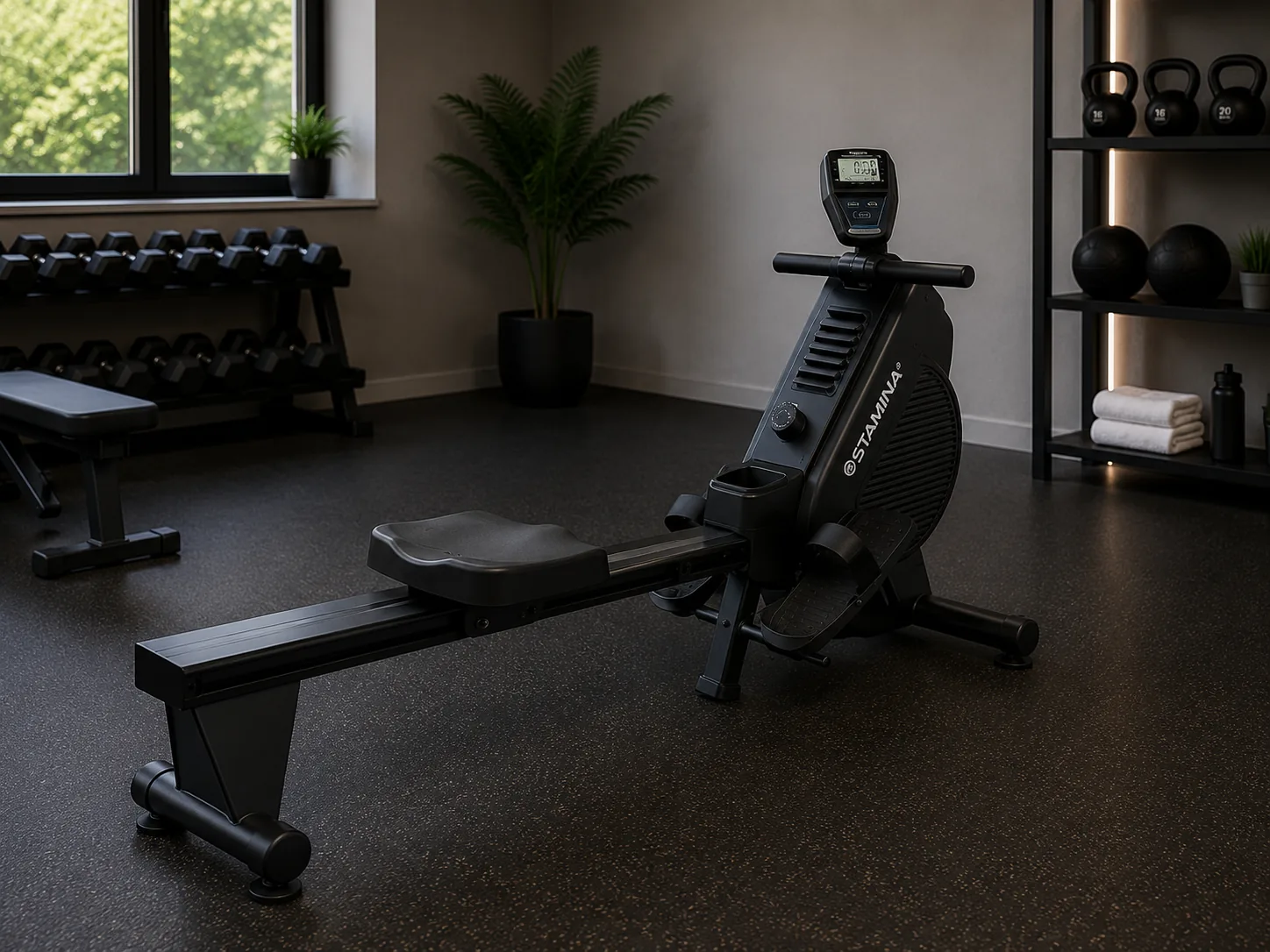
Air + magnetic rower · ~$450
Stamina DT397
A compact, affordable dual air-and-magnetic rower with a livelier stroke than basic magnetic models, but a bare-bones monitor and light frame.

How we review
Every rower is scored on the same six weighted criteria - resistance & feel, build, monitor, comfort, footprint, and value - from verified specifications, expert consensus, and aggregated long-term owner feedback. Our reviews are independent: we never accept payment for placement or a higher score. Reviewed by Jordan Lockwood (BSc, CPT). See our full methodology.
The Stamina DT397 sits in the crowded budget segment of the home-rowing market, but it tries to stand out with a dual resistance system that pairs a fan flywheel with eight levels of adjustable magnetic tension. The idea is to deliver some of the dynamic, speed-responsive feel of an air rower while keeping the quiet, set-it-and-forget-it baseline of a magnetic unit. At a street price in the low-to-mid hundreds, it competes with entry-level magnetic rowers rather than performance machines.
It is aimed squarely at beginners, casual exercisers, and anyone short on space. At 50 pounds and able to stand vertically when not in use, it is easy to move and tuck away in an apartment or shared room. Buyers expecting a connected, data-rich experience or the long-term durability of a premium rower should temper expectations; this is a simple, accessible cardio tool rather than a serious training platform.
Specifications at a glance
| Resistance type | Air + adjustable magnetic (dual) |
|---|---|
| Resistance levels | 8 magnetic levels, plus speed-dependent air |
| Monitor | LCD: time, count, distance, calories, total count |
| Heart rate | Not specified (no built-in pulse readout) |
| App / connectivity | muuv audio coaching app; no Bluetooth data sync |
| Assembled dimensions | 66 in L x 22 in W x 34.5 in H |
| Machine weight | 50 lb |
| Max user weight | 250 lb |
| Storage | Stores vertically; transport wheels (does not fold) |
| Warranty | 3 years frame, 90 days parts |
| Approx. price | ~$400-500 street |
Pros
- Dual air-plus-magnetic system gives a livelier stroke than magnetic-only budget rowers
- Light (50 lb) and stores vertically, ideal for small homes and apartments
- Eight magnetic levels let you set a baseline feel independent of stroke speed
- Includes the muuv guided-audio app at no extra subscription cost
- Straightforward assembly and a low, accessible price point
Cons
- Basic LCD only; no heart-rate input, preset programs, or Bluetooth metric sync
- 250 lb user limit and a light frame that can shift under larger, faster rowers
- Short 90-day parts warranty; some owners report monitor and spring wear over time
- Not suited to users taller than about 6 ft 3 in
Best for: Budget-conscious beginners and casual home exercisers in tight spaces who want a livelier air-plus-magnetic feel without a subscription.
How the dual air-plus-magnetic stroke actually feels
The DT397's headline trick is that it stacks a small air fan on top of an eight-level magnetic brake. In practice that means the magnetic dial sets a floor of resistance and the fan adds a speed-sensitive layer on top, so pulling harder genuinely gives you more back. Against the wall of identical magnetic-only rowers at this price, that makes the stroke feel livelier and more honest, with fewer dead spots at the catch and a more rowing-like load curve.
The honest caveat, echoed by reviewers and owners, is that doing two things at once means neither is done as well as a dedicated design. The air fan is small, so the dynamic resistance ceiling is modest and tops out well before a fit, powerful rower would want it to. The magnetic levels are useful for dialing in a baseline rather than for serious progressive overload. Think of the dual system as adding texture and a more engaging feel to a budget rower, not as buying you a performance erg's resistance range.
The monitor is the weakest link
The LCD does the bare minimum: time, distance, stroke count, total count and calories, driven by three buttons and a pair of AAA batteries. There is no backlight, no heart-rate input, no preset programs and no Bluetooth, so you cannot push numbers to Strava, a heart-rate strap or any training app. For interval work or any structured plan you will be doing the math in your head or on your phone.
Two specific irritations show up repeatedly in owner feedback and are worth knowing before you buy. The unit emits a soft beep after every single stroke, which a number of owners find maddening over a long session, and the monitor is also one of the more common failure points along with the cord-return mechanism. Several buyers report the display or recoil spring degrading over time, which lands squarely on the short 90-day parts warranty. The frame is covered for three years; the parts that actually tend to fail are not.
Build, fit and who physically fits on it
At roughly 50 pounds the DT397 is genuinely easy to assemble solo in about half an hour, easy to fold upright, and easy to wheel into a closet. For a small apartment or a shared room that storability is the single best thing about it. The flip side of a light frame is stability: it holds steady for moderate cardio, but heavier or faster rowers report it shifting or walking slightly during aggressive pulls, and the levelers only do so much on that score.
Sizing matters here more than the marketing suggests. The 250 lb user limit is firm, and while one or two sources optimistically quote a 6'6" ceiling, the more consistent and realistic guidance is that anyone over about 6'3" will feel cramped at the end of the drive. Taller and heavier users are exactly the people this rower is not built for, and they should treat those numbers as hard limits, not suggestions.
The app and the real cost of entry
Stamina bundles access to its guided-audio coaching (the muuv-style content) with no separate subscription, plus two free expert-guided online workouts. That is a nice touch at this price and gives a beginner some structure out of the box. It is also the kind of perk that is easy to oversell: the deeper library of workouts is paid, and because the monitor has no connectivity, the app cannot read your stroke data or sync metrics back. It is audio guidance running alongside the rower, not an integrated connected-fitness ecosystem.
If app-led, screen-driven workouts are the reason you are shopping, this is not the machine that delivers them well. The DT397's value lives in the hardware and the price, not in software you would keep paying for.
How it compares to the obvious alternative
The reference point everyone eventually lands on is the Concept2 RowErg, and the comparison is clarifying rather than flattering. The Concept2 costs perhaps twice as much, but it brings a 500 lb weight capacity (double the DT397), a far more detailed PM5 monitor with Bluetooth and USB data export, a near-bulletproof chain-and-flywheel drive, and a resale value that holds for years. The recurring knock on cheaper Stamina air rowers is that the strap or recoil parts can fail within months; the Concept2 is the machine you stop having to think about. If you will row often, train with data, or are anywhere near the weight or height limits, the RowErg is the smarter long-term spend.
Closer to the DT397's own price you will see the Schwinn Crewmaster and various Circuit Fitness models. Against those, the DT397's differentiators are the dual air-plus-magnetic feel and the easy vertical storage. It does not clearly out-build them, so the choice in that bracket comes down to whether the livelier stroke and the small footprint matter more to you than a particular monitor or seat.
Our take
Buy the DT397 if you are a budget-conscious, lighter-to-average-sized beginner or casual rower in a small space, you want something more engaging than the sea of identical magnetic-only rowers at this price, and you genuinely value folding it flat between sessions. For low-impact cardio a few times a week, it is a reasonable, honest little machine for the money.
Skip it if you are over about 6'3" or 250 lb, if you want heart-rate tracking, programs or any data sync, or if you are the kind of rower who will be hammering hard intervals - the small fan's ceiling, the beeping bare-bones monitor, and the documented monitor and spring wear will all start to grate. And if you can stretch the budget, the longevity gap to a Concept2 RowErg is large enough that committed rowers should save up rather than settle. That mix of real appeal and real limitations is exactly why it sits at 2.8 out of 5.
Our verdict
The Stamina DT397 is a likeable budget rower that earns its keep on two things: a dual air-plus-magnetic stroke that feels more alive than the magnetic-only crowd at this price, and a light, fold-flat frame that disappears into a small apartment. For a beginner or casual rower of average size doing low-impact cardio a few times a week, that is a fair deal.
But the compromises are real and they pile up the more seriously you row. The monitor is bare-bones, beeps after every stroke, and is one of the parts most likely to wear out under a stingy 90-day warranty; the small fan caps your resistance early; and anyone over about 6'3" or 250 lb is simply out of scope. Buy it as a cheap, space-saving starter and it will satisfy. Want data, durability, or room to grow as a rower, and you should stretch to a Concept2 RowErg instead. A fair 2.8 out of 5.
Frequently asked questions
- Is the Stamina DT397's resistance enough for a fit, experienced rower?
- Probably not. The eight magnetic levels set a baseline and the small air fan adds speed-based resistance on top, which feels livelier than magnetic-only rowers, but the combined ceiling is modest. Casual and beginner rowers will be fine; strong rowers who want to push hard intervals will hit the top of its range quickly.
- What are the most common problems owners report?
- The two recurring ones are the monitor and the cord-return (recoil spring) mechanism degrading over time, both of which fall under the short 90-day parts warranty rather than the three-year frame coverage. Many owners are also annoyed by a soft beep the monitor makes after every stroke.
- Can I track heart rate or sync my workouts to an app?
- No. The basic LCD has no heart-rate input, no Bluetooth and no USB, so it cannot connect to a chest strap or push metrics to any fitness app. The bundled guided-audio content runs alongside the rower but cannot read your actual stroke data.
- How tall and heavy can I be and still use it comfortably?
- The user weight limit is 250 lb, and despite one optimistic 6'6" claim, the realistic comfortable height ceiling is about 6'3". Taller or heavier users will feel cramped and may notice the light 50 lb frame shifting during hard strokes; they should look at a sturdier, higher-capacity rower instead.
- Is it worth buying over a Concept2 RowErg?
- Only if budget and storage are your top priorities. The Concept2 costs roughly double but offers a 500 lb capacity, a detailed connected monitor, far better durability and strong resale. If you will row regularly or want training data, the RowErg is the better long-term value; the DT397 makes sense mainly as an affordable, compact entry point.
References
- Stamina DT Rowing Machine (official product page) - Stamina Products
- Stamina DT397 Rowing Machine Review - Rowing Machine Guide
- Stamina DT397 Rowing Machine - Walmart
Jordan Lockwood (BSc, CPT)
Certified personal trainer (CPT), sports-science graduate, and lifelong rower. Jordan writes and reviews every guide on Rowing Machine Nerd.