 Rowing Machine Nerd
Merach Q1S Review
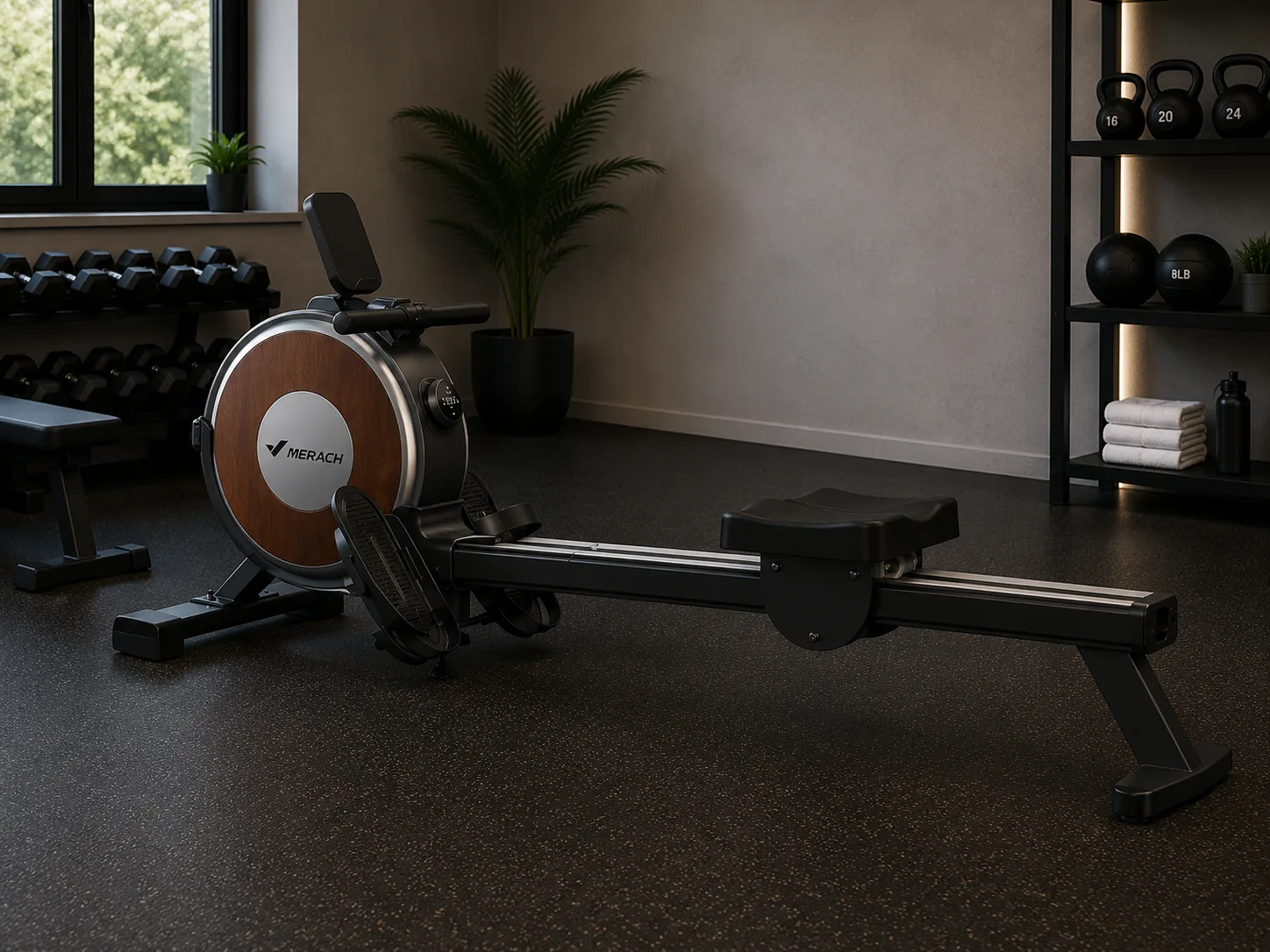
Magnetic rower · ~$240-$300
Merach Q1S
A quiet, compact magnetic rower that delivers strong value for casual home cardio, with manual resistance limiting harder training.

How we review
Every rower is scored on the same six weighted criteria - resistance & feel, build, monitor, comfort, footprint, and value - from verified specifications, expert consensus, and aggregated long-term owner feedback. Our reviews are independent: we never accept payment for placement or a higher score. Reviewed by Jordan Lockwood (BSc, CPT). See our full methodology.
The Merach Q1S is a budget-oriented magnetic rowing machine aimed squarely at the home fitness market, where quiet operation, a small footprint and a low price matter more than competition-grade performance. It pairs a magnetic resistance system with 16 manually adjustable levels, an LCD console and Bluetooth connectivity to the Merach app and Kinomap. Merach sells the Q1S name across several variants, but the model most commonly stocked by US retailers is the manual-magnetic version reviewed here.
It is best understood as an entry-level cardio tool rather than a serious trainer. For someone setting up a first home gym, rowing for general fitness or weight management, the Q1S offers most of the features people actually use, at a fraction of the cost of a Concept2 or a connected premium rower. More experienced rowers, or anyone chasing high-intensity resistance, will quickly find its limits.
Specifications at a glance
| Resistance type | Magnetic (electromagnetic), 16 manual levels |
|---|---|
| Flywheel | ~3 kg, peak resistance up to ~35 kg |
| Monitor | LCD: time, 500m split, distance, calories, SPM, watts, strokes, total strokes |
| Connectivity | Bluetooth; Merach app and Kinomap; tablet/iPad holder |
| Assembled dimensions | 65 x 19.3 x 24.8 in (1642 x 476 x 643 mm) |
| Machine weight | ~56-59 lbs (19-22 kg) |
| Max user weight | 350 lbs (158 kg) |
| Max user height | 6 ft 7 in |
| Storage | Folds upright for vertical storage |
| Warranty | 2 years frame; 1 year parts and monitor |
| Price | ~$240-$300 (varies; MSRP higher) |
Pros
- Genuinely quiet electromagnetic resistance suited to apartments and shared spaces
- Dual aluminum-alloy slide rails and 350 lb capacity feel sturdier than the price suggests
- Folds upright for a compact storage footprint
- LCD covers the core metrics including 500m split and watts
- Strong value, with Bluetooth and Kinomap/Merach app support uncommon at this price
Cons
- Resistance is adjusted by hand at the flywheel; the app cannot change it mid-workout
- Light flywheel and modest peak resistance limit hard training for stronger or experienced rowers
- Basic LCD lacks the data depth and precision of a Concept2 PM5
- Warranty on parts and monitor is only one year
Best for: Beginners and casual home exercisers who want a quiet, affordable, easy-to-store rower for steady cardio.
Where the magnetic resistance shines and where it stops
The Q1S nails the one thing most apartment dwellers actually care about: it is genuinely quiet. The electromagnetic flywheel produces a low hum and the smooth glide of the dual aluminum rails rather than the whoosh of air or the slosh of water, so you can row early or late without waking a household or annoying the people below you. Owners consistently describe the stroke as smooth and consistent through the whole pull, with no creaks or shudder from the frame, which is more than you can say for a lot of sub-$300 machines.
The catch is that the resistance is honest cardio resistance, not strength resistance. The 16 levels give a usable spread from very light to a moderately challenging burn, and that is plenty for steady-state sessions and general conditioning. But the flywheel is light and the top end is modest, so stronger or experienced rowers will spin out of meaningful load well before level 16. If you want resistance that fights back at the high end, this is not the machine, and several owners say as much, wishing the ceiling were noticeably higher.
One detail worth flagging that does not show up on the spec sheet: a number of owners report that the horizontal distance between the handle and the footrests is short, which can clip your range of motion at the catch and leave taller rowers feeling cramped. It is not a dealbreaker for casual use, but it does mean you may not get the long, full stroke a purist wants.
The app story is better than the price, with one big asterisk
Bluetooth plus Merach app and Kinomap support is uncommon at this price, and it genuinely lifts the experience. Kinomap's scenic routes and trainer-led sessions sync to your stroke rate and give you something to chase, which is exactly what keeps a budget rower from becoming a coat rack after a month. For a casual user who needs motivation more than data, this ecosystem is a real selling point.
The asterisk is that on this manual-resistance version, the app is a passenger, not a driver. It can track your metrics and play content, but it cannot change resistance mid-workout. Every adjustment happens by hand at the flywheel, so app-guided interval programs that ramp difficulty automatically simply will not move the dial for you. Be careful when shopping, too: Merach sells Q1S variants including a self-powered auto-resistance model, and the manual version reviewed here is the one where the app stays hands-off. Owners also note the Bluetooth can be twitchy, occasionally dropping or taking a moment to reconnect, so set expectations accordingly.
Build, comfort and the storage win
For the money, the hardware punches up. The aluminum-alloy dual rails and 350 lb capacity make it feel sturdier and more substantial than the price tag suggests, and the upright fold means it tucks against a wall in a footprint that suits small apartments and shared rooms. This is one of the rower's strongest cases: stability and storage are usually the first things budget machines compromise, and the Q1S does not.
Comfort is solid rather than premium. The padded handle and contoured seat are fine for typical sessions, but the footrests are not adjustable and the straps tend to land mid-foot rather than at the forefoot, which a few owners find fiddly to secure. The seat and rail movement, by contrast, draw consistent praise for being smooth and rattle-free. Assembly is doable but the instructions are dense with small, sometimes poorly oriented diagrams and a lot of hardware, so budget an unhurried hour.
Versus the Concept2 RowErg and the Sunny SF-RW5801
The Concept2 RowErg is the obvious aspirational comparison, and it is not a fair fight, by design. The RowErg costs roughly four times as much, uses air resistance that scales infinitely with effort, and ships with the PM5 monitor whose data depth, accuracy and longevity are the genuine reason serious rowers buy it. If you intend to train hard, race, or chase precise splits and watts over years, the Q1S's basic LCD and modest ceiling will frustrate you and you should save for the Concept2 instead. The Q1S is not trying to be that machine.
The more relevant rival is something like the Sunny Health SF-RW5801 at a similar price. Both give you 16 levels of quiet magnetic resistance and a compact, foldable build. The Sunny is the barebones, slightly cheaper pick with a clearer parts-and-support ecosystem but no real app integration. The Q1S's edge is exactly that connected layer: Bluetooth, the Merach app and Kinomap, plus a higher 350 lb capacity and dual aluminum rails. If app-driven motivation and a sturdier frame matter to you, the Q1S is the better buy at the price; if you just want the simplest reliable magnetic rower and do not care about screens, the Sunny is the safer minimalist choice.
Warranty and long-term ownership risk
The warranty is the weakest part of the package. One year on parts and the monitor is short for a piece of cardio equipment you hope to use daily for years, and it is worth weighing against the value story. Most owners report good day-to-day durability, including heavy daily use without issues, but the thin coverage means you are absorbing more of the long-tail risk than you would with a premium brand.
The other ownership risk is service. There are scattered reports of shipping damage and lukewarm customer support, with at least one owner told to handle a fix themselves. That is not universal, but inspect the machine carefully on arrival and document any damage immediately, because the post-sale safety net here is thinner than the price-to-features ratio might suggest.
Our take
Buy the Merach Q1S if you are a casual-to-intermediate home rower who wants quiet, low-impact cardio, values app connectivity and tidy storage, and is realistic that this is a conditioning tool rather than a strength or performance erg. For apartment dwellers, beginners, and anyone rowing primarily to stay active, it delivers a lot of machine and a surprisingly modern feature set for the money, which is why it earns a solid-but-not-exceptional 3.3 out of 5.
Skip it if you are a stronger or experienced rower who needs a high resistance ceiling, if you want the app to drive your resistance automatically (look at the auto-resistance Q1S variant or a different machine), or if precise data and long-term warranty matter to you. In those cases the manual adjustment, light flywheel, basic LCD and one-year parts coverage will hold you back, and the money is better spent climbing toward a Concept2.
Our verdict
The Merach Q1S is a smart budget buy for the right person and a frustrating one for the wrong person, which is exactly why it lands at 3.3 out of 5. It nails quiet operation, a sturdier-than-expected frame, compact upright storage, and a connected app layer with Kinomap support that is genuinely uncommon under $300. For casual home cardio in an apartment or shared space, it offers a lot of machine and motivation for the money.
Just go in clear-eyed about the limits. Resistance is adjusted by hand, the app cannot drive it on this version, the light flywheel tops out before serious rowers break a sweat, the LCD is basic, and the one-year parts warranty is thin. If you are a beginner or steady-state rower who wants quiet, affordable cardio, buy it with confidence. If you want to train hard, chase precise data, or have the app control resistance, save up toward a Concept2 RowErg or look at the auto-resistance Q1S variant instead.
Frequently asked questions
- Can the Merach app change the resistance during a workout?
- Not on this manual-resistance version. The app and Kinomap can track your metrics and play guided or scenic content, but you adjust resistance by hand at the flywheel. App-driven interval programs will not move the dial for you. Note that Merach also sells an auto-resistance Q1S variant if automatic control is essential to you.
- Is the Q1S strong enough for serious or experienced rowers?
- For hard training, no. The flywheel is light and the top of the 16-level range is only moderately challenging, so stronger rowers will spin out before they feel real load. It is built for steady-state cardio and general conditioning. If you want resistance that scales with maximum effort, an air rower like the Concept2 RowErg is the better fit.
- How quiet is it really for apartment use?
- Very quiet, which is its standout trait. The electromagnetic resistance and smooth dual rails produce a low hum rather than the loud whoosh of air or slosh of water rowers, with the main noise being a beep on power and level changes. Owners regularly use it in apartments and shared spaces without disturbing others.
- How is the build quality and does it fold for storage?
- The build is well above its price class, with aluminum-alloy dual rails and a 350 lb capacity that feels sturdy and rattle-free. It folds upright to store against a wall in a compact footprint, making it a good fit for small rooms. The main comfort gripe is non-adjustable footrests with straps that tend to sit mid-foot.
- What is the warranty and are there any reliability concerns?
- Parts and the monitor are covered for only one year, which is short for daily cardio gear. Most owners report good durability in regular use, but there are scattered reports of shipping damage and slow customer service, plus occasionally twitchy Bluetooth. Inspect the machine on arrival and document any damage right away.
References
- Q1S Manual Resistance Rower (official product page) - Merach
- Merach Q1S Rowing Machine Review - Rowing Machine Guide
- MERACH Q1S Magnetic Rowing Machine (retailer listing and customer reviews) - Best Buy
Jordan Lockwood (BSc, CPT)
Certified personal trainer (CPT), sports-science graduate, and lifelong rower. Jordan writes and reviews every guide on Rowing Machine Nerd.