 Rowing Machine Nerd
Stamina ATS Air Rower Review
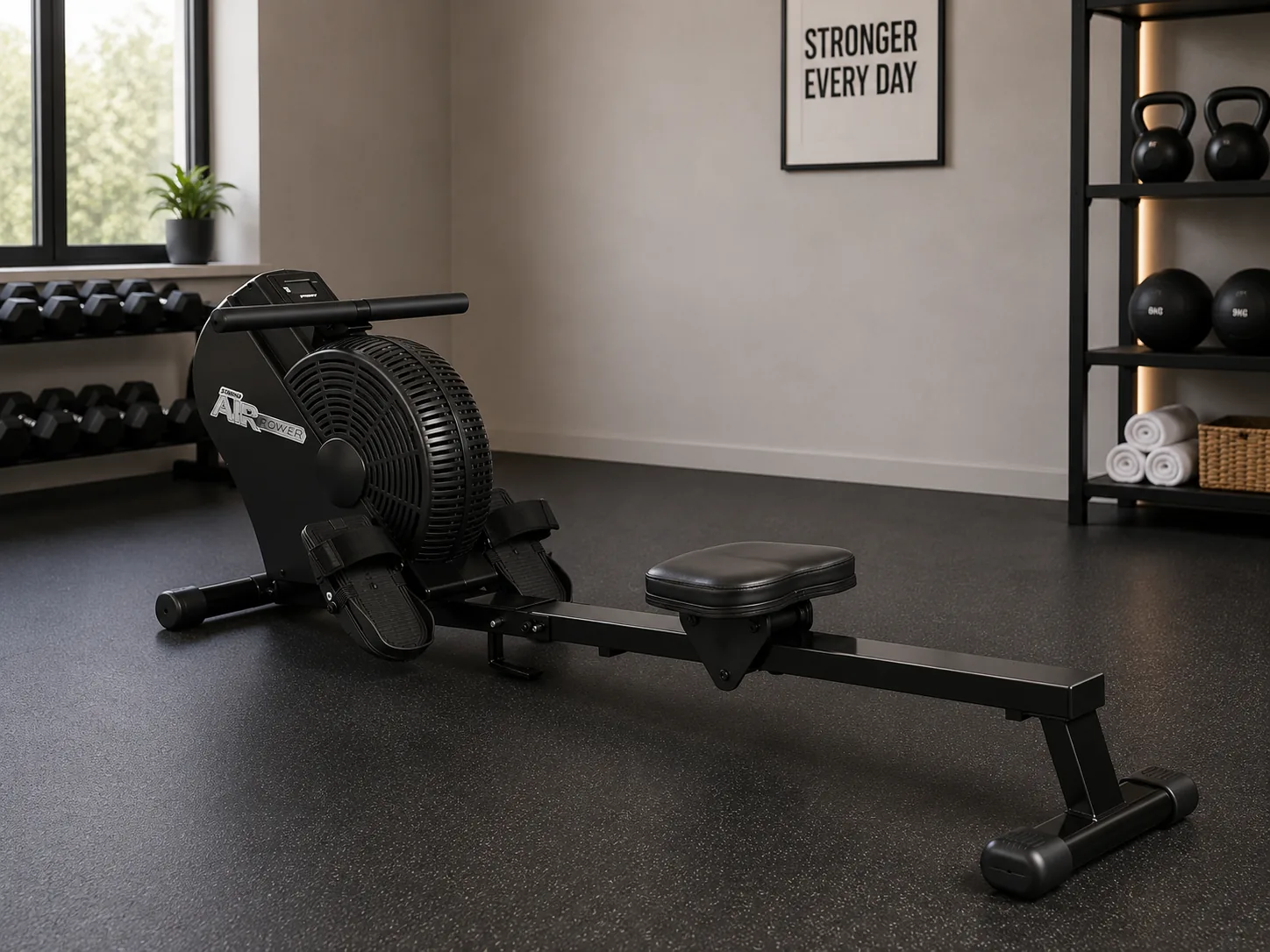
Air rower · ~$300-$400
Stamina ATS Air Rower
A genuine but basic budget air rower: real wind resistance and easy storage, held back by plastic build, a 250 lb limit, and a no-frills monitor.

How we review
Every rower is scored on the same six weighted criteria - resistance & feel, build, monitor, comfort, footprint, and value - from verified specifications, expert consensus, and aggregated long-term owner feedback. Our reviews are independent: we never accept payment for placement or a higher score. Reviewed by Jordan Lockwood (BSc, CPT). See our full methodology.
The Stamina ATS Air Rower is one of the longest-running budget air rowers on the US market, aimed squarely at shoppers who want the natural feel of fan resistance without the price of a Concept2. It pairs a steel-and-plastic frame with a wind-resistance flywheel, a simple LCD monitor, and a foldable rail, and typically sells in the $300 to $400 range depending on the retailer and model variant.
It is best understood as an entry-level machine rather than a performance tool. Buyers get a real air rower that scales resistance with effort, but they trade away the rugged build, longer rail, and connected metrics found on mid-range and premium rowers. For occasional home cardio in a small space, that trade can make sense; for serious training or larger athletes, the compromises add up quickly.
Specifications at a glance
| Resistance type | Air (wind) resistance |
|---|---|
| Monitor | Multi-function LCD: speed, distance, time, calories |
| Bluetooth / app sync | No Bluetooth data sync; bundled Muuv audio-coaching app |
| Assembled dimensions | 77" L x 18.75" W x 22" H |
| Folded dimensions | 48" L x 18" W x 28" H |
| Machine weight | 54 lbs |
| Max user weight | 250 lbs |
| Recommended user height | Up to about 6'4" (claimed) |
| Folding / storage | Yes; rail folds vertically via pull pin |
| Warranty | 3 years frame, 90 days parts |
| Price | Approx. $300-$400 street |
Pros
- Genuine air resistance that scales naturally with stroke effort, a step up from cheap hydraulic rowers
- Folds vertically and weighs only 54 lbs, so it stores and moves easily in small spaces
- Low entry price makes a true air rower accessible to beginners
- Simple assembly and quiet operation reported by most owners
Cons
- Basic LCD monitor with no Bluetooth, heart-rate input, or data export to apps
- Heavy reliance on plastic, including the flywheel housing, with only a 90-day parts warranty
- Short seat rail and 250 lb capacity limit comfort for taller and heavier users
- Reviewers report some shakiness and an inconsistent sense of resistance under hard effort
Best for: Budget-minded beginners and casual users in small spaces who want a real air rower without paying for connected features.
Resistance and feel: real air, but a wobble under load
The single best thing about the Stamina ATS Air Rower is that it is a genuine air rower. Pull harder and the fan spins faster, so the resistance scales with your own effort instead of capping out the way a cheap hydraulic-piston rower does. For someone stepping up from a sub-$200 magnetic or hydraulic machine, that responsive, self-regulating feel is a real upgrade and the main reason this rower exists.
Where it falls short is composure. Owners and testers repeatedly describe a fan and frame that wobble and flex when you put serious power through the catch, and the sense of resistance can feel inconsistent once you are rowing hard. It is fine for steady-state cardio and moderate intervals, but it does not deliver the planted, repeatable stroke that a serious rower wants for threshold or interval work. Also worth setting expectations on: air rowers are the loudest resistance type, and this one is no exception, so it is not the machine for an apartment with thin walls or early-morning sessions next to a sleeping household.
Monitor and connectivity: a screen from two decades ago
The LCD console is the weakest part of the package. It is a single-button, multi-function display that cycles through distance, time, strokes per minute, total strokes, speed and calories one metric at a time. There is no Bluetooth, no ANT+ heart-rate input, no stroke-rate-paired pace targets, and no way to export your sessions to a training app or log. Reviewers are blunt that the display feels a generation or two behind anything connected.
Stamina leans on its free companion app (currently branded muuv) to fill the gap, offering audio coaching and follow-along guidance that does not require a subscription. That is a nice no-strings extra, but it is coaching layered on top of your phone, not real two-way data from the machine. If you care about tracking pace splits, watts, or syncing workouts to your phone or watch, treat this rower as effectively offline and budget your expectations accordingly.
Build, comfort and the durability question
This is a 54 lb machine built around plastic, including the flywheel housing, and the 90-day parts warranty tells you how much confidence the manufacturer has in those parts surviving. That short coverage window is the single biggest red flag, and owner reports back it up: cracked footplate covers, a nylon pull strap that can fray or break, and recoil or spring-box failures within the first several months of regular use are recurring themes. None of this is universal (plenty of owners are happy), but the failure stories cluster around heavier or more frequent use, which is exactly the stress a committed rower puts on it.
Comfort is mixed. The upholstered seat and strapped footplates are fine for casual sessions, but the seat rail is short and the 250 lb capacity is genuinely limiting, ruling out a chunk of potential buyers and cramping taller users. Some reviewers also flag the footplate angle and a forward catch position that can nudge you into a hunched posture, which matters if you have a cranky lower back. On the plus side, it folds vertically and rolls on wheels, so storage and moving it between rooms is one area where it clearly earns its keep.
Who it actually suits
The honest target buyer is narrow but real: a beginner or casual user on a tight budget who wants to try true air resistance, weighs comfortably under the 250 lb limit, and will row a few times a week for general fitness rather than train hard or daily. For that person, the low entry price and easy storage make it a reasonable on-ramp into rowing without the commitment of a premium erg.
It is the wrong machine for heavier users, taller users who need a long rail, anyone over roughly 200 lbs who plans to row intensely, and anyone who wants data, app sync, or heart-rate tracking. If you suspect you will fall in love with rowing and row most days, the durability ceiling and the 90-day warranty mean you may be replacing parts (or the whole machine) within a year, which erodes the value that drew you in.
Versus the Concept2 RowErg
The obvious comparison is the Concept2 RowErg, and it is not really a contest on quality. The Concept2 costs roughly two to three times as much, but you get a rock-solid frame, a metal pull chain instead of a breakable nylon strap, a 500 lb capacity (double the Stamina), a longer rail, and the PM5 monitor with wireless heart-rate, programmable workouts, racing, and USB or app data export. It is the machine that holds its resale value and survives years of daily abuse.
The Stamina's only winning arguments are price, weight (it is lighter to move) and vertical fold storage. If your budget genuinely tops out around $300 to $400 and you just want to start rowing, the Stamina lets you do that today. But understand the trade: you are buying a starter machine, not a lifetime one. If you can stretch the budget or buy a used Concept2, the long-term cost per workout almost always favors the Concept2, because it simply will not break the way reviewers report the Stamina can.
Our take
Buy the Stamina ATS Air Rower only if three things are all true: your budget is firmly in the $300 to $400 range, you are well under the 250 lb limit, and you are a casual rower who values cheap entry and easy storage over data and longevity. For that specific person it does the one important thing right, which is delivering genuine air resistance at a low price, and the vertical fold makes it livable in a small space.
Skip it if you are tall, heavier, plan to row hard or daily, or care at all about app connectivity and heart-rate tracking. The plastic-heavy build, 90-day parts warranty, short seat rail and bare-bones monitor are not flaws you can upgrade away, and the recurring failure reports mean a heavy user may end up replacing it within the year. In that case, save toward a Concept2 RowErg, which is the machine that actually lasts. Our 2.8 out of 5 reflects exactly this split: a real air rower that does its core job, held back by a build and feature set that limit who should own it.
Our verdict
The Stamina ATS Air Rower gets the one thing that matters most right: it is a true air rower at a budget price, giving beginners responsive wind resistance and easy vertical-fold storage without a premium spend. That is a real, if narrow, win. But the package around it is basic and fragile. A plastic-heavy build, a 90-day parts warranty, a short seat rail, a 250 lb limit, and a monitor that feels two decades old all conspire to make this a starter machine rather than a keeper, and the recurring owner reports of cracked footplates and broken springs back that up.
Our verdict at 2.8 out of 5: a reasonable on-ramp for a light, casual, budget-bound rower who fits comfortably under the weight limit and does not care about data. Everyone else, especially heavier users and anyone who plans to row hard or daily, should save toward a Concept2 RowErg, which costs more up front but will outlast several of these and actually track your training. Buy the Stamina for what it is, not for what you hope rowing will become.
Frequently asked questions
- Is the Stamina ATS Air Rower a real air rower or a cheaper resistance type?
- It is a genuine air rower with a fan flywheel, so resistance scales naturally with how hard you pull, unlike hydraulic-piston budget rowers. That responsiveness is its main selling point, though the fan and frame can wobble under hard effort.
- Does it connect to apps or track heart rate?
- No. The LCD monitor has no Bluetooth, no ANT+ heart-rate input, and no data export. Stamina offers a free companion app (muuv) for audio coaching on your phone, but it does not pull live metrics from the machine, so treat the rower itself as offline.
- How durable is it, and what does the warranty cover?
- It is built heavily from plastic, including the flywheel housing, and carries only a 90-day parts warranty. Owners report cracked footplate covers, nylon strap wear, and spring or recoil failures within months, especially under frequent or intense use. Casual users fare better than heavy daily rowers.
- Who should not buy this machine?
- Anyone near or over the 250 lb capacity, taller users who need a long rail, people who plan to row hard or daily, and anyone who wants app sync, pace splits, or heart-rate tracking. Those buyers should save toward a Concept2 RowErg instead.
- How does it compare to the Concept2 RowErg?
- The Concept2 costs roughly two to three times more but is far sturdier, with a metal chain instead of nylon strap, a 500 lb capacity, a longer rail, and the advanced PM5 monitor with heart-rate and data export. The Stamina only wins on price, light weight, and vertical fold storage.
References
- Stamina ATS Air Rower (official product page and specs) - Stamina Products
- Stamina ATS 35-1403 Air Rower Review (2026) - Garage Gym Reviews
- Stamina ATS Air Rower 1399 Review - AllRowers
Jordan Lockwood (BSc, CPT)
Certified personal trainer (CPT), sports-science graduate, and lifelong rower. Jordan writes and reviews every guide on Rowing Machine Nerd.