 Rowing Machine Nerd
XTERRA Fitness ERG400 Review
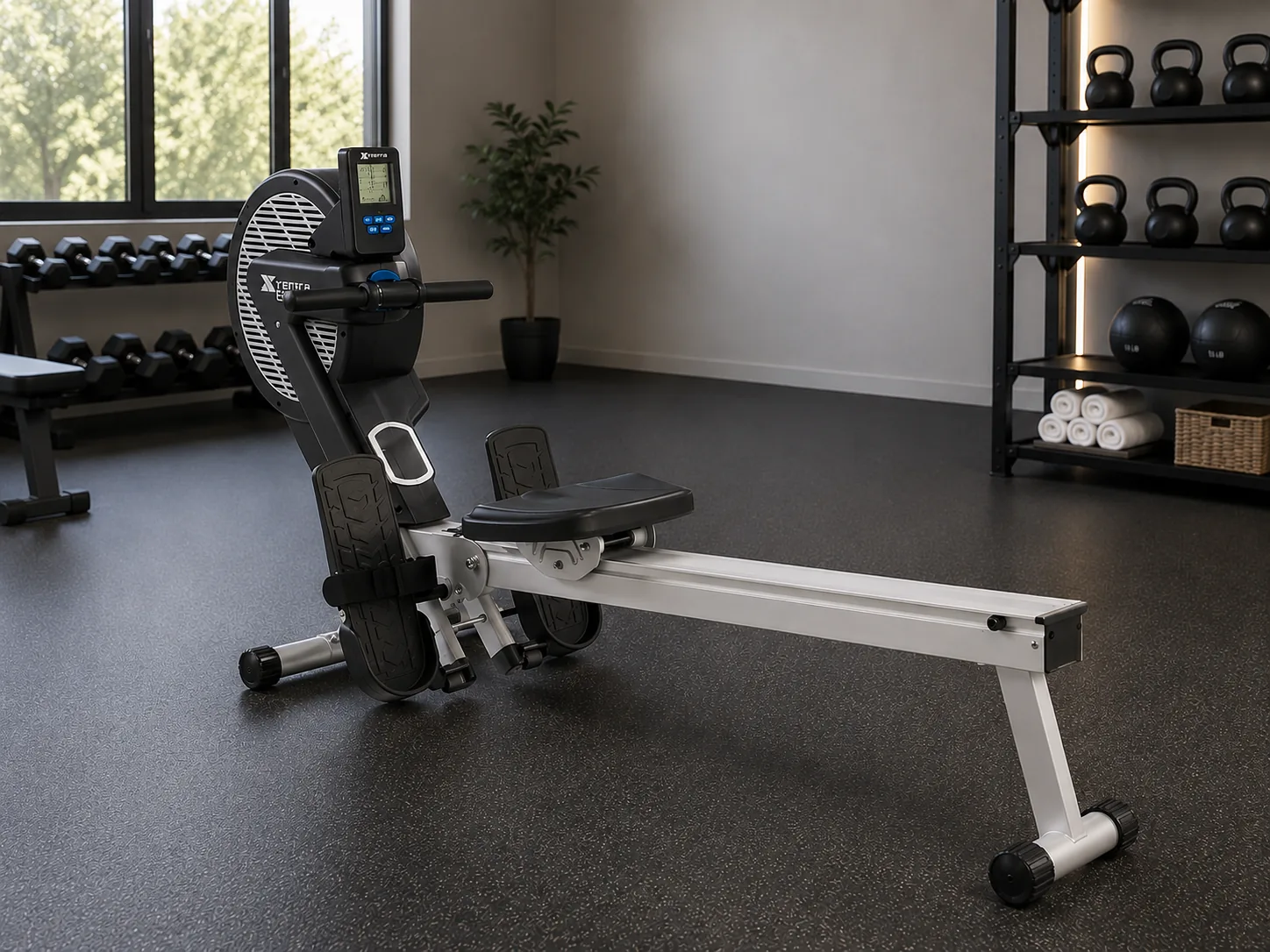
Air + magnetic rower · ~$450
XTERRA Fitness ERG400
A folding air-plus-magnetic budget rower with a 16-level console; capable and affordable, but reliability reports and a short parts warranty temper it.

How we review
Every rower is scored on the same six weighted criteria - resistance & feel, build, monitor, comfort, footprint, and value - from verified specifications, expert consensus, and aggregated long-term owner feedback. Our reviews are independent: we never accept payment for placement or a higher score. Reviewed by Jordan Lockwood (BSc, CPT). See our full methodology.
The XTERRA Fitness ERG400 is a folding home rower that pairs air resistance with a magnetic brake, offering 16 selectable resistance levels rather than the speed-only feel of a pure air machine. With an 11 lb flywheel, an aluminum slide rail and a roughly $400-$500 street price, it sits squarely in the entry-to-mid budget tier and competes with machines like the Sunny air/magnetic rowers and the lower end of the NordicTrack lineup.
It is aimed at someone setting up a home gym who wants more resistance control than a basic hydraulic or air rower provides, plus the ability to fold the frame away between sessions. Buyers chasing app-based classes, structured PM5-style data, or commercial durability should look elsewhere; the ERG400 is a straightforward, no-subscription machine for general cardio and weight management.
Specifications at a glance
| Resistance type | Air + magnetic, 16 levels |
|---|---|
| Flywheel | 11 lb high-RPM flywheel |
| Console | Adjustable-angle LCD: time, distance, calories, strokes, SPM, watts |
| App / Bluetooth | Not specified (none advertised) |
| Heart rate | Not specified (no HR receiver advertised) |
| Assembled dimensions | 72" L x 19" W x 33" H |
| Machine weight | 50.7 lb |
| Max user weight | 250 lb |
| Folding / storage | Yes, frame folds for storage |
| Rail | Extruded aluminum slide rail with steel supports |
| Warranty | 5 years frame, 1 year parts |
| Power | 110V AC adapter for console |
Pros
- Combines air and magnetic resistance with 16 selectable levels, giving more range than air-only budget rowers
- Console shows a useful spread of metrics including watts, strokes per minute, distance and calories
- Frame folds for storage and the machine is light (50.7 lb) and easy to move
- Five-year frame warranty is generous for the price point
- Aluminum slide rail with steel supports feels solid underfoot
Cons
- Multiple reviews report mechanical/flywheel reliability issues after several months of use
- Parts warranty is only one year, short given the durability reports
- No Bluetooth, app integration, or heart-rate receiver
- 250 lb user limit and small display are limiting for larger or data-focused users
Best for: Budget-minded home users who want adjustable air-plus-magnetic resistance and folding storage, and who don't need app connectivity or commercial-grade durability.
Resistance and feel: the hybrid sounds better than it works
The ERG400's pitch is genuinely appealing for the money. It pairs a small 11 lb air flywheel with a magnetic brake and gives you 16 electronically selectable levels, so on paper you get the wind-up responsiveness of air rowing plus the quiet, dialed-in control of magnetic. In practice the blend is competent rather than convincing. The flywheel is light, which keeps the catch from feeling planted and means the stroke loses inertia quickly between pulls. Several owners report that even at level 16 the top-end resistance is underwhelming, so stronger rowers and anyone who likes to grind out heavy power strokes can hit the ceiling fast.
The other honest caveat is noise. The air component is the loudest part of the machine, and in a small apartment or a shared room it gets conspicuous as your stroke rate climbs. If you specifically wanted air resistance for the dynamic, water-like feel, the ERG400 delivers a watered-down version of it; if you wanted magnetic resistance for near-silent early mornings, the air side undercuts that too. It is a rower that does two things adequately rather than either one well.
The reliability question is the whole story
No amount of feature discussion matters if the machine breaks, and reliability is where the ERG400 repeatedly stumbles in owner reports. The most common failure points are the rowing cable or cord and the spring that retracts the handle to the flywheel, with multiple buyers describing breakages inside the first few months - some within weeks, many in the five-to-six-month window. There are accounts of the cord pulling out shortly after purchase and of replacement parts that never quite restored normal operation.
This is the single biggest reason our rating sits at 2.9 out of 5 rather than higher. A budget rower can forgive a mediocre seat or a small screen, but a drivetrain that fails under normal home use is a different category of problem. The mitigating factor, and it is a real one, is that XTERRA's customer service is responsive and the failures fall inside the frame warranty period for the frame itself. But the parts warranty is only a year, which is uncomfortably short given that these are exactly the components owners report replacing.
Monitor and connectivity: functional, dated, and isolated
The angle-adjustable LCD console covers the metrics that matter for casual training - time, distance, stroke count, strokes per minute, calories, and watts - which is actually a slightly fuller spread than some sub-$500 rivals show. The trouble is execution. The display is small and several reviewers find it hard to read mid-effort, and the layout has been described as fiddly with some of the on-screen information feeling like filler rather than useful feedback.
More limiting for 2026 is what is missing. There is no Bluetooth, no app connectivity, and no heart-rate receiver, so the ERG400 lives entirely on its own little screen. You cannot push workouts to Strava, Kinomap, or a training app, and you cannot pair a chest strap to see heart rate. For a buyer who just wants to log a number and move on, that is fine. For anyone who expects their cardio gear to talk to a phone, this machine is a dead end.
Build, comfort and storage: the genuinely good part
The chassis is the most defensible aspect of the ERG400. The extruded aluminum slide rail on steel supports feels solid underfoot, the frame folds into a compact upright footprint of roughly 16 by 24 by 46 inches, and at about 50.7 lb with transport wheels it is easy to wheel out of the way - a real advantage for small homes where the rower has to disappear between sessions. The five-year frame warranty backs this up and is generous at the price.
Comfort is mid-pack. The seat sits around 16 inches off the floor, which makes getting on and off easier than some low-slung budget rowers, but it is unmistakably a budget seat and longer sessions expose its thin padding. The 250 lb user limit is the other ceiling to watch: it rules the machine out for heavier users entirely, and taller or larger rowers should confirm the inseam works for them before buying.
How it compares: Concept2 RowErg and the Sunny budget peers
The obvious aspirational alternative is the Concept2 RowErg, and the comparison is not close on the things that matter long term. The Concept2 costs roughly twice as much, but it is the machine clubs, gyms, and serious home rowers actually trust for years; its resistance ceiling is effectively unlimited for a home user, its PM5 monitor connects to apps and heart-rate straps, and its reliability and parts availability are in a different universe. If your budget can stretch and you plan to row consistently, the RowErg is the smarter spend per year of ownership, full stop.
Within the ERG400's own price bracket, the more relevant rival is the budget field led by Sunny Health and Fitness, which generally earns better owner ratings than the ERG400. A magnetic-only Sunny gives up the air feel and some of the metrics, but trades that for fewer of the cable-and-spring horror stories that dog the XTERRA. Against XTERRA's own lineup, the simpler magnetic ERG200 and ERG220 sit at similar money with fewer moving parts to fail. The ERG400's hybrid resistance is its differentiator, but that same complexity is also where it breaks.
Our take
Buy the ERG400 only if you specifically want a folding, easy-to-store hybrid rower for light-to-moderate home use, you are under the 250 lb limit, you do not care about app connectivity, and you are buying it from a seller with an easy return path. For that narrow buyer it is affordable, compact, and the metrics are adequate. The strong frame warranty and responsive support also mean a frame failure or an early-life part failure is recoverable, if annoying.
Skip it if you are a heavier or stronger rower who will test the resistance ceiling, if you want your data to sync to a phone or a heart-rate strap, or if you simply want to buy once and not think about it. The recurring flywheel, cable, and handle-spring failures plus a one-year parts warranty make this a calculated risk rather than a safe default. If you can find a similarly priced Sunny or stretch toward a Concept2 RowErg, either is the more dependable use of the same money.
Our verdict
The XTERRA ERG400 is a likable idea undermined by its execution. A folding, lightweight hybrid rower with 16 levels and a full set of basic metrics for around $450 is a tempting package for small-space, light-use buyers, and the solid aluminum frame plus a five-year frame warranty give it a real foundation. But the recurring reports of cable, cord, and handle-spring failures in the first few months - paired with a stingy one-year parts warranty and a resistance ceiling that disappoints stronger rowers - keep this firmly in calculated-risk territory.
At 2.9 out of 5, it earns a conditional recommendation and nothing more. If you are a casual rower under 250 lb who values compact storage over connectivity and durability, and you buy with an easy return path, the ERG400 can serve you. Everyone else should look at a better-reviewed Sunny budget rower at the same price or save toward a Concept2 RowErg, which costs more once and asks far less of you afterward.
Frequently asked questions
- Is the XTERRA ERG400 reliable enough for daily use?
- This is its weakest point. Owners repeatedly report the rowing cable, cord, or handle-retract spring failing within the first two to six months, sometimes sooner. It can handle daily light use, but the failure rate is high enough that we treat heavy daily training as a real risk. Buy from a seller with an easy return policy and keep your warranty paperwork.
- How does the air-plus-magnetic resistance actually feel?
- The 11 lb flywheel is light, so the stroke lacks inertia and the catch does not feel planted. The 16 magnetic levels give you control, but several owners find the top end too weak for a hard workout, and the air component gets noticeably loud at higher stroke rates. It is fine for moderate cardio, underwhelming for strong rowers.
- Can I connect the ERG400 to apps or a heart-rate strap?
- No. There is no Bluetooth, no app integration, and no heart-rate receiver. Your data lives only on the small built-in LCD, which shows time, distance, strokes, strokes per minute, calories, and watts. If syncing to Strava, Kinomap, or a chest strap matters to you, this machine cannot do it.
- Who should not buy the ERG400?
- Anyone over the 250 lb limit, stronger rowers who will max out the resistance, data-focused users who want app or heart-rate connectivity, and anyone wanting a buy-it-once machine. For those buyers a better-reviewed Sunny budget rower or a Concept2 RowErg is the safer choice.
- Is it worth it over a Concept2 RowErg?
- Only on upfront price. The RowErg costs about double but offers an unlimited practical resistance ceiling, an app- and strap-connected PM5 monitor, and far better proven longevity and parts support. If you row regularly and can stretch the budget, the RowErg is the better value per year of ownership.
References
- XTERRA Fitness ERG400 Air & Magnetic Resistance Folding Rower - Amazon
- Xterra ERG400 Rower - Garage Gym Reviews
- Xterra ERG400 Rowing Machine Review - Rowing Machine Guide
Jordan Lockwood (BSc, CPT)
Certified personal trainer (CPT), sports-science graduate, and lifelong rower. Jordan writes and reviews every guide on Rowing Machine Nerd.