 Rowing Machine Nerd
WaterRower GX Review
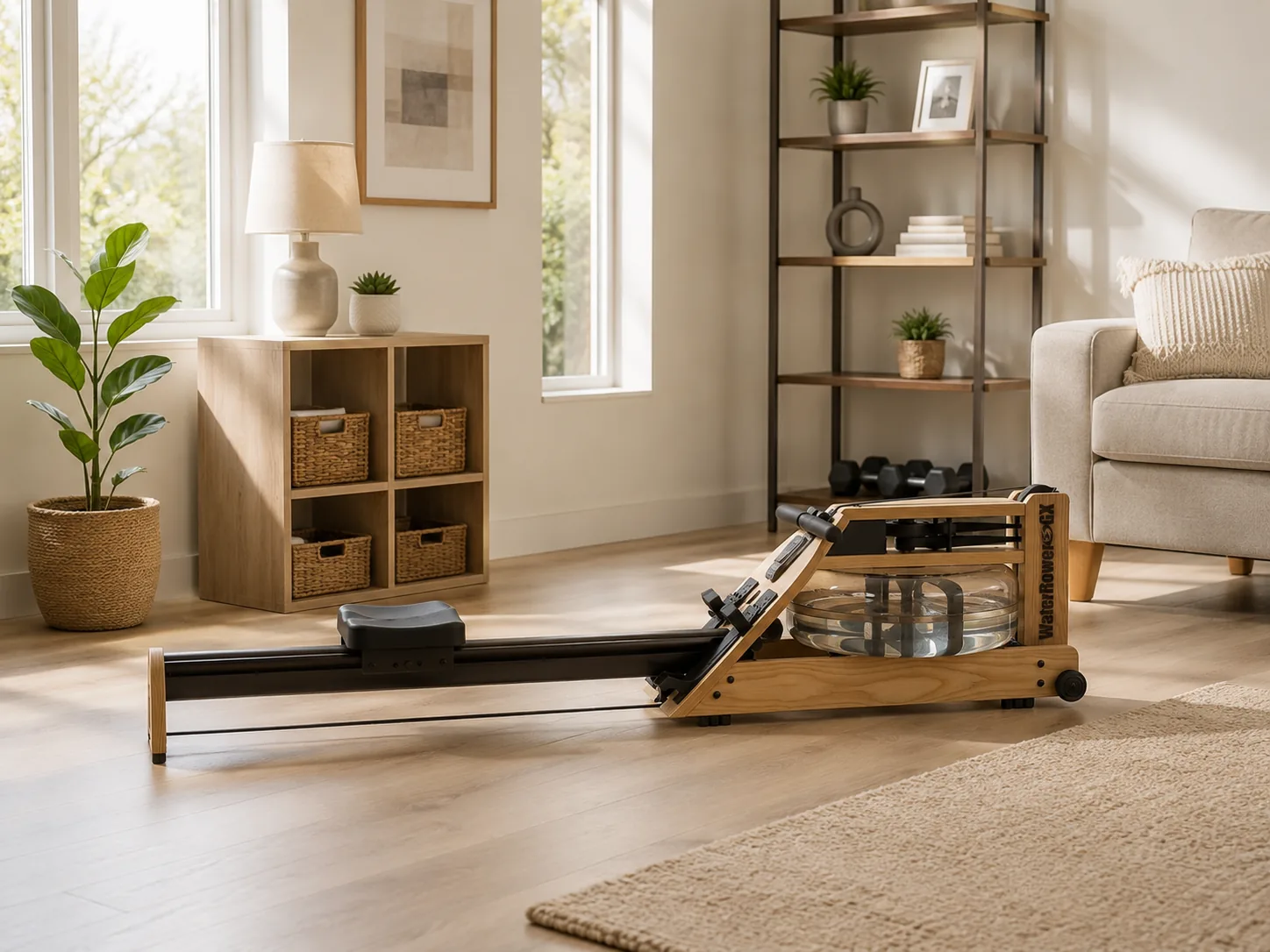
Water rower · ~$1,000-$1,300 (discontinued)
WaterRower GX
A durable studio-oriented water rower with smooth resistance, but a bare-bones monitor and no connectivity now that it's discontinued.

How we review
Every rower is scored on the same six weighted criteria - resistance & feel, build, monitor, comfort, footprint, and value - from verified specifications, expert consensus, and aggregated long-term owner feedback. Our reviews are independent: we never accept payment for placement or a higher score. Reviewed by Jordan Lockwood (BSc, CPT). See our full methodology.
The WaterRower GX was the brand's group-exercise and studio-focused machine, sharing the company's signature water-resistance flywheel with its better-known wood-framed siblings but built around a streamlined aluminium monorail intended for high-traffic class settings such as Indo-Row and ShockWave. It came in two trims: a Home version rated to 325 lb and a more robust Studio version rated to 375 lb and warrantied for commercial use.
It is important to know up front that the GX was discontinued in late 2017 and replaced in WaterRower's lineup by the A1. That means new units are no longer made, and shoppers will encounter it primarily through refurbished or used-equipment channels. As a result, this is a research-based assessment of a machine best evaluated as a secondhand purchase rather than a current retail option.
Specifications at a glance
| Resistance type | Water (patented WaterFlywheel) |
|---|---|
| Monitor | GX QuickStart monitor: time, distance, stroke rate, speed/intensity, calories |
| App / Bluetooth | None |
| Assembled dimensions | 83.5" L x 22.25" W x 20" H |
| Machine weight | 61 lb dry / ~98 lb filled |
| Max user weight | 325 lb (Home) / 375 lb (Studio) |
| Storage | Stands vertically; does not fold |
| Warranty | 3 years parts / 5 years frame (with registration) |
| Status | Discontinued (2017), replaced by WaterRower A1 |
Pros
- Smooth, natural water resistance that scales with effort
- Sturdy ash-wood and aluminium-monorail construction built for studio use
- High user-weight capacity, up to 375 lb on the Studio model
- QuickStart monitor is simple and immediate for beginners
- Stands upright for relatively compact storage
Cons
- Basic monitor with no heart-rate, presets, or programs
- No Bluetooth, app, or PC connectivity
- Discontinued, so only available used or refurbished
- Long 83.5-inch footprint needs dedicated floor space
Best for: Buyers who want a durable studio-grade water rower and prefer a simple, distraction-free monitor over app-connected features.
The water-resistance feel is the whole point
The GX is built around WaterRower's WaterFlywheel: two paddles spinning in a sealed polycarbonate tank, with resistance that scales by the cube of your speed. In practice that means the harder you pull, the more the machine pushes back, the same way a boat behaves on real water. There is no resistance lever to fiddle with mid-workout, which is exactly what most water-rower buyers want - the stroke feels organic and self-regulating rather than mechanical.
You tune the overall feel by adding or removing water from the tank rather than turning a dial. More water gives a heavier, slower catch; less water makes it lighter and quicker. It is a once-and-done adjustment, not something you change between intervals, so think of it as setting the boat's displacement rather than picking a damper level. The trade-off versus an air rower is that the resistance ceiling is governed by water volume and your own power, so very strong rowers chasing maximum drag have less headroom than they would on a fan-based erg cranked to the top.
That signature swoosh - aesthetics and sound
This is where the GX earns its keep against cheaper, louder machines. The ash-wood frame and water tank absorb vibration, and the dominant sound is the soft swoosh of water rather than the whir of a fan. For apartments, shared walls, or rowing in front of a sleeping household, that difference is real and meaningful - it is consistently the thing owners praise most. Some people find the rhythmic splash genuinely relaxing; a few find it monotonous. It is quieter than an air rower, not silent.
The hand-crafted Appalachian ash with a honey-oak stain and Danish-oil finish is the other reason people choose this category. The GX looks like furniture, not gym equipment, and it stands upright on caster wheels in a footprint about the size of an upright bike when not in use. If you want a rower that can live in a living room rather than a garage, the wood-and-water aesthetic is a legitimate buying reason, and the GX delivers it.
The monitor is the weak link
The QuickStart GX monitor is honest about what it is: press one button and row. It shows time, distance, stroke rate, speed or split, and calories across its windows, which covers the basics for someone who just wants to get on and move. For a true beginner, the simplicity is arguably a feature - nothing to configure, nothing to misread.
But it is a genuine limitation for anyone who trains by data. There is no heart-rate display, no preset programs, no intervals you can pre-build, and critically no Bluetooth, app, or PC connectivity. You cannot log workouts to a phone, follow on-screen coaching, or pull structured sessions. WaterRower sold an S4 monitor upgrade (around $150 historically) that adds heart-rate compatibility and PC connectivity, and if you buy a used GX it is worth budgeting for that swap if metrics matter to you. Out of the box, the GX expects you to either not care about numbers or bring your own watch.
Build, comfort and the studio pedigree
The GX was designed for commercial studio use, and it shows in the construction. The aluminum monorail uses a concave shape that collects less dust and needs less cleaning than older twin-rail designs, and the seat tracks smoothly along it. The Studio variant carries a high 375 lb user-weight ceiling (the Home variant is rated lower at 325 lb), so it comfortably handles larger and heavier rowers - a real advantage over many budget machines that quietly cap out around 250 lb.
Comfort is solid rather than plush. Owners note the seat is firm on long sessions, which is common to this category, and WaterRower's footrests have historically been narrow, though the GX positions them on either side of the rail for better foot placement. The 83.5-inch length is the practical catch: it is a long machine, and while it stands up for storage, you still need a clear stretch of floor to use it. Registration extends the warranty to 3 years on components and 5 years on the wood frame, and these frames are widely regarded as lifetime-durable.
Versus the Concept2 RowErg
The honest alternative at this price is the Concept2 RowErg, and the comparison is not close on every axis. On pure value and training utility, the Concept2 wins decisively: its PM5 monitor is the industry-standard data console with Bluetooth and ANT+, structured workouts, and the ErgData ecosystem; spare parts are cheap and everywhere; and because it is the universal benchmark used at world championships and HYROX, resale value is excellent and your splits are comparable with every other rower on earth. It is also still in production, where the GX is discontinued.
The GX wins on the things the Concept2 ignores. It is meaningfully quieter, it looks like furniture instead of a machine, and the water stroke feels smoother and more boat-like to many rowers. If you are a data-driven trainer, a competitor, or anyone who wants long-term parts support and a connected monitor, the Concept2 is the smarter buy. If your priorities are a beautiful, quiet machine in a living space and a natural-feeling pull, and you can accept a bare monitor, the GX makes its case - but you are paying a premium for aesthetics and sound, not for features.
Our take
Buy the GX if the look, the feel, and the quiet matter more to you than data and connectivity - and if you can find a clean used or refurbished unit at a fair price, because it is no longer sold new. It is a genuinely durable, attractive, studio-grade machine that will outlast cheaper rowers, and the water stroke is the real deal. The high weight capacity on the Studio version also makes it one of the better water rowers for heavier users.
Skip it if you train by the numbers, want app-guided workouts or heart-rate tracking, or value future-proof parts and software support. The discontinued status and the bare monitor are the two things that drag our rating down, and neither is fixable without spending more on an S4 upgrade or simply buying a Concept2 instead. For most performance-minded buyers, that Concept2 is the better-value answer; for the aesthetics-and-quiet crowd, the GX is still a defensible choice.
Our verdict
The WaterRower GX is a beautiful, durable, studio-grade water rower whose strengths are exactly the ones the spec sheet cannot capture: a smooth, boat-like stroke, a soothing water swoosh instead of fan noise, and an ash-wood frame that looks like furniture. For buyers who want a rower they will actually leave out in a living space, who value quiet operation, or who need the Studio model's high 375 lb capacity, it remains a genuinely appealing machine - if you can find a clean used or refurbished one at a sensible price.
But the bare QuickStart monitor and the total lack of connectivity are real limitations in 2026, and the discontinued status means no new units and a fading parts pipeline. If you train by data or want app-guided workouts, the still-in-production Concept2 RowErg is the smarter, better-value buy. The GX earns its 3.4 out of 5: excellent to row and lovely to look at, held back by a feature set that has aged poorly. Buy it for the feel and the aesthetics, not for the screen.
Frequently asked questions
- Is the WaterRower GX still available to buy new?
- No. The GX was discontinued (around 2017, with the A1 effectively replacing it), so you will only find it used or refurbished. Factor in that you are buying an older unit when judging price, and inspect the tank, seat rollers and monorail before paying.
- Can I track heart rate or connect the GX to an app?
- Not with the stock QuickStart monitor - it has no heart-rate input and no Bluetooth, app, or PC connectivity. WaterRower offered an S4 monitor upgrade (historically about $150) that adds heart-rate compatibility and PC connectivity, so if data matters, budget for that swap or wear a separate fitness watch.
- How loud is it compared to an air rower?
- Noticeably quieter. The dominant sound is a soft swoosh of water rather than the fan whir of an air rower, and the wood frame absorbs vibration. It is well suited to apartments and shared spaces, though it is not completely silent.
- What weight can the GX hold?
- The Studio model is rated to 375 lb, which is high for a rowing machine; the Home variant is rated lower at 325 lb. Either way it comfortably suits larger and heavier rowers, accommodating users from roughly 5 feet to 6 feet 5 inches.
- How do you adjust resistance on the GX?
- You change the amount of water in the tank rather than using a lever. More water makes the stroke heavier and slower, less water makes it lighter and quicker. Beyond that, resistance scales automatically with how hard you pull, so there is nothing to adjust mid-workout.
References
- WaterRower GX Home Rowing Machine Review - Rowing Machine King
- WaterRower GX Studio Rower Review - FitRated
- WaterRower GX Studio Rowing Machine - Johnson Fitness
Jordan Lockwood (BSc, CPT)
Certified personal trainer (CPT), sports-science graduate, and lifelong rower. Jordan writes and reviews every guide on Rowing Machine Nerd.